


Boeing's Stock Price Forecast: Could the BA Stock Get Ahead in 2026?



AI Podcast


Boeing stock (BA) is facing investor scrutiny as its operational transformation and order flow improve. After significant production challenges, the company is showing stability and positive free cash flow in 2025. A strong backlog of thousands of aircraft, including potential large orders from Saudi Arabia and renewed interest from India and China, provides long-term revenue visibility. Analysts are optimistic, projecting billions in free cash flow by 2026, which could enable debt reduction and shareholder returns. However, risks persist, including the 777X delivery delay to early 2027 and ongoing execution challenges related to quality control and supply chain management. High leverage also presents a concern in a high-interest-rate environment, making Boeing best suited for long-term investors.
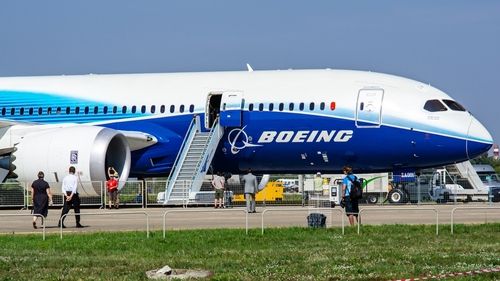
TradingKey - As we enter 2026, the Boeing stock (BA) is facing increasing investor scrutiny as they assess whether to take a greater investment in this leading aerospace company based on improving operations and increasing order flow. Following a long and difficult recovery, after having a multitude of safety challenges, production delays and program overruns, new data is indicating the second largest aircraft manufacturer in the world "may be approaching stability", yet still has plenty of ups and downs that are about to occur over the next year.
Boeing's Story / Theme
Boeing's stock story is tied to the multi-year operational transformation that occurred after having a turbulent period during the early part of the 2020 decade. An abundance of production disruptions primarily due to bottlenecks in production, including the production of the 737 MAX and the production of the new 777X’s wide-body aircraft, have had an enormous impact on Boeing's ability to deliver, and build cash flow. By 2025, Boeing has demonstrated notable progress as it has rebuilt its production capabilities for many of its commercial aircraft families, as well as, now has begun to generate positive free cash flow for the first time in several years of negative cash flow. As a result, investors have started to increase their investment in Boeing stock, and as new information continues to be released many financial analysts are now ranking Boeing as one of their top industrial investment recommendations for 2026, citing improving operational execution, a strong backlog of orders, and a very long runway for free cash flow growth.
Support Backlog Production and Ramp
Boeing's increasing fundamentals are demonstrated by Boeing's improving fundamentals, which are attributable largely to increasing production rates for commercial aircraft. The 737 MAX production has been established as well as expanded and recently the FAA gave Boeing permission to increase production rates to support this expansion. Many analysts believe this increased production rate is the most critical factor for converting years of backlog into revenue and margin growth. In 2025 Boeing had a backlog of orders at more than thousands of aircrafts due to growth in global airline re-inventories. With this significant backlog there is long-term visibility to revenue for Boeing beyond 2025. The presence of such a significant contingency demand is unique among industries that are characterized as long cycle manufacturing industries supporting the argument that continuing to improve production at Boeing will materially improve the production rate of Boeing.
Along with anticipated demand from commercial orders, recent developments in the industry suggest there will be new opportunity markets for the company to tap into as well. For example, Saudi Arabia's national airline is currently working with Boeing and other major airplane manufacturers to finalize a large historic purchase of aircraft that could potentially number more than 150 units. This indicates that there is a lot of unfulfilled demand for aircraft among the many global companies that are growing. There have also been reports of an increase in interest from governments and businesses in countries like India, as well as a renewed interest by the Chinese government to consider placing orders for commercial aircraft, indicating that global demand continues to be an important driver of future revenue/growth opportunities for the company.
Free Cash Flow Recovery and Analyst Confidence
The narrative of Boeing is heavily focused on free cash flow generation from operations and orders. A number of independent analysts have provided buy ratings on Boeing's stock through 2026 based on their expectation of a significant increase in free cash flow due to stability of Boeing’s operations. Some estimates project that Boeing could have multiple billions of dollars of free cash flow by 2026 and a rapidly increasing free cash flow on an annualized basis in future years due to improving production rates and inventory consumption. Increased free cash flow will allow for reduced leverage, enhanced operational flexibility, and ultimately create a basis for providing future returns to shareholders through dividends or share repurchases. Furthermore, analysts from TD Cowen and Bernstein believe that free cash flow will continue to evolve positively through a greater accumulation of cash, allowing for potential outperformance in periods ahead.
Investors’ attitudes toward Boeing's stock price appear to mirror the changes outlined above. The consensus price targets set by independent analysts for the next 12 months suggest a significant upside versus the current stock price, with some targets being substantially above the stock price as of early 2026. This positive investor sentiment is based on the anticipation of Boeing's transition into a multi-year period of operational consistency, improvement in production processes and margins.
Project Deliverables and Timeframes
The investment proposition for Boeing continues to be closely tied to execution risks associated with its next-generation commercial jet programs, especially the 777X, which was meant to be Boeing’s flagship large jet. The timeline for the first delivery of the 777X has now slipped to early 2027 instead of the original estimate of 2026, resulting in a historically large headwind to both revenue recognition as well as to investor sentiment; however, analysts suggest that the delay will be viewed in terms of a timing issue rather than as a structural problem, due to the long duration of development.
In addition to the above-described 777X certification milestones, the completion of additional certification milestones for the 737 MAX family of aircraft will also play an important role in expanding Boeing's available market and competitive position vis-a-vis Airbus. Each of these certification milestones will serve to create new opportunities for incremental recurring revenues for Boeing, and they will also act as positive signals to investors regarding Boeing's future production and delivery capabilities.
Risks and Differing Opinions
Despite increased production forecasts and analyst bullishness, Boeing faces still substantial amounts of risk inherent in its company forecast. The historical weakness that Boeing has had due to both quality control and supply chain management has negatively affected its brand image and total cost structure for many years. Boeing has made progress in terms of addressing some of these legacy issues via internal restructuring efforts as well as acquiring companies like Spirit AeroSystems, however, execution risk remains a concern, especially if new supply chain issues emerge.
The balance sheet and debt structure of Boeing create additional concern for investors. Boeing has a high amount of leverage due to the amount invested and the cash burned over the past few years; this situation will affect Boeing's strategic flexibility going forward especially in a high interest rate environment and could limit its ability to return capital to shareholders until cash flows are generated at a consistent level. On top of the credit ratings for Boeing being moved to stable from negative, the timeline for debt maturities and the need to refinance debt also create concern for fixed income investors and credit analysts.
Implications for Market / Investor Interpretation
For investors assessing Boeing's stock as part of a larger investing strategy, the company's changing production rhythm, backlog strength and evolving free cash flow profile emerge to define a solid long-term recovery narrative for $BA. A cautiously optimistic perspective supports the notion that Boeing's turnaround requires significant milestones: stabilization of 737 MAX output; high order visibility; and an anticipated rise in free cash flow. If analysts' projections are realised, Boeing could move from recovery mode to sustainable growth mode over the mid 2020s.
Nevertheless, execution risk and program delays indicate Boeing is likely best suited for investors with a long-term investment horizon capable of weathering volatility and potential setbacks without reacting to short-term share price fluctuations. For investors focused on cycle-sensitive companies and large-cycle manufacturing leaders, the price performance of Boeing shares provide both a point of entry into recovering global travel demand and a unique case study in operational discipline reshaping the long-term potential of a legacy manufacturer.
Recommended Articles









Comments (0)
Click the $ button, enter the symbol, and select to link a stock, ETF, or other ticker.