


Japan-US Currency Game Enters White-Hot Stage After Yen Surges 400 Points. Fed Interest Rate Decision + New Chair Suspense Upgrades Currency War?



AI Podcast


Abnormal yen volatility, amplified by a Federal Reserve "rate check," has pushed USD/JPY to its lowest level since mid-November. Japan faces a dilemma intervening against yen depreciation due to potential JGB yield increases. The upcoming Fed policy announcement and potential new Chair selection introduce further uncertainty, with Rick Rieder now favored. While the Fed is expected to hold rates steady, any signal on future rate cuts could impact the dollar and, consequently, the yen. Analysts suggest limited intervention cooperation would be tactical, unable to reverse the yen's long-term trend.
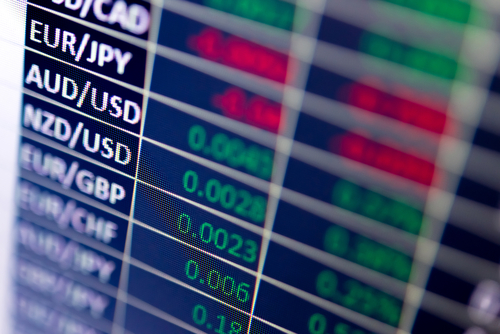
TradingKey - Japan's financial market has dropped another bombshell, as abnormal volatility in the Japanese bond market begins to spill over into the foreign exchange market. USD/JPY Following a 260-pip plunge last Friday, the pair fell another 160 pips on Monday to hit its lowest level since mid-November. A "rate check" on USD/JPY by the Federal Reserve Bank of New York served as the catalyst for this sharp volatility in the yen.
The Federal Reserve is set to announce its latest interest rate decision this week, with markets widely expecting the target range to remain unchanged at 3.5%-3.75%. Furthermore, the suspense surrounding the new Fed Chair may be resolved this week; the probability of dark horse candidate Rick Rieder has surged to 54%, adding uncertainty to financial markets. With the yen standing on the precipice of policy intervention, the dual variables of Fed personnel and policy could catalyze further exchange rate volatility.
Yen's push toward 160 fails; will a joint Japan-U.S. intervention be triggered?
USD/JPY faced downward pressure near 160, and the yen surged for two consecutive sessions, gaining more than 400 pips. The driving force behind this was a rare "rate check" operation by the U.S. Treasury, where the New York Fed contacted multiple banks to inquire about USD/JPY quotes.
A "rate check" involves officials asking dealers what prices they would offer if authorities were to enter the market. It is a signaling tool used by monetary authorities to indicate they are "ready to intervene." Such inquiries are often viewed as a warning to traders that authorities believe yen movements are excessive and are prepared to influence the exchange rate by directly buying or selling in the market.
Regarding the recent high volatility in Japanese financial markets, Finance Minister Satsuki Katayama stated that she is "monitoring exchange rates with a sense of urgency," yet the Japanese government is caught in a dilemma. While it wants to intervene against excessive yen depreciation to curb imported inflation, it fears that aggressive intervention could drive up JGB yields and burst the bubble of financial stability.
Whether the U.S. will truly step in to "save the yen" remains a major question. On one hand, Japan selling U.S. Treasuries to buy yen could push up U.S. yields and increase borrowing costs; on the other hand, a weaker dollar could trigger a "sell-off America" wave, contradicting U.S. efforts to counter de-dollarization.
Analysts at Mitsubishi UFJ Morgan Stanley Securities believe that even if the U.S. is willing to cooperate in a limited intervention, it would be difficult to reverse the yen's five-year downward trend. Consequently, any cooperation would be tactical rather than transformative.
Fed rate decision and new Chair selection loom: Will the pace of rate cuts change?
Investors are focusing on two major Fed events this week that could directly determine the dollar's trajectory and, consequently, lock in the yen's direction. In particular, the potential "dark horse upset" regarding the new Chair has completely upended market expectations.
Who will succeed Jerome Powell? The answer may be revealed this week. According to data from the prediction platform Polymarket, as of January 24, the probability of BlackRock’s Global CIO of Fixed Income Rick Rieder being selected has skyrocketed from 4% at the start of the year to 54%, far outpacing second-place Kevin Warsh (29%) as the top dark horse.
A market veteran managing $2.4 trillion in assets, Rieder advocates for lowering the Fed's benchmark rate from 3.5%-3.75% to 3%, potentially implying more rate cuts than originally planned.
With the FOMC meeting starting on January 27 local time, expectations are widespread for rates to hold steady at 3.5%-3.75%. As Powell's term ends this May, the focus of his remarks will influence market pricing for subsequent rate cuts.
For the dollar, the short term may see "bad news fully priced in"—if the decision sends a hawkish signal, the dollar could rebound and further suppress the yen; if Powell hints at room for further cuts, the dollar could come under pressure, giving the yen a chance to breathe.
Morgan Stanley predicts the Fed may implement two 25-basis-point rate cuts in 2026, an easing cycle that would theoretically exert pressure on the dollar.
In the short term, the yen's trajectory is constrained by three main factors: Fed policy, the selection of the new Fed Chair, and expectations for Japan-U.S. intervention. The fate of the yen is no longer decided by Tokyo alone but hinges on the delicate balance of U.S.-Japan policy coordination, weighing Japan's need for price and financial stability against U.S. strategic considerations for dollar hegemony.
This content was translated using AI and reviewed for clarity. It is for informational purposes only.
Recommended Articles









Comments (0)
Click the $ button, enter the symbol, and select to link a stock, ETF, or other ticker.