


Senate Rejects Iran Strike Restriction Bill, Is Trump’s Use of Force Truly ‘Unstoppable’?



AI Podcast


The U.S. Senate rejected a resolution to restrict President Trump's military actions against Iran, voting 52-47. This outcome largely aligns with party lines, with Republicans supporting presidential discretion and Democrats advocating for congressional oversight. This decision strengthens the President's authority to conduct military operations without immediate congressional approval, a move critics argue erodes constitutional checks and balances. The vote underscores deepening partisan polarization and a shift from broader bipartisan consensus on military authorizations. The administration's justification of "limited self-defense actions" further cements executive power in military decision-making, with similar resolutions facing dim prospects in the House.
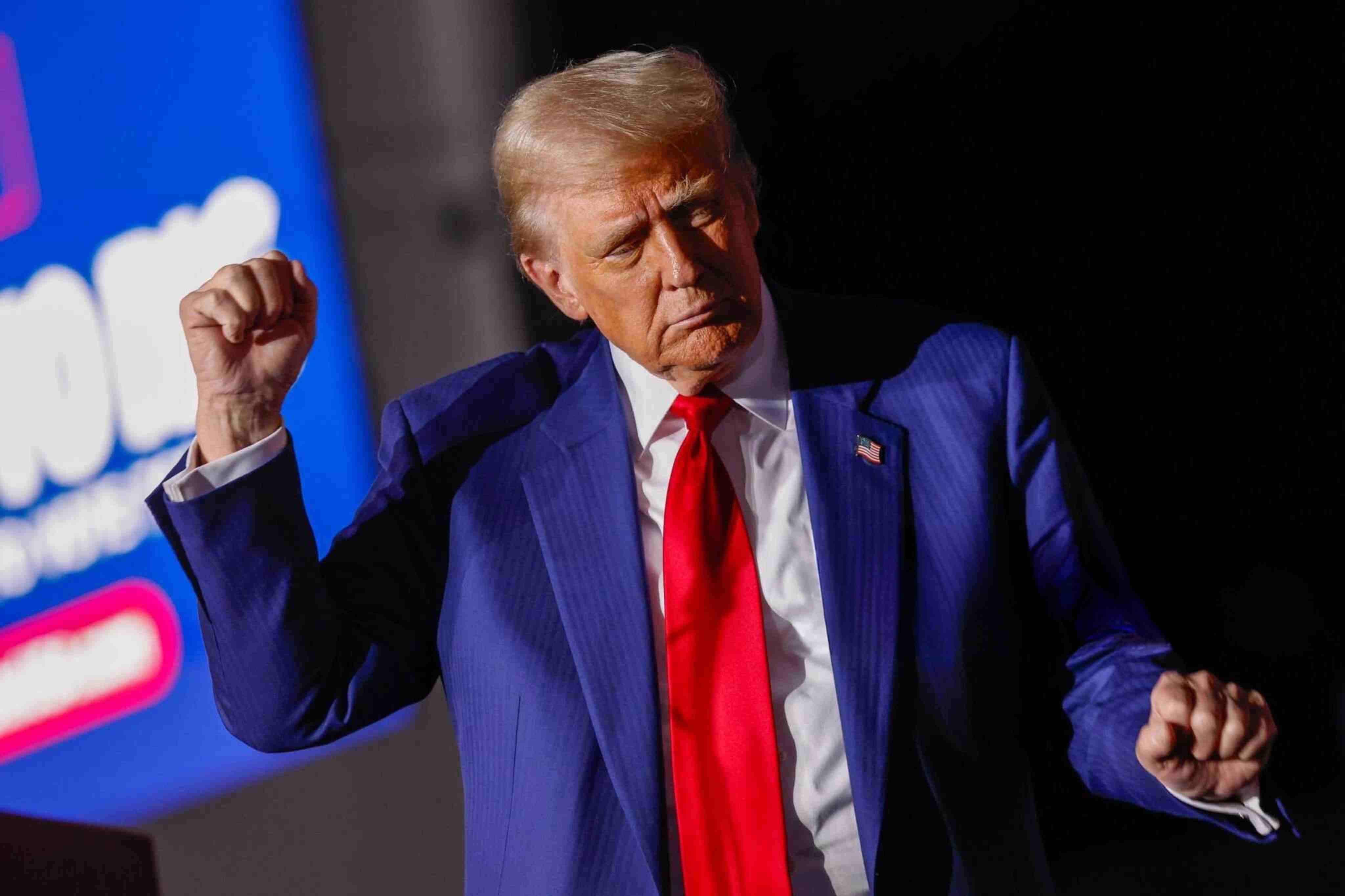
TradingKey - On March 4, local time, the U.S. Senate rejected a resolution aimed at restricting Trump's military actions against Iran with a vote of 47 in favor and 52 against. This means a majority of senators support Trump's military actions against Iran, which is equivalent to tacitly granting Trump the authority to continue advancing related military operations.
The resolution was introduced by Senator Tim Kaine, a Democrat from Virginia. Its core requirement was the withdrawal of U.S. armed forces from hostilities against Iran unless Congress issues a formal declaration of war or a specific Authorization for Use of Military Force (AUMF).
Intensifying Partisan Polarization
In this vote, the vast majority of Republican senators sided with Trump, supporting the maintenance of presidential discretion over military actions and arguing that the current threat from Iran constitutes an extraordinary and urgent national security risk. Meanwhile, Democratic senators collectively pushed for the resolution's passage, criticizing Trump for bypassing Congress and unilaterally escalating the conflict.
Former Senate Majority Leader Mitch McConnell stated clearly that the President's authority to use force without prior congressional approval is "long-settled," and that Trump's actions fall squarely within his inherent powers as Commander-in-Chief.
On the Democratic side, lawmakers' concerns focused on two levels: first, the risk of casualties resulting from a broader conflict, and second, the erosion of constitutional separation of powers caused by the President bypassing Congress to wage war.
Senator Chris Murphy, a Democrat from Connecticut, compared the action to failed U.S. policies in places like Afghanistan and Libya, criticizing Republicans for failing to learn from past failures in Middle East policy.
Senator Tim Kaine, the Democrat from Virginia who sponsored the resolution, also noted that the conflict has already resulted in the deaths of six U.S. service members and that Iran has retaliated against America's Arab allies, warning that the situation risks further escalation.
Notably, two senators broke party lines. Senator John Fetterman, a Democrat from Pennsylvania, defected to the Republican side to support the President's military actions against Iran, while Senator Rand Paul, a Republican from Kentucky, joined the Democratic camp to vote in favor of limiting presidential powers.
The Senate's support for Trump's military actions against Iran stands in stark contrast to the 2002 vote authorizing George W. Bush to use force against Iraq.
At that time, the Senate passed the authorization by a wide margin of 77 to 23, with nearly half of the Democratic senators voting in favor, including prominent political figures such as Hillary Clinton and Joe Biden. In this current vote, party lines were much more rigid, and cross-party support nearly vanished.
Simultaneously, the American public is also divided into two camps regarding this military action. Supporters believe a tough stance will lead to long-term peace, while opponents view it as a high-stakes gamble. Despite clear divisions in public opinion, a general consensus has emerged: no one wants to get dragged into another protracted war of attrition.
American society's patience with wars in the Middle East has long since been exhausted, and young voters have an instinctive aversion to "endless wars." Today, most citizens are no longer concerned with geopolitical wins or losses, but rather with how the conflict will drive up oil prices, exacerbate inflation, and ultimately show up on their tax bills and cost of living.
U.S. Constitution and Legislative Background
Article I, Section 8 of the U.S. Constitution explicitly states that only Congress has the power to declare war. However, since the end of World War II, presidents have gradually assumed significant de facto military decision-making power by launching "limited military actions."
The War Powers Resolution of 1973 attempted to regulate this practice, specifying that the President can only use force without congressional authorization in three scenarios: an attack on the U.S. mainland, its territories or possessions, or an attack on the armed forces that triggers a national emergency.
The Trump administration has defined the airstrikes against Iran as "limited self-defense actions," based on potential threats from Iran to U.S. facilities or allies, thereby bypassing congressional authorization requirements. The Senate's rejection of this resolution further confirms the legal space for this executive branch interpretation.
Trump has previously openly mocked Congress's war powers, stating that he would strike if he wanted to. Militarily, he has demonstrated his capability to lead operations; however, in terms of constitutional structure, a war lasting more than 60 days without explicit congressional authorization would rapidly evolve into a serious constitutional conflict.
As for the House of Representatives, which is expected to vote on a similar resolution on Thursday, the outlook is equally bleak. House Speaker Johnson has clearly stated his belief that the resolution will also fail in the House, noting that several moderate House Democrats have already indicated they will vote against it. Even if the House ultimately passes the resolution, it would be difficult to impose effective constraints since the Senate has already rejected a similar measure.
Furthermore, even if both chambers were to pass the resolution, Trump would likely exercise his veto power, and a two-thirds majority in both houses of Congress would be required to override a presidential veto.
In the long run, the struggle over war powers between Congress and the President will continue. If the conflict escalates into ground operations or a larger-scale war in the future, the pressure for congressional authorization will significantly increase.
This content was translated using AI and reviewed for clarity. It is for informational purposes only.
Recommended Articles












Comments (0)
Click the $ button, enter the symbol, and select to link a stock, ETF, or other ticker.