


WTI and Brent Crude Prices Surge Over 4%: Why Are Oil Prices Rising?



AI Podcast


On October 8, international oil prices surged over 3%, driven by escalating Middle East shipping risks and hurricane-related production suspensions in the U.S. Gulf of Mexico. Brent crude rose to $105.10 per barrel, and WTI crude reached $92.50 per barrel. Supply-side uncertainties were further compounded by a larger-than-expected decline in U.S. commercial crude inventories. While previous emergency reserve releases weighed temporarily on the market, geopolitical tensions and weather disruptions dominate current focus. Future price trends will depend heavily on Strait of Hormuz transit conditions, Gulf production recovery speeds, and broader Middle East developments.
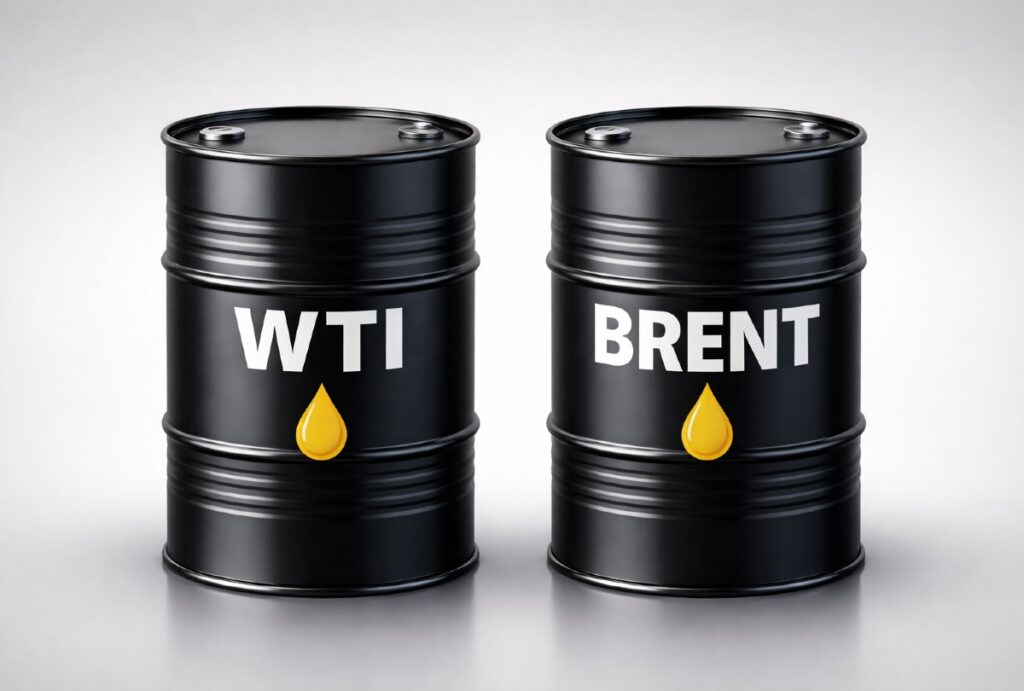
TradingKey - On October 8, international oil prices surged intraday, with both WTI (USOIL) crude and Brent (UKOIL) crude rising by over 5% at one point. Middle East shipping security risks escalated again, while some crude oil production in the U.S. Gulf of Mexico was suspended due to a hurricane, with supply-side uncertainty driving oil prices rapidly higher.
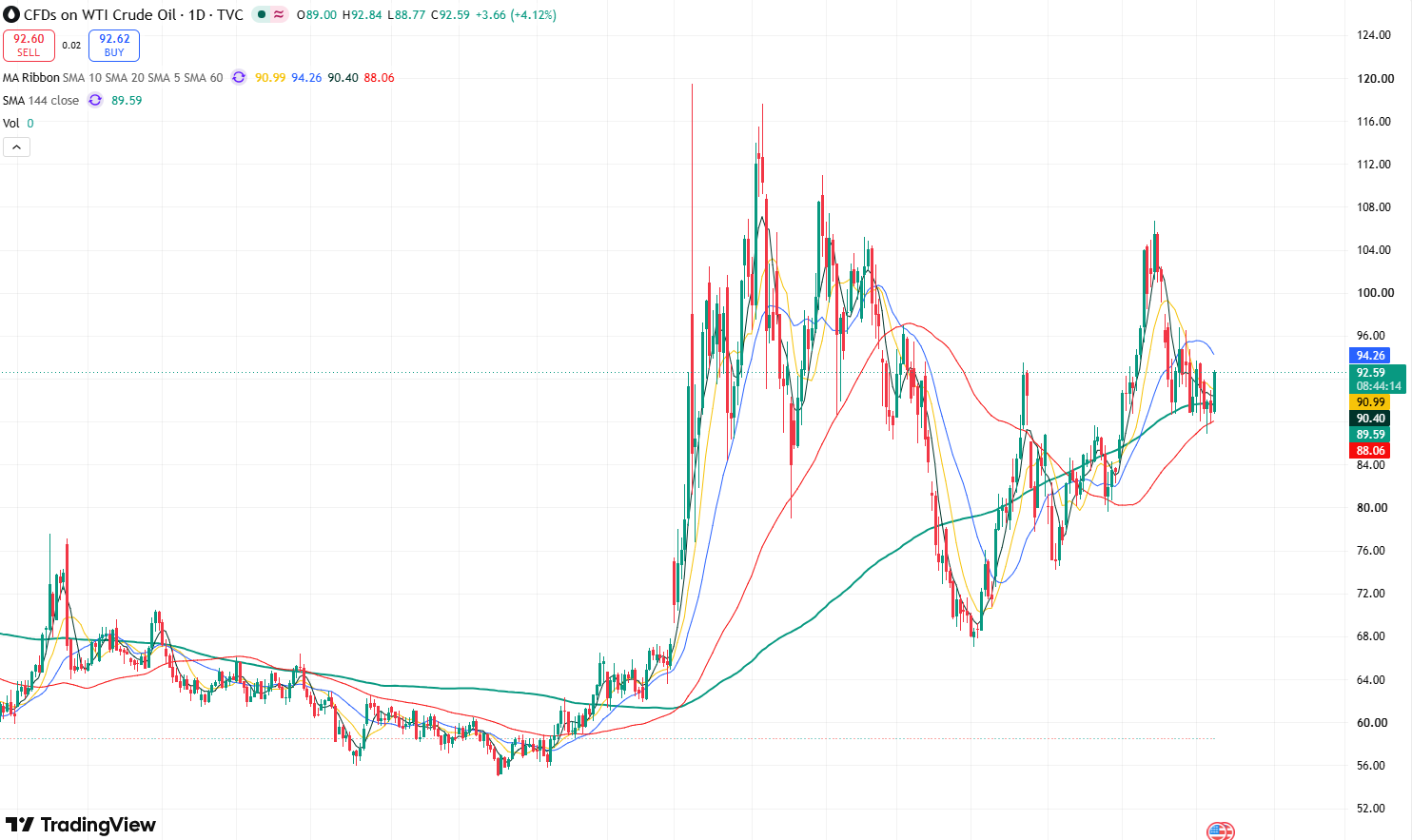
WTI crude oil price daily chart, source: TradingView
As of press time, Brent crude rose about 3.8% to $105.10 per barrel, reaching its highest level since September 29; WTI crude rose about 4.1% to $92.50 per barrel, its highest level since October 2.
Middle East supply risks have become a key driver of this rally. Recent attacks on tankers in the Strait of Hormuz have increased noticeably, with the number of related attacks last week reaching the highest single-week level since the outbreak of the U.S.-Iran conflict. Latest shipping data showed that on October 6, only seven commodity vessels passed through the Strait of Hormuz, the lowest level in over two months, while crude oil flows through the strait dropped to about 10.1 million barrels per day.
Meanwhile, Hurricane Isaias is approaching the U.S. Gulf Coast. Energy companies such as Shell and Chevron have curtailed some offshore production activities. As of Wednesday, approximately 25.08% of crude oil production and 16.37% of natural gas production in the U.S. Gulf of Mexico were shut in, further adding to short-term supply pressure.
U.S. inventory data also provided support for oil prices. EIA data showed that for the week ending October 2, U.S. commercial crude oil inventories decreased by 3.2 million barrels to 424.1 million barrels, compared with market expectations for an increase of about 1.7 million barrels; over the same period, U.S. crude oil exports increased to 4.77 million barrels per day.
Earlier, the International Energy Agency's decision to accelerate the release of emergency petroleum reserves weighed on oil prices for a time, but Middle East shipping risks and U.S. supply disruptions have now returned to the market focus. Future oil price trends will still depend on transit conditions in the Strait of Hormuz, the pace of capacity recovery in the U.S. Gulf of Mexico, and further developments in the Middle East situation.
This content was translated using AI and reviewed for clarity. It is for informational purposes only.
Recommended Articles











Comments (0)
Click the $ button, enter the symbol, and select to link a stock, ETF, or other ticker.