


Oil Prices Tumble Nearly $40 After Trump Signals End to War, Though Analysts Maintain Hormuz Strait Is the Real Decider



AI Podcast


President Trump's statement on the US-Iran conflict's end caused crude oil prices to plunge, with WTI and Brent briefly dropping to $80. The US announced temporary oil sanctions waivers and considered releasing emergency reserves to curb prices. Analysts attribute the shift to controlling inflationary pressures and midterm election concerns. Despite perceived de-escalation, oil prices remain volatile, dependent on the conflict's duration and Strait of Hormuz security. Iran disputes the war's end, asserting the conflict's outcome is undecided and the Strait remains closed, suggesting continued high oil prices due to the regime's grassroots operational capacity.
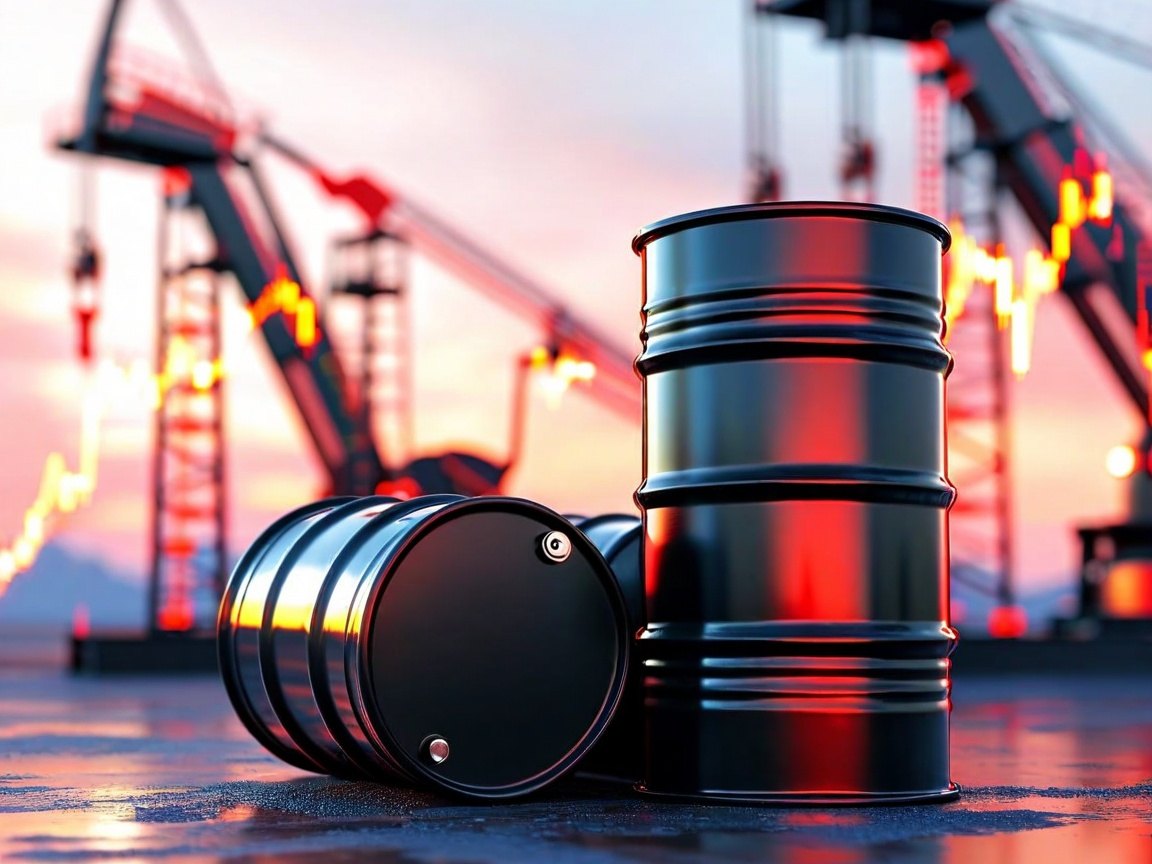
TradingKey - On Monday (March 9) ET, Trump stated in an interview that the US-Iran war is essentially over, causing crude oil prices to plunge on the news. WTI and Brent crude futures both approached a high of $120 that day, but driven by this news, they briefly dropped to the $80 mark.
TACO Logic Returns as Trump Moves to Talk Down Oil Prices
Trump stated that military operations against Iran have been very thorough, with Iran's navy, air force, communication facilities, missiles, and drones almost entirely destroyed, noting that the progress of the war has been much faster than his initial estimate of 4 to 5 weeks.
To counter surging oil prices, Trump announced that the US is temporarily waiving certain oil-related sanctions to ensure adequate supply and lower prices until the Strait of Hormuz returns to normal. It is understood that the US issued a 30-day temporary waiver last week, allowing Russian oil currently stranded at sea to be sold to India.
Recently, the Trump administration has discussed a series of measures to suppress oil prices, including releasing emergency reserves, suspending federal gasoline taxes, and Treasury intervention in the crude oil futures market. However, suspending taxes requires Congressional approval, releasing emergency reserves faces operational hurdles, and the effectiveness and mechanism of Treasury intervention in futures markets remain questionable.
At Monday's G7 meeting, finance ministers stated that all parties are prepared to release oil reserves but have "not yet reached an agreement on the matter," with the US supporting a release of up to 400 million barrels of crude oil.
Analysts believe the core reason for Trump's sudden shift from aggressively striking Iran to controlling oil prices is that surging prices would heighten inflationary pressures in the US, leading to risks of stagflation.
Furthermore, Bank of America Chief Investment Strategist Michael Hartnett pointed out another significant reason: Trump needs to consider the midterm elections. Hartnett noted that since the conflict began, US oil has surged 45% and gasoline prices have risen 15%; the inflationary pressure driven by oil is being transmitted directly to average voters, pushing Trump's economic approval rating down to 40% and his inflation approval rating to a low of 36%.
Market Overreaction or Turning Point? Why the "Peace" Signal Remains One-Sided
Despite signs of a perceived de-escalation in the conflict, analysts believe that oil prices will ultimately depend on the duration of the Middle East conflict and the extent of the disruption in the Strait of Hormuz. In other words, crude oil fundamentals will not change until the conflict is fully resolved and security in the Strait of Hormuz is restored.
Bob McNally, president of consulting firm Rapidan Energy Group, stated that while other options may exist to mitigate surging oil prices, none can offset the impact when one-fifth of global oil transport is blocked in the Strait of Hormuz, nor can any option substitute for the contribution of reopening the Strait to price stability.
Additionally, Iran responded to the US claim that the "war is essentially over" by asserting that the outcome will be decided by Iran and that the US military cannot end it. Iran took a hardline stance, stating that oil shipments will not resume if the US and Israel continue their attacks. Sources claim Iran will continue to fight until Trump admits defeat.
According to CNN, Iran is developing plans to impose "security fees" in the Persian Gulf on tankers and merchant ships belonging to countries allied with the US, stating that the Strait of Hormuz currently "remains closed," even as Trump claims it is open.
Diplomats noted that although Iranian leaders have been removed, there are no signs of serious fractures or institutional collapse. The key reason lies in the structure of the Iranian regime: it is not a simple top-down linear hierarchy; rather, the exercise of power relies heavily on representatives of the Supreme Leader—officials stationed at the grassroots level. This network-like power structure means that even if changes occur at the top, the system remains operational at the base. Consequently, as long as Iran's grassroots organizations are not fully dismantled, the US-Iran conflict will remain at a stalemate, keeping oil prices high.
This content was translated using AI and reviewed for clarity. It is for informational purposes only.
Recommended Articles







Comments (0)
Click the $ button, enter the symbol, and select to link a stock, ETF, or other ticker.