


CME Group Plans to Launch Computing Power Futures: What Changes Will It Bring to the AI Industry Chain?



AI Podcast


CME Group and Silicon Data plan to launch standardized compute futures in late 2026, subject to regulatory approval, marking computing power's entry into derivatives trading. This move addresses exponential AI-driven demand and price volatility, which has driven H100 lease prices up 38.2% between October 2025 and March 2026. The futures will offer hedging tools for AI companies and lessors, improve price discovery, and aid capital expenditure planning, fostering innovation and predictable cost management for businesses. This financialization of computing power is expected to enhance asset quality and earnings certainty across the AI value chain.
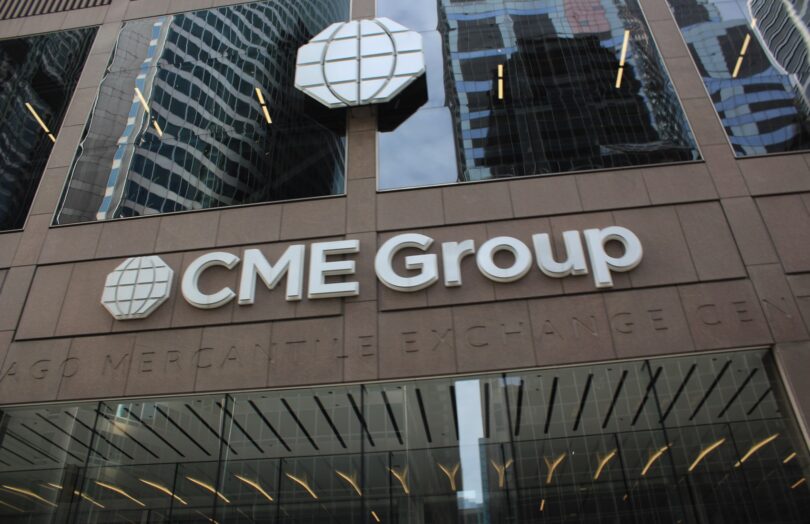
Tradingkey - On May 12, CME Group and GPU market data provider Silicon Data jointly announced plans to launch the world's first standardized compute futures products in the second half of 2026, subject to final regulatory review. This marks the official entry of computing power assets into the era of standardized derivatives trading.
What are computing power futures?
Computing power (Computing Power) refers to the efficiency and capacity of computers and data centers to execute data processing and inference tasks. With the rapid development of AI, computing power has become a new core productive force in the digital economy era, providing the foundational support for deep learning model training and large-scale inference.
Today, computing power has become a key production factor comparable to electricity. AI interaction, content generation, and data processing are essentially processes of computing power consumption, while Tokens serve as the basic unit of measurement for quantifying this consumption.
CME Group CEO Terry Duffy stated that all AI training, trade clearing, and data processing depend on computing power, which has become a rapidly rising independent asset class.
By positioning computing power as the core commodity of the AI era, one can clearly understand computing power futures' underlying logic. Its mechanism is entirely consistent with that of traditional commodity futures like crude oil and electricity: both parties use standardized contracts to agree in advance on specifications, quantities, and delivery prices, completing the delivery of computing power usage rights at a specified future point in time.
To use a simple example: price fluctuations in computing power follow the same principles as the crude oil market, primarily driven by supply and demand. For instance, a conflict in the Middle East blockading the Strait of Hormuz would cause a massive supply-side shock to crude oil, driving prices higher.
Computing power futures are equivalent to locking in a price for future delivery; for example, purchasing a contract now to buy computing power at 100 yuan in three months. At the agreed time, even if the spot market price has risen to 200 yuan, you can still obtain it at the 100 yuan price. This locks in cost-side expenditures for AI companies and hedges against the risks of price volatility.
Explosive Growth in Computing Power Demand Forces Comprehensive Upgrade of Price Risk Management Systems
As the AI industry enters an agent-driven stage of explosive growth, global demand for computing power is climbing exponentially. The sharp volatility in computing prices has become a core pain point constraining the stable development of the industry chain, forcing an accelerated and comprehensive upgrade of the entire industry's price risk management system.
On the demand side, the comprehensive penetration of AI applications has driven expansionary growth in token consumption. Goldman Sachs analysts estimate that by 2030, global token consumption will surge 24-fold from 2026 levels, reaching approximately 120 quadrillion tokens per month.
Growth in demand has caused massive fluctuations in computing prices. Impacted by factors such as upstream memory capacity, advanced node supply, shortages of key equipment, and rising electricity costs in North America, the global supply-demand gap for computing power persists, directly driving substantial volatility in lease prices. Reportedly, the one-year lease price for the H100 jumped 38.2% between October 2025 and March 2026.
Against this backdrop, companies across the AI value chain—including computing power leasing firms and large model developers—face risks of cost and revenue uncertainty. Price volatility has also created significant risk exposure, fueling demand for computing price hedging, which is the primary reason why the CME Group is rushing to launch computing power futures.
What changes will computing power futures bring to the AI industry?
The launch of computing power futures is timely and will inject stability into the volatile computing power market. Institutions generally believe it will bring comprehensive transformation to the AI industry. CITIC Securities' latest research report states that once implemented, computing power futures will have a profound impact on the entire industry chain.
Regarding hedging, it provides hedging tools for the industry chain. Large model companies and cloud providers can buy futures to lock in procurement costs, while computing power lessors can sell futures to hedge against the risk of price declines.
In terms of price discovery and the development of forward pricing curves, wafer manufacturers and hardware suppliers can use the price trends of computing power futures to anticipate downstream demand, optimizing production schedules and inventory management. For downstream cloud providers and AI application firms, it provides a reliable anchor for capital expenditure planning.
Simultaneously, it will encourage more downstream companies to adopt AI applications. The predictability of computing power costs will significantly reduce financial uncertainty for SMEs and startups entering the AI space, incentivizing more developers to innovate and creating a virtuous cycle.
Regarding specific industry chain targets, the firm believes that the financialization of computing power will systematically enhance asset quality and earnings certainty across all segments. As core builders of computing power infrastructure, the four North American hyperscalers have significantly raised their 2026 capital expenditure guidance. They serve as both users of hedging tools and primary beneficiaries of AI computing growth, with their cloud revenue growth already demonstrating significant results.
Reportedly, the four major North American cloud service providers are Amazon ( AMZN ): Ranking first in global cloud market share, it has long maintained a lead in Infrastructure as a Service (IaaS). Its 2025 cloud service net sales reached $30.873 billion, a 17% year-on-year increase.
Microsoft ( MSFT ): A major driver of AI-cloud integration, growing rapidly through enterprise services and its partnership with OpenAI.
Google ( GOOGL ): Operates one of the world's largest and fastest private fiber-optic networks, powering over 90% of global search. Its massive data center network provides high availability and low-latency computing support for Google Cloud Platform (GCP).
Meta ( META ): The scale of the company's data center infrastructure, along with its demand and investment in AI training power, has positioned it as a hyperscaler alongside the top three.
This content was translated using AI and reviewed for clarity. It is for informational purposes only.
Recommended Articles








Comments (0)
Click the $ button, enter the symbol, and select to link a stock, ETF, or other ticker.