


Three Charts Tell the Shifting Story of Gold and Silver



AI Podcast


Gold and silver rebounded following a sharp sell-off, maintaining a strong bull run driven by trade tensions, political unease, and geopolitical conflict. The gold-to-silver ratio has shown significant volatility, swinging widely before compressing. Precious metals are experiencing heightened volatility, with gold's daily swings being the sharpest since 2008 and silver's since 1980. Despite recent reversals and unwinding of crowded trades, volatility is expected to remain elevated, though a bubble is not anticipated. Gold's fundamental role as a hedge against inflation and currency risk remains intact.
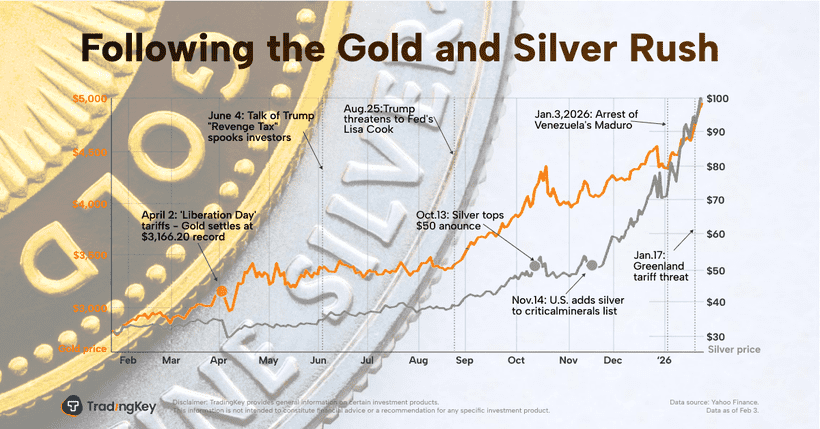
TradingKey - Gold (XAUUSD) and silver (XAGUSD) rebounded on Wednesday after last week’s sharp sell‑off. Investors in the metals are still keeping the faith.
Over the past year, both metals have climbed through a solid bull run. But this was never a one‑note rally. It was built piece by piece — by trade tensions and tariff threats, by political unease over central‑bank independence, and by the steady hum of geopolitical conflict and resource anxiety. Each episode added another turn to the spiral of caution that lifted demand for safety.
Gold usually makes the first move, and silver follows — often faster and further. In this cycle, silver jumped from around $30 to almost $100 before losing some momentum. For investors, the two metals respond to more than interest rates or inflation headlines. They are also finely tuned to the unpredictable world of policy shifts and geopolitical shocks. Every spat over tariffs, every flashpoint in foreign policy can jolt them into a local burst of speed.
By early 2025, the gold‑to‑silver ratio was swinging wildly. It pushed past 100 to 1 — the widest in five years — before collapsing towards 60, a range last seen more than a decade ago. The reason was timing: gold peaked first as monetary and sovereign‑risk themes gathered pace, while silver lagged, then sprinted to catch up. That pattern stretched, then compressed, the ratio. Because silver is both a monetary asset and a working metal, its price constantly balances two sets of forces. Traders now watch that balance as a signal of how those worlds are shifting.
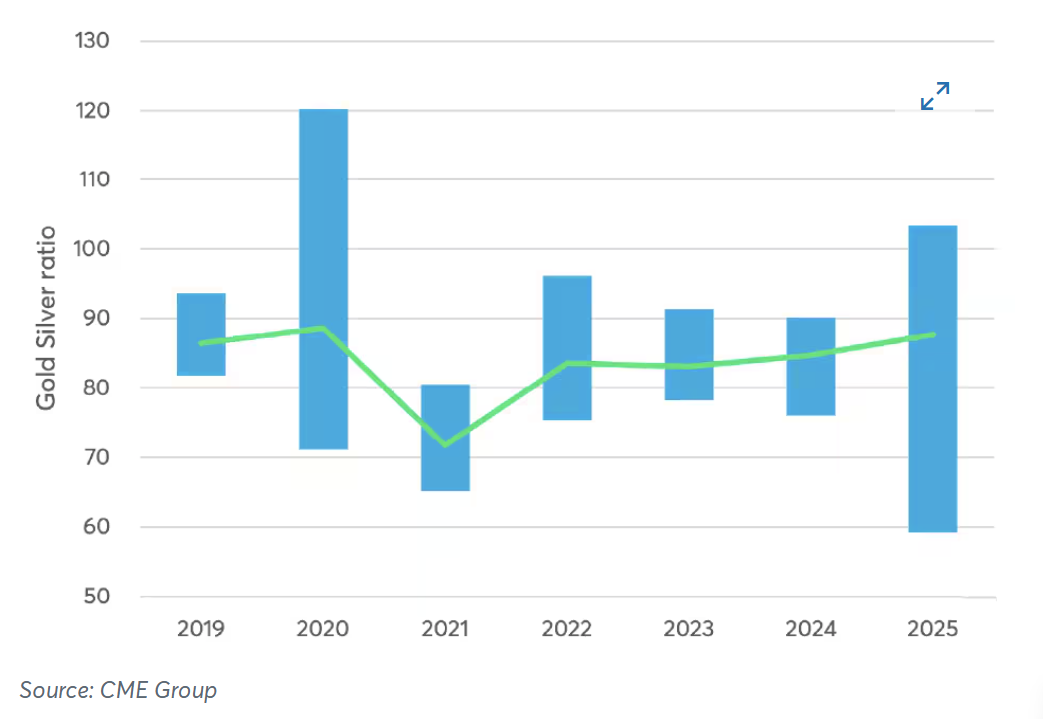
Gold/Silver ratio, annual minimum, maximum, and average (green line)
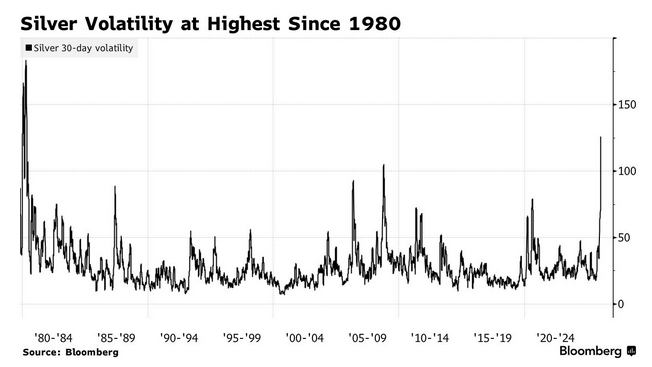
Bank of America (BAC) data suggest that the precious‑metals market has entered a period of heightened volatility. Gold’s daily swings are the sharpest since the financial crisis of 2008; silver’s are the fiercest since the boom‑and‑bust years of 1980. The surge earlier this year owed much to geopolitical tension, speculation and questions over the Federal Reserve’s independence. Then came the reversal — gold’s steepest weekly fall in a decade and one of silver’s worst on record — a reminder of how quickly crowded trades unwind.
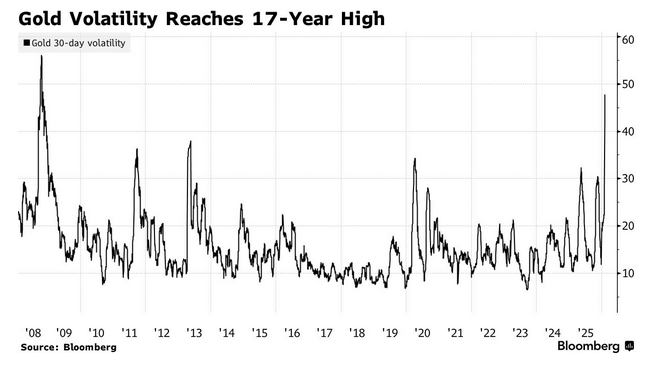
Niklas Westermark, who oversees trading at a major bullion desk, thinks volatility will stay “higher than history would suggest”, though he doubts another bubble is forming. With prices bouncing this week, he sees buyers returning and long‑term logic holding firm: gold still does its main job as a hedge against inflation and currency risk. Position sizes may shift, he says, but the core thesis remains.
Recommended Articles







Comments (0)
Click the $ button, enter the symbol, and select to link a stock, ETF, or other ticker.