The Federal Reserve's Interest Rate Dilemma Is About to Go From Bad to Warsh -- and the Stock Market May End Up Paying the Price



Key Points
Jerome Powell's last day as Fed chair is May 15.
Donald Trump's nominee to succeed Powell, Kevin Warsh, may not have the same game plan as the president or investors.
Trump's actions in Iran have thrown a monkey wrench into the Federal Open Market Committee's rate-easing cycle -- and that's terrible news for the stock market.
One of the greatest aspects of putting money to work on Wall Street is the disproportionate nature of investing cycles. While bear markets are normal, healthy, and inevitable, bull markets last substantially longer. It's why the Dow Jones Industrial Average (DJINDICES: ^DJI), S&P 500 (SNPINDEX: ^GSPC), and Nasdaq Composite (NASDAQINDEX: ^IXIC) ascend to new highs over extended periods.
But just because the Dow, S&P 500, and Nasdaq rise over the long term doesn't mean things can't get dicey over shorter time horizons.
Will AI create the world's first trillionaire? Our team just released a report on the one little-known company, called an "Indispensable Monopoly" providing the critical technology Nvidia and Intel both need. Continue »
We're less than three weeks away from a historic change at the Federal Reserve, which has the potential to materially shift the central bank's and Wall Street's narratives.

Jerome Powell's term as Fed chair ends in less than three weeks. Image source: Official Federal Reserve Photo.
Change is brewing at America's foremost financial institution
May 15 will mark the final day of Jerome Powell's second term as Fed chair, and, presumably, the beginning of Kevin Warsh's tenure as the head of the central bank.
Since President Donald Trump took office for his second, non-consecutive term, he's been especially critical of Powell's stance on interest rates. Trump has repeatedly urged Powell and members of the Federal Open Market Committee (FOMC) to aggressively cut interest rates to 1% or lower. The FOMC is the 12-person entity, including Fed Chair Powell, that is responsible for setting U.S. monetary policy.
Trump's vocal clashes with the current Fed chair led the president to nominate Kevin Warsh on Jan. 30 to succeed Powell.
While Wall Street and President Trump are both hoping for additional interest rate cuts from a Warsh-led Fed, history suggests this is unlikely.
Although members of the FOMC are focused on upholding the central bank's dual mandate of stabilizing prices and maximizing employment, Kevin Warsh's voting record as a previous FOMC member should give investors pause.
"If Trump wants someone easy on inflation, he got the wrong guy in Kevin Warsh."@AnnaEconomist pic.twitter.com/FGMfeSqHpU
-- Daily Chartbook (@dailychartbook) January 31, 2026
Warsh served on the Board of Governors of the Federal Reserve from Feb. 24, 2006, to March 31, 2011. This means he played an integral role in steering the ship through America's worst economic crisis in decades (the Great Recession). Whereas most voting members of the FOMC pushed for rate cuts during the financial crisis, Warsh's voting record and commentary point to a hawkish approach. In simple terms, Trump's Fed chair nominee favored higher interest rates to suppress inflation, even as the unemployment rate soared.
Furthermore, Trump's pick to lead the central bank has been critical of the Fed's sizable balance sheet, which stood at $6.7 trillion as of April 15, 2026. From August 2008 to March 2022, the Fed's balance sheet, comprised mostly of long-term Treasury bonds and mortgage-backed securities, roughly 10X'd from $900 billion to almost $9 trillion.
Warsh has made clear that he believes the Fed should be a passive market participant. This would entail selling a significant portion of the central bank's assets -- and that's where things can get dicey.
Bond prices and yields are inversely related. If America's foremost financial institution were to begin selling long-term Treasuries and mortgage-backed securities en masse, the expected reaction would be lower bond prices and higher yields. In other words, Warsh's actions to deleverage the Fed's balance sheet would result in higher lending rates -- the exact opposite of what Trump and investors hope for.

President Trump overseeing Operation Epic Fury. Image source: Official White House Photo by Daniel Torok.
The Fed's interest rate dilemma is about to go from bad to Warsh
Kevin Warsh's past sets the stage for what may be a precarious situation for the central bank moving forward.
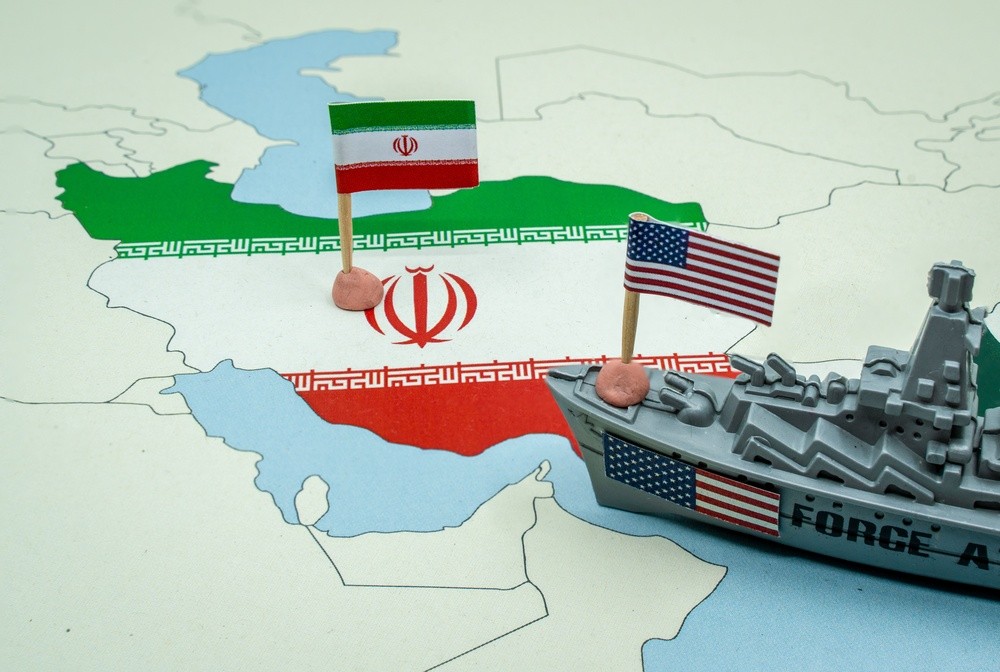
On Feb. 28, at President Trump's command, U.S. military forces, along with Israel, commenced attacks against Iran. This conflict, now known as the Iran war, resulted in Iran shutting down the Strait of Hormuz to virtually all oil exports. This roughly two-month shipping disturbance represents the largest energy supply disruption in modern history.
If you've fueled up your car, truck, or SUV at any point since early March, you've seen exactly what's happened to energy prices. Skyrocketing crude oil prices are pinching consumers at the pump and threatening to increase transportation and production costs for businesses.
Before the start of the Iran war, the trailing 12-month (TTM) U.S. inflation rate for February clocked in at 2.4%. One month later, TTM inflation had jumped by 90 basis points to 3.3%, with energy prices doing most of the heavy lifting. The Cleveland Fed's forecast for April, courtesy of its Inflation Nowcasting tool, is 3.58% as of April 20.
The challenge with energy price shocks is that these are rarely short-term events. Even if the Iran war resolves relatively soon, the inflationary effects of a two-month (or greater) crude oil supply disruption will be felt for several quarters.
Here's a list of major geopolitical events since WWII.
-- Ryan Detrick, CMT (@RyanDetrick) February 28, 2026
Up a median of 5% six months later. All of them felt really bad at the time. pic.twitter.com/Jb3QXL0L05
Additionally, among geopolitical and major events, those involving oil price shocks have been more likely to trigger steep corrections, bear markets, or even crashes in the Dow Jones Industrial Average, S&P 500, and Nasdaq Composite, dating back to 1940.
Although Kevin Warsh would represent just one of 12 votes within the FOMC, his historically hawkish voting record and desire to reduce the Fed's bloated balance sheet strongly suggest that he wouldn't be in favor of continuing the central bank's existing rate-easing cycle.
In fact, a pretty strong argument can be made that if U.S. inflation nears 3.6% in April and continues to trend modestly higher in the months thereafter, Warsh may push for higher interest rates to stabilize prices. This would set the presumed new Fed chair on a public collision course with President Trump and Wall Street.
The stock market began 2026 at its second-priciest valuation over the last 155 years. One of the main reasons investors have supported such an expensive stock market is the belief that the FOMC would further cut interest rates this year. Trump's actions in Iran, coupled with a shift to Kevin Warsh as Fed chair, all but remove the possibility of rate cuts from the equation.
We may be just weeks away from things going from bad to Warsh for the Dow, S&P 500, and Nasdaq Composite.
Should you buy stock in S&P 500 Index right now?
Before you buy stock in S&P 500 Index, consider this:
The Motley Fool Stock Advisor analyst team just identified what they believe are the 10 best stocks for investors to buy now… and S&P 500 Index wasn’t one of them. The 10 stocks that made the cut could produce monster returns in the coming years.
Consider when Netflix made this list on December 17, 2004... if you invested $1,000 at the time of our recommendation, you’d have $500,572!* Or when Nvidia made this list on April 15, 2005... if you invested $1,000 at the time of our recommendation, you’d have $1,223,900!*
Now, it’s worth noting Stock Advisor’s total average return is 967% — a market-crushing outperformance compared to 199% for the S&P 500. Don't miss the latest top 10 list, available with Stock Advisor, and join an investing community built by individual investors for individual investors.
*Stock Advisor returns as of April 25, 2026.
Sean Williams has no position in any of the stocks mentioned. The Motley Fool has no position in any of the stocks mentioned. The Motley Fool has a disclosure policy.
Recommended Articles