


Latest Progress in U.S.-Iran Peace Talks: Iran Refuses to Meet U.S. Officials, How Will International Oil Prices Trend?



AI Podcast


U.S.-Iran negotiations remain inconclusive, with Iran refusing direct talks and opting for mediation through Pakistan. The U.S.-Iran conflict has cost approximately $35 billion, depleting armaments and impacting U.S. domestic approval ratings ahead of the 2026 midterms. Oil prices are surging, with Brent crude up 17% and WTI up 15%. Persistent disruption in the Strait of Hormuz, with only five vessels transiting in 24 hours, could drive Brent crude to $130 per barrel if the disruption continues for two months. Goldman Sachs notes that current physical market tightness may not be fully reflected in futures prices.
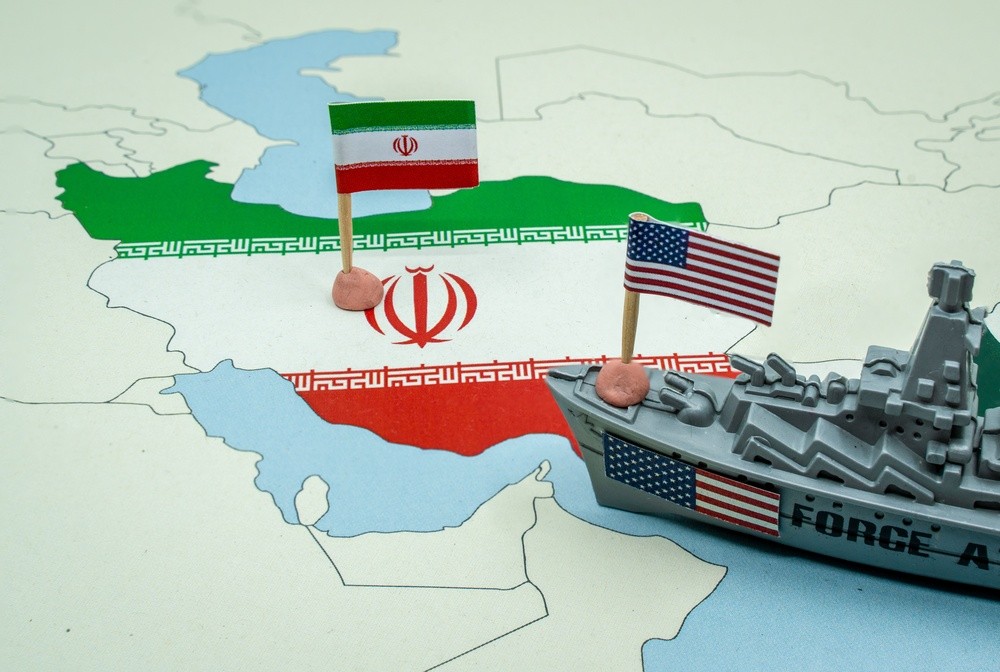
TradingKey - According to the latest reports, the second round of U.S.-Iran negotiations remains inconclusive. The U.S. plans to dispatch negotiators to Pakistan this Saturday (April 25), but Iran has indicated it has no intention of meeting directly with U.S. officials.
Reuters reports indicate that U.S. President Donald Trump's envoy Steve Witkoff and his son-in-law Jared Kushner are expected to depart on Saturday, with plans to hold talks with Iranian Foreign Minister Abbas Araqchi.
However, a spokesperson for the Iranian Foreign Ministry stated that Iran has no plans for direct dialogue with the U.S. and will instead convey its position through the mediating nation, Pakistan. Currently, Pakistan's Chief of Army Staff Asim Munir has already met with Iranian Foreign Minister Araqchi in Islamabad.
Despite Iran's rejection of the request for a direct meeting, Trump stated in an interview that Iran is planning to propose a scheme that meets U.S. requirements, though details remain unclear. He remarked that he is "in contact with those in power." White House spokesperson Karoline Leavitt noted that some progress has been observed from the Iranian side recently and expressed expectations for a further breakthrough this weekend.
At present, Trump continues to state that the impact of a U.S.-Iran conflict on the stock market and oil prices has been lower than expected, and therefore he is in no hurry to reach a deal.
Two weeks ago, the U.S. and Iran held the first round of negotiations in Islamabad, but no substantive results were achieved. Previously, Iran had formally rejected the second round of negotiations originally scheduled for the 22nd on the 21st, while Trump announced his agreement to extend the U.S.-Iran ceasefire.
The Trump Administration’s Dual Challenges: $35 Billion Defense Expenditure and the 2026 Midterm Crisis
Currently, the U.S.-Iran war has entered its ninth week, with both sides paying a heavy price. According to information disclosed by U.S. media, since the United States launched military operations against Iran in late February this year, the total cost of this round of military action has reached a range of approximately $28 billion to $35 billion, averaging nearly $1 billion per day, making it one of the most expensive short-term military conflicts in recent years.
Due to the rapid depletion of armaments recently, the U.S. military has been forced to divert stockpiles from Asia and Europe to support the Middle East theater, leading to gaps in the defensive capabilities of other regional commands.
On the political front, Trump's domestic approval ratings have plummeted. With only six months left until the 2026 midterm elections, the latest CNBC All-America Economic Survey shows that in the first quarter of 2026, 60% of respondents expressed dissatisfaction with Trump's economic governance.
An anonymous Republican campaign strategist stated that voters' ultimate judgment on the Republican Party's economic performance will depend largely on the U.S.-Iran war and oil prices.
Recently, the Trump administration has explicitly pressured the U.S. shale industry in hopes of boosting domestic crude production capacity. However, the number of U.S. oil and gas rigs has yet to see significant growth, and the latest quarterly survey from the Dallas Fed shows that among executives from over 100 oil and gas companies, 43% of respondents expect daily production growth in 2026 to not exceed 250,000 barrels. This illustrates the tension between executive mandates and business decisions.
Crude Supply Alert: Brent Crude Set to Surge Toward $130
International oil prices rose this week, with Brent crude futures gaining 17% and WTI crude rising 15%.
The Strait of Hormuz remains in a state of substantive disruption. The latest shipping data shows that only five vessels passed through the area in the last 24 hours, far below the pre-war level of approximately 130 vessels per day, with no large crude oil supertankers recorded transiting.
Future crude oil price trends remain dependent on the transit status of the Strait of Hormuz. Citi (C) research reports indicate that, calculated from April 20, if the shipping disruption in the strait persists for another month, oil prices could rise to $110 per barrel; an additional two months of disruption could lead to a production halt of approximately 1.7 billion barrels, pushing prices up to $130 per barrel.
Previously, the U.S. Energy Information Administration (EIA) projected that Brent crude prices would continue to climb, peaking at approximately $115 per barrel this summer, though this forecast was based on the assumption that the conflict would not persist beyond April.
Currently, due to the chaotic situation, oil prices have become difficult to predict, but Goldman Sachs (GS) points out that the current phenomenon of crude oil spot prices exceeding forward futures prices suggests that tightness in the physical market has not been fully transmitted to futures prices. Once existing crude inventories are depleted to their natural lower limits, if supply remains unrecovered, the market will only be able to curb demand through higher prices, leading to another surge in oil prices.
This content was translated using AI and reviewed for clarity. It is for informational purposes only.
Recommended Articles










Comments (0)
Click the $ button, enter the symbol, and select to link a stock, ETF, or other ticker.