US STOCKS-Wall Street ends mixed as worries linger before Good Friday break

By Sabrina Valle and Twesha Dikshit
April 2 (Reuters) - U.S. stocks ended slightly mixed on Thursday after paring deeper losses, as diplomatic signals from the Middle East helped calm markets rattled earlier by U.S. President Donald Trump's threats of tougher action against Iran ahead of a long holiday weekend.
Investor sentiment steadied in the afternoon after Iran’s foreign ministry said it was drafting a protocol with Oman to manage traffic through the Strait of Hormuz and Britain said dozens of countries were discussing ways to end the crisis, easing worries about prolonged disruption to global oil flows.
The three indexes had their biggest weekly rise in four months and the first week of gains in six.
Stocks had opened lower amid rising oil prices after U.S. President Donald Trump signaled more aggressive attacks, ahead of the Good Friday holiday, when markets will be closed.
Front-month crude prices surged, with U.S. crude up 11% at around $111 a barrel. The international reference Brent closed up about 7% near $108. But traders priced it at about $82 per barrel in October, a signal that they expect the disruption to be temporary.
“The (stock) market has no real conviction either way right now, but October oil prices tell you the market thinks this crisis will likely be over by the fall,” said Michael Antonelli, market strategist at Baird.
At 4:06 p.m. the Dow Jones Industrial Average .DJI fell 0.13%, to 46,504.67 points, the S&P 500 .SPX gained 0.11% to 6,582.69 points and the Nasdaq Composite .IXIC gained 0.18%, to 21,879.18.
Wall Street's fear gauge, the CBOE VIX index .VIX fell to 23.87 points.
For the week, the S&P 500 gained 3.36%, the Nasdaq rose 4.44%, and the Dow climbed 2.96%. The Russell 2000 small-cap index rose 3.19%.
The rebound reflected caution, with investors favoring stock segments seen as more resilient to economic stress. Utilities, which tend to offer steady earnings and dividends, rose 0.6%. Real estate stocks, which often benefit from steady rental income and tend to perform better when investors seek reliable cash flows in uncertain environments, advanced 1.5%.
Meanwhile, consumer discretionary stocks slid 1.5%, the worst-performing sector on the day, led by a 5.4% drop in Tesla TSLA.O after its first-quarter delivery figures.
Wall Street had opened sharply lower on Iran, in a sharp reversal from Trump's earlier comments that the U.S. will be "out of Iran pretty quickly".
Separately, private credit jitters resurfaced after Blue Owl OWL.N capped the amount investors can withdraw from two of its retail-focused funds. Stocks of the firm were among the most heavily traded on the last session of the week.
Volume on U.S. exchanges was 16.75 billion shares, compared with the 17.82 billion average for the full session over the last 20 trading days.
Further developments on Elon Musk's SpaceX will be in focus after it confidentially filed for a U.S. initial public offering on Wednesday, and is expected to target a $1.75 trillion valuation.
Friday's nonfarm-payroll numbers will be in the spotlight after weekly jobless claims fell last week, but U.S. markets will remain closed throughout the long weekend.
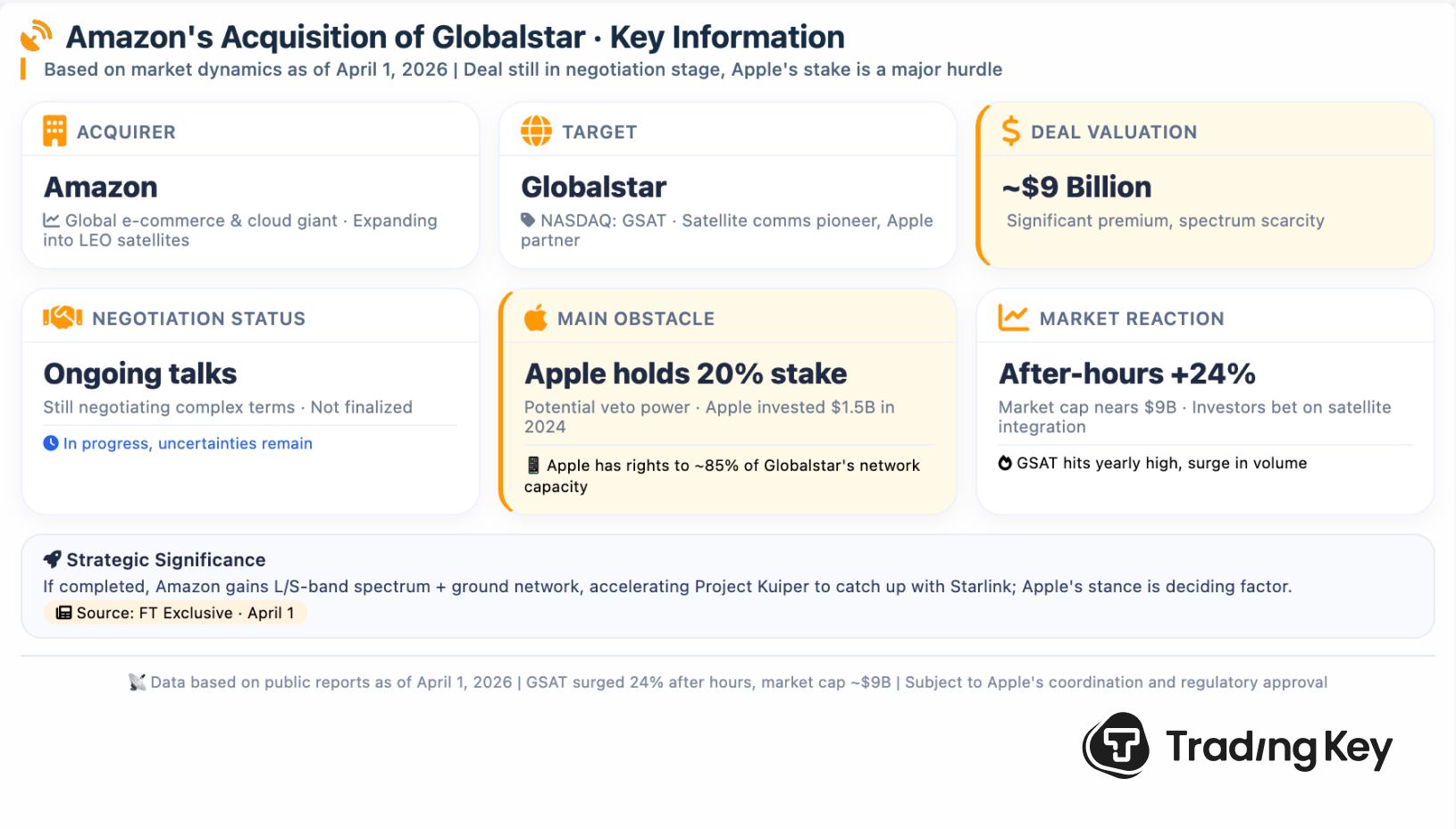
Globalstar's shares GSAT.O jumped after a report said Amazon is in talks to buy the low-earth-orbit communication satellites company.