The Hidden Medicare Costs No One Tells You About Until It's Too Late

Key Points
Despite having traditional Medicare, a 65-year-old may need $172,500 in after-tax savings to cover medical expenses in retirement.
The earlier you begin creating a health care budget, the easier it will be to navigate medical costs.
While no one can control everything, considering supplemental insurance and tapping all your available resources can help mitigate medical expenses in retirement.
A 2025 Fidelity Retiree Health Care Cost Estimate found that a 65-year-old may need $172,500 to cover healthcare costs in retirement. For many Americans, that figure may seem surreal, especially if they've always believed Medicare would cover all health-related expenses.
The issue at hand is the number of hidden healthcare costs that Medicare recipients must cover. They include the following.
Will AI create the world's first trillionaire? Our team just released a report on the one little-known company, called an "Indispensable Monopoly" providing the critical technology Nvidia and Intel both need. Continue »
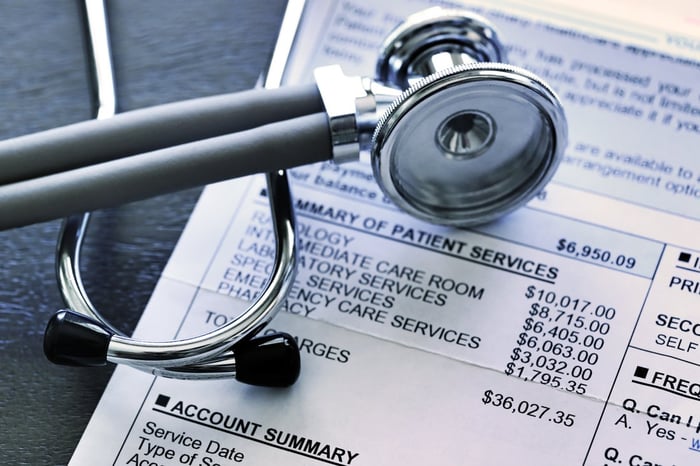
Image source: Getty Images.
Coverage isn't free
While most Americans qualify for free Medicare Part A coverage (hospital insurance), there are still out-of-pocket costs to pay if you get sick. For example, if you're hospitalized, you'll pay a $1,736 deductible per benefit period. After 60 days in the hospital, you'll also face a daily fee, ranging from $434 to $838.
In addition, there's a monthly fee for Parts B and D (medical and prescription drug coverage). The standard monthly cost for Part B in 2026 is $202.90, and for Part D it's $38.99.
The 20% Part B gap
Original Medicare typically covers 80% of approved medical expenses, leaving you with the final 20% to pay (with no maximum out-of-pocket limit).
Note: Medicare Advantage plans offer varying levels of coverage and may better meet your needs. Before deciding on a plan, make it a point to compare Original Medicare to Medicare Advantage.
Lack of dental, vision, and hearing coverage
Routine exams, and supplies you may need -- like glasses, dentures, and hearing aids -- are not covered by Original Medicare. Depending on your medical needs, the lack of coverage could cost thousands over the course of your retirement.
IRMAA surcharges
If your annual income exceeds a specific threshold, you'll pay higher premiums for Part B and Part D coverage. Let's say you want to withdraw enough money from your retirement account to take a trip around the globe or purchase an RV. If you withdraw the money from a pre-tax account -- like a 401(k) or traditional IRA -- the funds will be added to your annual income, and you could face a (sometimes significant) jump in premiums.
Changes to Part D
Part D plans sometimes change their drug formularies mid-year. If that should happen, the medication you take can be moved to a higher tier, which comes at a higher price.
Travel abroad
Whether you travel for pleasure or are considering a move abroad in retirement, Original Medicare typically doesn't cover healthcare outside the U.S., which could lead to a large unexpected medical bill. If you're planning to travel outside the U.S., look into a travel medical insurance policy.
How to bridge gaps
There are several steps you can take to prepare for unforeseen expenses. They include:
- Supplemental insurance: Consider buying a Medigap plan, a private insurance policy that helps cover costs such as deductibles, copayments, and coinsurance.
- Carefully compare: Take the time necessary to compare Medicare plans, as they can differ dramatically. Also, compare Original Medicare plans to Medicare Advantage plans.
- Tap available resources: If you have trouble covering your medical expenses, investigate resources available to Medicare recipients in your area. You can start by logging onto the Elder Locator site.
One of the best ways to be prepared for medical expenses in retirement is to include them in your retirement plan. If you're not quite sure how to get started, a financial or retirement advisor can help.
The $23,760 Social Security bonus most retirees completely overlook
If you're like most Americans, you're a few years (or more) behind on your retirement savings. But a handful of little-known "Social Security secrets" could help ensure a boost in your retirement income.
One easy trick could pay you as much as $23,760 more... each year! Once you learn how to maximize your Social Security benefits, we think you could retire confidently with the peace of mind we're all after. Join Stock Advisor to learn more about these strategies.
The Motley Fool has a disclosure policy.