


Pop Mart Drops Most in Almost a Year After Revenue Just Misses



Pop Mart International Group Ltd. slid 15%, the biggest intraday drop since April 2025, after posting full-year revenue that barely missed analyst estimates.
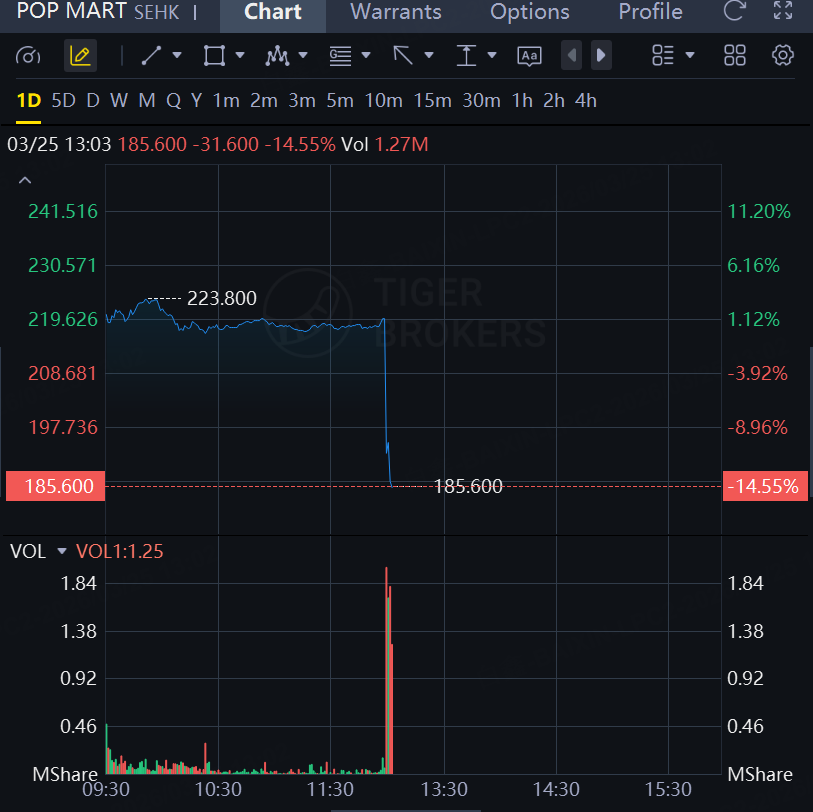
Revenue surged 185% to 37.1 billion yuan ($5.4 billion) in 2025, shy of the 38 billion yuan consensus, the Chinese pop toy maker reported Wednesday. Net income climbed 309% to 12.8 billion yuan, slightly exceeding the forecast of 12.6 billion yuan.
Pop Mart has relied on the global appeal of Labubu, the snaggle-toothed monster doll that has become a worldwide collectible phenomenon and remains the company’s primary growth driver. The company is now pushing to diversify its intellectual property portfolio and sustain momentum through new releases, positioning emerging characters like Twinkle Twinkle as standalone draws with their own fan bases — rather than substitutes for Labubu.
Even so, Labubu remains central to the company’s performance. The Labubu-led Monsters series posted revenue of 14.2 billion yuan in 2025, beating estimates of 12.5 billion yuan. The character accounted for about 40% of total revenue last year, up from 23% in 2024.
Labubu went viral in 2025, helping propel Beijing-based Pop Mart into overseas markets including the US. But as supply increased and counterfeit products spread, resale premiums narrowed and the frenzy cooled. The company is now betting that other characters can extend the collectible boom sparked by Labubu, testing its ability to evolve into a durable IP powerhouse capable of competing with players such as Sanrio Co., the owner of Hello Kitty.
Concerns persist, however, that the Labubu craze could fade, weighing on the company’s Hong Kong-listed shares since their August peak. In response, Pop Mart has stepped up promotion of other characters while seeking to reignite interest in Labubu through a movie with Sony Pictures Entertainment Inc.
“Pop Mart’s growth in overseas markets, especially in Asia-Pacific and North America, IP diversification (ex-Labubu) and new launches will be key to sustaining momentum this year,” Bloomberg Intelligence analysts Peter Tang and Monica Si wrote in a note.
Recommended Articles








Comments (0)
Click the $ button, enter the symbol, and select to link a stock, ETF, or other ticker.