BREAKINGVIEWS-Markets’ Iran base case looks like a best case

By George Hay
LONDON, March 6 (Reuters Breakingviews) - What endgame for Iran are investors pricing in? Judging by moves in financial markets since U.S. President Donald Trump and Israeli Prime Minister Benjamin Netanyahu launched the bombing campaign that killed Iranian Supreme Leader Ayatollah Ali Khamenei on Saturday, they seem to expect a swift end to the conflict. Yet that begs the question of what happens afterwards. There's a risk that investors are confusing base-case and best-case scenarios.
There are many possible outcomes in Iran. One scenario is that the current government falls apart following the death of scores of senior leaders. The country could then split along factional or ethnic lines, as Libya did after Muammar Gaddafi was overthrown. A second option is that the Islamic Republic limps on in roughly its current form. Or Iran could embrace a more open and democratic form of government, reintegrating its economy with the world and encouraging Washington to phase out sanctions.
The first two scenarios could see oil prices spiking above $100 a barrel, from around $87 today, Capital Economics reckons. That’s because internal turmoil would disrupt Iran’s daily output exceeding 3 million barrels, while an outcome where the hardline Islamic Revolutionary Guard Corps (IRGC) keeps its grip on power would probably involve Tehran continuing to threaten tankers that sail through the Strait of Hormuz. Only the last scenario would lead to increased Iranian oil production, an economic recovery, and prices of the black stuff falling to $50 a barrel over time.
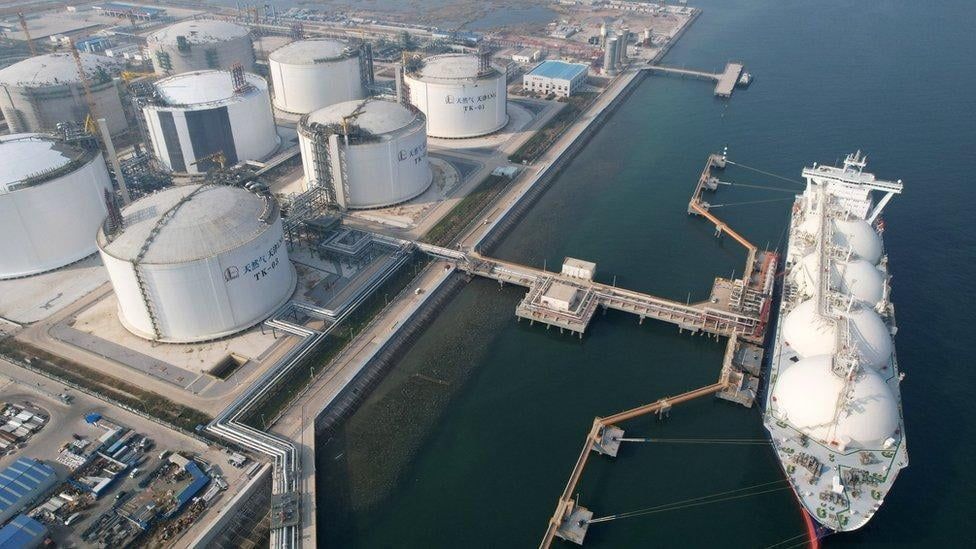
The relative calm in financial and commodities markets suggests investors expect a swift end to the conflict and to disruption, plus a high probability of a benign scenario thereafter. Despite the recent jump, oil prices remain far below the $130 a barrel level they approached following Russia’s invasion of Ukraine four years ago. European gas prices have jumped 60% to 52 euros per megawatt-hour, way below the 100 euros per MWh at which they consistently traded in 2022. Meanwhile, gas prices for delivery a few years hence have hardly budged, implying a short interruption.
Washington claimed on Thursday it had destroyed over 60% of Tehran’s missiles and launchers, plus 30 of its ships. Trump also asserted that Iran wanted talks, that the U.S. would have to be involved in choosing the next leader of Iran, and IRGC ally Mojtaba Khamenei, the late leader's hardline son, was an unlikely choice as a successor.
Still, a fifth of the world’s oil supply is currently trapped behind the Strait of Hormuz. On Goldman Sachs figures, oil prices will rise even if the status quo persists for only a few months. The IRGC has been taking a stronger governing role since the latest war commenced, Reuters reported on Wednesday citing six Iranian and regional sources. As such, the market may be attaching too much weight to a swift end to the conflict — and choosing the wrong base case.
Follow George Hay on Bluesky and LinkedIn.
CONTEXT NEWS
Iran vowed to take revenge for a U.S. torpedo attack on an Iranian warship off the coast of Sri Lanka on March 4, which killed more than 80 sailors, Reuters reported on March 5.
Qatar's energy minister Saad al-Kaabi warned that war in the Middle East could "bring down the economies of the world", predicting that all Gulf energy exporters would shut down production within weeks and drive oil to $150 a barrel, the Financial Times reported on March 6.
Brent crude hit $87.3 a barrel as of 1007 GMT on March 6.
Oil prices are still trading far below the levels reached in 2022