


Boeing Co Stock Moved Down by 3.40% on Mar 3: What Investors Need To Know



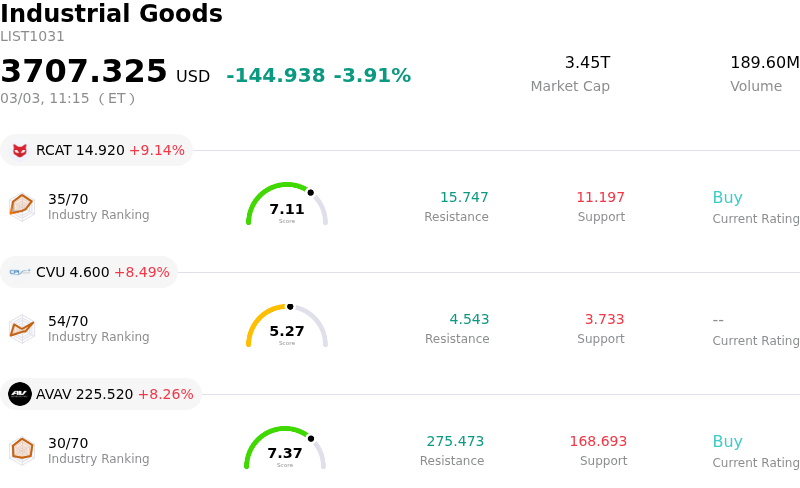
Boeing Co (BA) moved down by 3.40%. The Industrial Goods industry is down by 3.91%. The company outperformed the industry. Top 3 gainers of the industry: Red Cat Holdings Inc (RCAT) up 9.14%; CPI Aerostructures Inc (CVU) up 8.49%; AeroVironment Inc (AVAV) up 8.26%.
Boeing's stock experienced a notable decline during Tuesday's trading session, reflecting a confluence of ongoing concerns and fresh developments impacting investor sentiment. While some recent reports painted a picture of stabilization and an anticipated turnaround for 2026, negative news regarding regulatory actions, geopolitical tensions, and institutional portfolio adjustments appear to have outweighed positive sentiment.
A significant factor contributing to the downward movement was the news of Huntington National Bank reducing its holdings in Boeing by 19.6% during the third quarter, as detailed in a recent 13F filing. This institutional selling indicates a less optimistic outlook from a major player and can trigger broader market concern among investors.
Furthermore, the persistent issue of quality control continues to be a drag on the stock. Recent events, such as an emergency return of a United Airlines Boeing 787 to LAX due to an engine fire report, sparked an FAA investigation into the incident and the 787-9 Dreamliner model. This adds to the existing concerns regarding the 737 MAX, particularly an immediately effective FAA order issued in late February to address risks posed by a problem with the 737 MAX's environmental control system that could cause cabins to become dangerously hot due to a "ground wire fault". Another FAA airworthiness directive from late February required inspections of certain 757s for cracks in wing panels, highlighting broader scrutiny on older models as well. While Boeing is reportedly developing engineering solutions and the NTSB indicates a safety fix for a CFM Leap engine design flaw is on track for the first quarter of 2026, these ongoing safety and quality challenges erode investor confidence.
The broader market environment also played a role. Escalating geopolitical tensions in the Middle East led to a surge in defense stocks on Monday, but Boeing's gains were notably muted, indicating that its internal quality crises are causing its aerospace segment to lag behind competitors benefiting from the conflict. Airline stocks globally have also taken a tumble due to widespread airspace closures and rerouting stemming from these tensions, which could indirectly impact demand for new aircraft, although Boeing's backlog remains robust.
While Boeing's production rates for the 737 MAX and 787 Dreamliner are steadily increasing, and the company is targeting sustainably positive free cash flow in 2026, the market's focus on persistent quality control issues and regulatory oversight seems to have overshadowed these positive developments, leading to the stock's decline. Analysts had previously noted that while revenue was recovering, EPS remained well shy of peak levels due to FAA-mandated production limits, and that the stock had experienced significant drops after past earnings misses.
Technically, Boeing Co (BA) shows a MACD (12,26,9) value of [0.16], indicating a neutral signal. The RSI at 43.36 suggests neutral condition and the Williams %R at -74.75 suggests oversold condition. Please monitor closely.
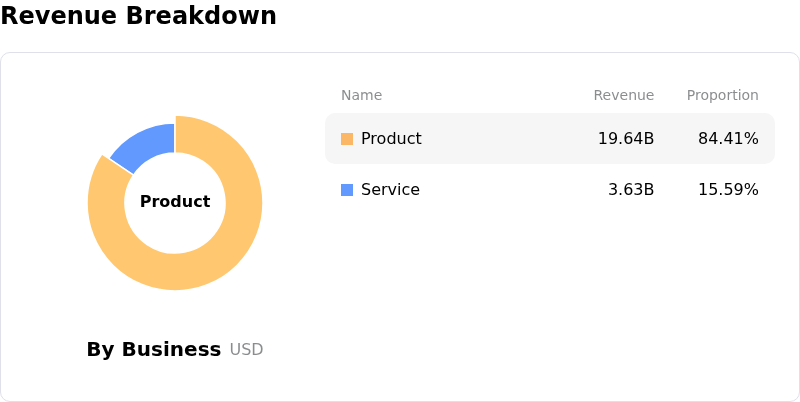
Boeing Co (BA) is in the Industrial Goods industry. Its latest annual revenue is 89.46B, ranking 1 in the industry. The net profit is 1.89B, ranking 6 in the industry. Company Profile
Over the past month, multiple analysts have rated the company as BUY, with an average price target of 272.48, a high of 300.00, and a low of 232.00.
Company Specific Risks:
- A United Airlines Boeing 787-9 Dreamliner made an emergency landing on March 2, 2026, due to engine issues, underscoring persistent concerns regarding the operational quality and reliability of Boeing aircraft and potentially inviting further scrutiny from aviation authorities.
- Boeing carries a significant debt burden, with analysts indicating that operating cash flow does not sufficiently cover its debt obligations, and an Altman Z-Score of 1.59 suggests a potential risk of financial distress. The company also has $8 billion in debt maturing in 2026, contributing to ongoing interest expense drag on earnings.
- The FAA maintains "embedded" oversight in Boeing's production facilities, and the discovery of any new systemic quality issues could result in additional production caps or even partial shutdowns. The FAA has clarified that delays in certifying the 737 MAX 7 and MAX 10 variants are attributable to Boeing's "long-standing quality issues" rather than regulatory impediments.
- Boeing's defense business faces ongoing risks from budget delays, shifts in procurement priorities, and persistent supply chain constraints, which could hinder production rates and the segment's overall financial performance.
This article may include AI-generated content that is human-reviewed, which is for reference and general information purposes only and does not constitute investment advice.
Recommended Articles








Comments (0)
Click the $ button, enter the symbol, and select to link a stock, ETF, or other ticker.