



GLOBAL MARKETS-Stocks rise as Nikkei sets record, dollar drops

By Gregor Stuart Hunter
SINGAPORE, Feb 10 (Reuters) - Global stocks advanced in Asian trade on Tuesday, led by an extended rally in Tokyo's benchmark after Japanese Prime Minister Sanae Takaichi's decisive election victory over the weekend.
MSCI's broadest index of Asia-Pacific shares outside Japan .MIAPJ0000PUS was up 0.6%, while the Nikkei 225 .N225 jumped 2.3%, rising for a third consecutive day to a fresh peak. The yen also strengthened for a second day.
The gains pushed the MSCI All-Country World Index 0.2% higher to a fresh record.
U.S. equity futures cooled after a two-day rally, with S&P 500 e-mini futures EScv1 down 0.1%, partially retracing gains on Wall Street overnight. On Monday, the S&P 500 .SPX rose 0.5% and the Nasdaq Composite .IXIC gained 0.9% as technology stocks found their footing following last week's AI-sparked selloff.
"Overall, we actually are quite positive on the economic situation, although we see maybe some cracks," said Kees Verbaas, Robeco’s global head of fundamental equity.
"The investment programmes of the large companies are increasing rather than decreasing... which typically is good for economic activity," he added. "A lot of the AI supply chain is only possible thanks to emerging markets."
With several critical U.S. economic reports due for release this week including delayed payrolls data, White House economic adviser Kevin Hassett said on Monday job gains could be lower in the coming months as the Trump administration's immigration policies slow labour growth and new AI tools boost productivity.
Against the yen JPY=, the U.S. dollar was last down 0.4% at 155.315 yen.
The U.S. dollar index =USD, which measures the greenback's strength against a basket of six currencies, was down 0.1%, wallowing near its lowest levels of the month at 96.86.
The index logged its biggest one-day drop in two weeks on Monday, following a Bloomberg News report that Chinese regulators advised financial institutions to curb holdings of U.S. Treasury bonds due to concern over concentration risk and market volatility.
Treasury Secretary Scott Bessent said on Monday that senior U.S. Treasury staff visited China last week "to strengthen channels of communication" between Washington and Beijing.
Against the offshore yuan CNH=, the dollar was last down 0.1% at 6.9092 yuan.
"Elevating the renminbi’s global role is moving up the policy agenda," analysts from Alpine Macro wrote in a research note. "Beijing’s main goal is not to challenge the dollar’s dominance but to reduce vulnerability to it."
The yield on the U.S. 10-year Treasury bond was last flat at 4.184%.
Market pricing continues to indicate that the Federal Reserve will remain on hold until June. Fed funds futures are pricing an implied 17.7% probability of a 25-basis-point rate cut at the U.S. central bank's next two-day meeting ending March 18, compared with an 18.4% chance on Friday, according to the CME Group's FedWatch tool.
Indonesian markets .JSKE remained composed throughout trading in Jakarta, rising 1% and largely unswayed by FTSE Russell's decision to postpone a scheduled index review. Last month, larger rival MSCI MSCI.N warned the country risked a downgrade to frontier status over data transparency issues.
In commodities markets, Brent crude LCOc1 was last flat at $69.06.
Gold XAU= fell 0.6% to $5,033.752 per ounce, while silver XAG= lost 1.9% at $81.75 per ounce.
Bitcoin BTC= fell 1.7% at $69,192.52, while ether ETH= tumbled 3.7% at $2,042.73.
Related Articles
Coca Cola (KO) Q4 Earnings Preview: Look for the Upside in the AI Initiatives, not in the Revenue and the EPS
Coca-Cola (KO) enters its fourth-quarter 2025 earnings call tomorrow with significant momentum. However, a fundamental shift is occurring.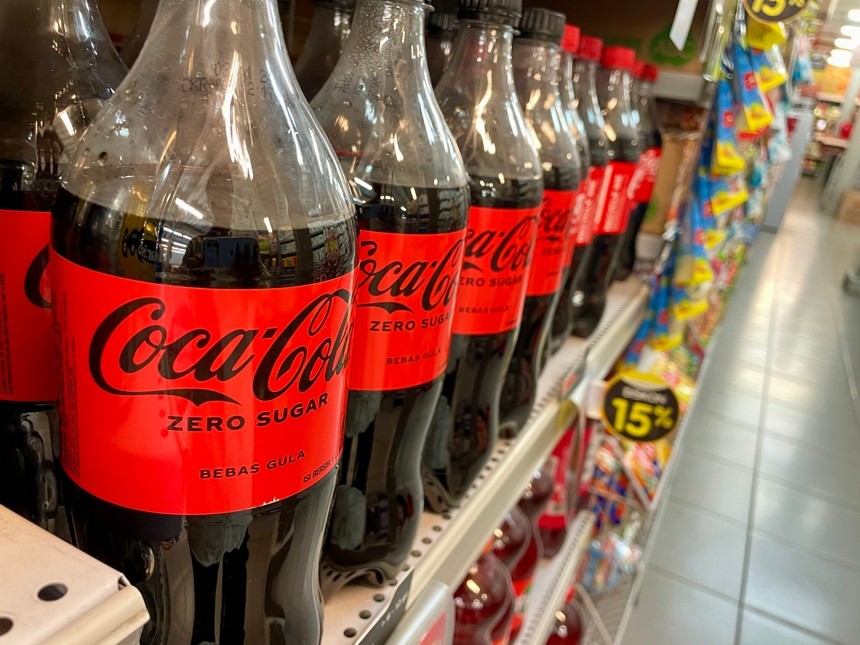
Warsh’s Fed Era Signals a Death Knell for QE, Jolting the $30 Trillion Treasury Market
With Warsh’s nomination, his past proposals for governing the Federal Reserve are being brought to the forefront. A central issue is the formulation of a new "1951 Accord" to restructure the relationship between the Fed and the Treasury. Analysts suggest such a move could impact the $30 trillion Tre
Amazon Stock Predictions for 2026 to 2030: Will They Exceed Expectations and Achieve Major Long-Term Goals?
TradingKey - As we head into 2026, many investors are questioning where Amazon (AMZN) fits into the technology world.
A Crash After a Surge: Why Silver Lost 40% in a Week?
TradingKey - Spot silver (XAGUSD) prices continue to decline. Silver plunged 20% on Thursday, breaking below $71 per ounce, with the sell-off intensifying on Friday as prices fell further below $64. Compared to the all-time high set on January 29, silver prices have retraced more than 40%, wiping out nearly all gains accumulated over the previous month.

