


Coca Cola (KO) Q4 Earnings Preview: Look for the Upside in the AI Initiatives, not in the Revenue and the EPS



AI Podcast


Coca-Cola's fourth-quarter earnings call is expected to focus on its AI-driven digital transformation, mirroring Walmart's success. The company's $1.1 billion Microsoft partnership aims to unify operations, enhance marketing via generative AI, and simulate supply chains. Unlike asset-heavy peers, Coca-Cola's "asset-light" model allows strategic AI investment, already yielding improved sales forecasting, reduced waste, and operational efficiencies. While near-term EPS and revenue growth are modest, management's commentary on AI progress could drive a valuation re-rating beyond traditional beverage multiples, positioning KO as a tech-enabled leader.
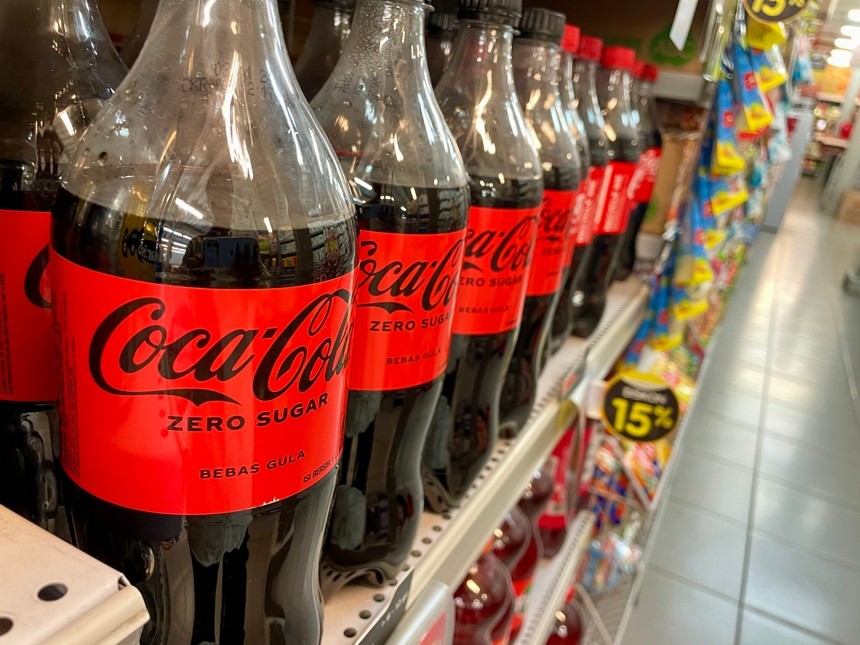
Coca-Cola (KO) enters its fourth-quarter 2025 earnings call tomorrow with significant momentum, having seen its stock price climb nearly 15% since the beginning of the year. Traditionally, Wall Street views KO as a "low upside, low downside" defensive play—a reliable fortress for capital during periods of high-tech volatility. However, a fundamental shift is occurring.
While the market remains focused on steady 2.58% dividends and modest revenue growth, the real story is Coca-Cola’s aggressive transition into a "digital-first" enterprise. By following "Walmart Blueprint", leveraging massive AI investment to transform traditional operations, Coca-Cola is positioning itself for a valuation re-rating that transcends the typical beverage industry multiples.
The Earnings Backdrop: Expectations vs. Reality
For the earnings release on February 10, 2026, analysts have set a conservative bar:
- Earnings Per Share (EPS): Expected at $0.57, representing a modest ~3.6% YoY growth.
- Revenue: Projected at $12.05 Billion, a ~4.4% YoY increase.
While 3–4% growth is not "flashy," Coca-Cola’s strength lies in its downside protection. Even in economic downturns, its exceptionally strong brand image and vast product variety ensure consistent cash flow. This reliability has made it a cornerstone of Warren Buffett’s portfolio for decades. Yet, the true upside catalyst for tomorrow isn't just a beat on these numbers; it's the management’s commentary on their AI transformation and how it is beginning to yield actual financial results.
The Walmart Blueprint: A Trillion-Dollar Precedent
To understand why Coca-Cola’s AI pivot matters, one must look at Walmart. On February 3, 2026, Walmart became the first traditional, non-tech retailer to hit a $1 trillion market cap. Walmart achieved this milestone by proving that a legacy business could successfully pivot to a tech-driven model—growing e-commerce, utilizing AI for supply chain automation, and leveraging its data for a high-margin advertising business. This is even more true with the development of AI beyond the data centers towards industrial applicability.
Coca-Cola is now applying this same formula to the global beverage industry. By integrating powerful AI tools, KO aims to transform from a "traditional" business into one that yields the high-efficiency operational results typically reserved for tech giants.
The $1.1 Billion "Digital Nervous System"
The cornerstone of this transformation is the $1.1 billion, five-year strategic partnership with Microsoft, signed in 2024 and spanning through 2029. This agreement is four times larger than their previous $250 million deal from 2020, signaling KO’s massive acceleration in AI ambition.
Key Pillars of the Microsoft Partnership:
Unified Global Network: Coke is migrating its entire application suite and those of its independent bottling partners to Microsoft Azure. This creates a synchronized data environment where HQ and distributors share real-time insights, streamlining the entire global ecosystem.
Generative AI & Productivity: By implementing Azure OpenAI Service and Copilot for Microsoft 365, Coca-Cola is reducing "time-to-answer" for its employees, automating content drafting, and streamlining internal workflows.
AI-Driven Marketing: The "Create Real Magic" platform uses GPT-4 and DALL-E to allow for hyper-local, personalized marketing at a scale previously impossible. This has already led to engagement yields significantly higher than traditional benchmarks.
Operational Simulations: AI-powered "digital twins" are being used to simulate supply chain, manufacturing, and logistics scenarios to predict and prevent disruptions before they happen.
Competitive Advantage: The "Asset-Light" Edge
Coca-Cola’s unique business model gives it a distinct advantage over its peers when it comes to AI reinvestment.
Metric | Coca-Cola (KO) | PepsiCo (PEP) | Nestlé | Mondelēz (MDLZ) |
2025 PP&E (Physical Assets) | ~$10.2 Billion | ~$31.5 Billion | ~$32.1 Billion | ~$10.8 Billion |
Business Model | Asset-Light | Asset-Heavy | Asset-Heavy | Moderate-Heavy |
2025 CapEx | $2.03 Billion | $4.97 Billion | $5.60 Billion | $2.10 Billion |
2025 Op. Margin | ~32.5% | ~14.5% | ~17.2% | ~16.8% |
Primary AI Initiative | $1.1B Microsoft Deal (Connecting independent bottlers; Gen-AI for hyper-local marketing.) - Most Comprehensive | NVIDIA Digital Twins (Increase in factory output without building new plants.) | NesGPT R&D (New high-margin health products to market) | Accenture Gen-AI (Reducing decision-making time) |
Competitors like PepsiCo and Nestlé are "Asset-Heavy," meaning their AI initiatives (such as NVIDIA Digital Twins) are largely defensive, focused on managing and maintaining massive physical factory networks. Further, Coca-Cola’s 32.5% operating margin is nearly double that of its peers. Because KO delegates the heavy manufacturing and distribution to third-party bottlers, it can spend its capital "surgically" on optimization and brand-building technologies rather than basic physical maintenance.
Measurable Impacts: AI in the Real World
This transformation is already producing tangible results. Coca-Cola’s machine-learning-driven sales forecasting has reportedly improved accuracy from 70% to 90%, leading to an 8% boost in sales and a 25% reduction in waste.
Other AI-driven successes include:
- Predictive Restocking: In pilot programs, AI-powered restocking alerts sent to store managers led to a 7–8% increase in store-level sales by ensuring products were always available during peak demand.
- Vending Innovation: Smart vending machines now use AI to adjust pricing dynamically based on local demand and even offer personalized beverage recommendations to consumers.
- Resource Efficiency: Bottling partners like CCI have utilized digital twin technology to achieve 20% energy savings and 9% water savings annually.
The Re-Rating Opportunity
As we look towards tomorrow's earnings, the primary takeaway is that the AI strategy will not be an overnight success, but it is a real and accelerating engine for margin expansion.
The prospect of a stock re-rating is very real if Coca-Cola can continue to prove that its $1.1 billion Microsoft investment is translating into higher efficiency and liberated cash flow. Better inventory management leads to lower costs, which in turn leads to even more reliable dividend payments.
The conclusion is not just look at the revenue and EPS tomorrow. Listen for the progress on digital transformation. If Coca-Cola can successfully execute the "Walmart Formula," investors may soon stop viewing it as a slow-growing beverage giant and start valuing it as a high-margin, tech-enabled leader of the 21st century
Recommended Articles





Comments (0)
Click the $ button, enter the symbol, and select to link a stock, ETF, or other ticker.