What Happens If You Claim Social Security Early and Then Change Your Mind? Options and Consequences Explained.

Key Points
It's possible to withdraw your Social Security claim, as long as you meet specific criteria.
Withdrawing your claim makes it as if you never filed, and your benefits will continue to grow.
If you've reached full retirement age and decide you'd rather wait, you can suspend your claim.
A record number of Americans are filing for Social Security benefits before reaching full retirement age (FRA), despite knowing their benefits will be reduced by as much as 30%. So what do you do if you file for early benefits, start receiving them, and change your mind?
According to the Social Security Administration (SSA), there may be a solution.
Where to invest $1,000 right now? Our analyst team just revealed what they believe are the 10 best stocks to buy right now. Continue »
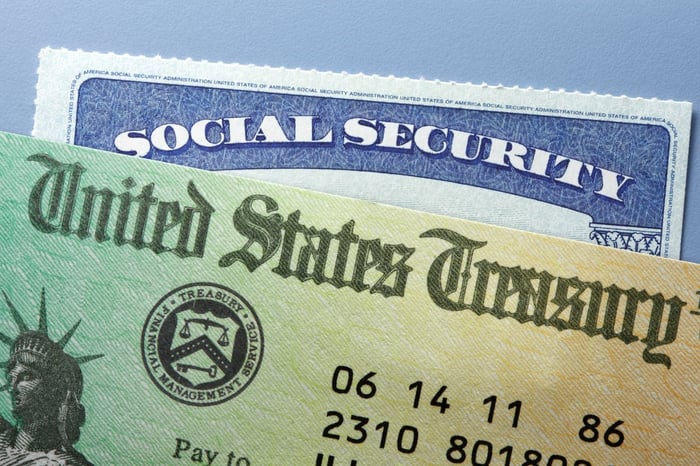
Image source: Getty Images.
How it's done
If it's been less than 12 months since you were first entitled to benefits, you may be able to withdraw your Social Security claim if you change your mind. Here's what to do:
- You must complete Form SSA-521, Request for Withdrawal of Application, and either mail it or bring it to your Social Security office.
- If you've received payments, you'll need to repay them, along with any money that was withheld for taxes, Medicare premiums, or garnishment.
- If payments were made to your spouse or children due to your Social Security claim, that money will also need to be repaid. Like payments to you, you'll need to repay any money withheld for taxes, Medicare premiums, or garnishment.
Following benefit withdrawal
Once you withdraw your Social Security claim, it will be as though you never filed it in the first place. Your benefits will continue to grow by 8% a year until you reach age 70, and you can refile for benefits at any time.
Suspending your benefits
If you've reached FRA (67 for most non-retired Americans) but haven't reached the age of 70 yet, you also have the option of suspending your benefits. If you choose to suspend benefits, you'll earn delayed retirement credits for each month they're suspended (until you hit 70). That means your benefits will increase by 8% each year.
Let's say your monthly benefits were $2,000 before suspending them and you decide not to resume payments until age 70. Given that your retirement credits continue to grow by 8% annually, your benefit will be 24% higher once you resume claiming them. Instead of receiving $2,000 a month, you'll receive $2,480.
Whether you decide to go back to work, start your own business, or simply forgo the $2,000 payments for a few years, that extra $480 a month amounts to $5,760 a year.
If you decide to suspend benefits, you're not required to repay any previous payments, although it does affect a spouse or child claiming on your record. It also suspends Supplemental Security Income payments.
In the event you suspend benefits and find yourself short on money, you can restart them. The new payout amount will depend on how long the payments were suspended.
Here's the bottom line: If you claim Social Security benefits and realize claiming early doesn't work with your long-term retirement plan, you do have options.
The $23,760 Social Security bonus most retirees completely overlook
If you're like most Americans, you're a few years (or more) behind on your retirement savings. But a handful of little-known "Social Security secrets" could help ensure a boost in your retirement income.
One easy trick could pay you as much as $23,760 more... each year! Once you learn how to maximize your Social Security benefits, we think you could retire confidently with the peace of mind we're all after. Join Stock Advisor to learn more about these strategies.
The Motley Fool has a disclosure policy.
Related Articles
Why Sanae Takaichi Winning Japan’s Diet Election Led to a Surge in Japanese Stock Indices?
TradingKey - Reports indicate that the ruling coalition led by Japanese Prime Minister Sanae Takaichi has secured a single-party majority in the parliamentary elections held on Sunday (February 8). Following the news, the yen weakened slightly, while the Nikkei Index surpassed 57,000 for the first t
Amazon Stock Predictions for 2026 to 2030: Will They Exceed Expectations and Achieve Major Long-Term Goals?
TradingKey - As we head into 2026, many investors are questioning where Amazon (AMZN) fits into the technology world.
A Crash After a Surge: Why Silver Lost 40% in a Week?
TradingKey - Spot silver (XAGUSD) prices continue to decline. Silver plunged 20% on Thursday, breaking below $71 per ounce, with the sell-off intensifying on Friday as prices fell further below $64. Compared to the all-time high set on January 29, silver prices have retraced more than 40%, wiping out nearly all gains accumulated over the previous month.
Is Bitcoin’s Four-Year Cycle Dead in 2026?
Is the Bitcoin 4-year cycle dead? After 2025 broke historical records with a red post-halving year, institutional analysts explore if the Bitcoin price has decoupled from the halving countdown. Analyze the impact of spot ETFs, global liquidity, and the roadmap to the 2028 halving in this 2026 market