By Steve Holland and Enas Alashray
WASHINGTON/CAIRO, April 2 (Reuters) - Hopes for a swift end to the Middle East war faded on Thursday after U.S. President Donald Trump vowed more aggressive strikes on Iran, sending oil prices back well over $100 a barrel in a blow to consumers around the world.
Stocks slid and the dollar gained after Trump said military operations would be intensified without offering the timeline that investors had sought for ending hostilities against Iran.
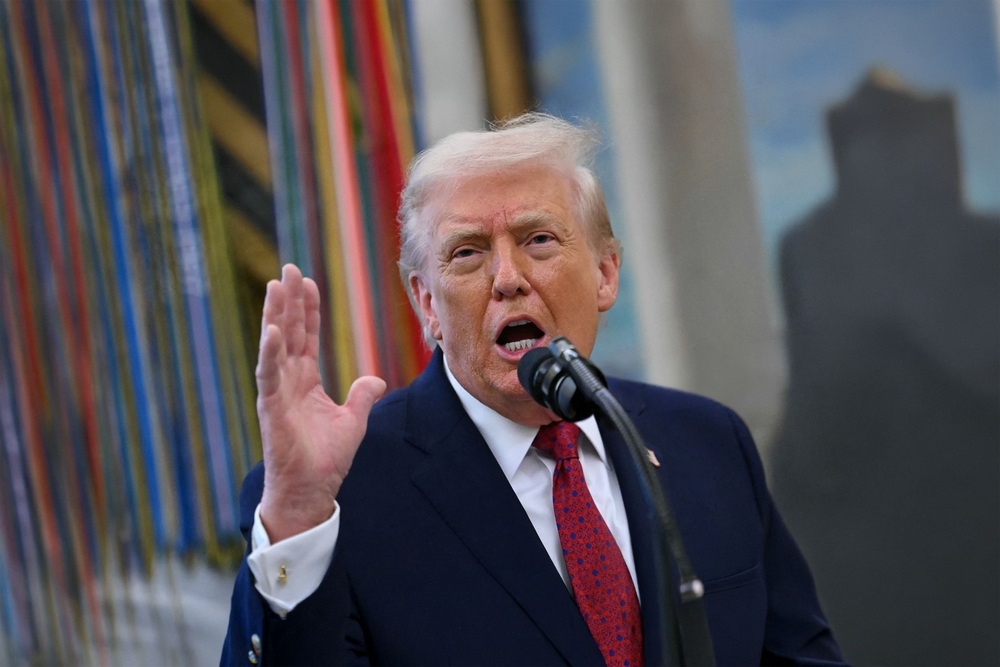
"We're going to hit them extremely hard over the next two to three weeks. We're going to bring them back to the Stone Ages where they belong," Trump said in a Wednesday evening prime-time speech.
Trump said the U.S. would achieve its military objectives soon but suggested the war could escalate if Iranian leaders did not give in to Washington's terms during negotiations, with strikes on Iran's energy and oil infrastructure possible.
Iran's armed forces responded with a warning for the United States and Israel of "more crushing, broader and more destructive" attacks in store.
Ebrahim Zolfaqari, a spokesperson of the Iranian military's Khatam al-Anbiya central headquarters, said the war would continue until the "permanent regret and surrender" of Tehran's enemies, according to a statement shared by Iranian media.
NO REASSURANCE ON ENERGY CRISIS
Fuel shortages have already caused economic strains across Asia and they are expected to bite in Europe soon. Italy's foreign minister said migration flows would increase if the conflict were to drag on.
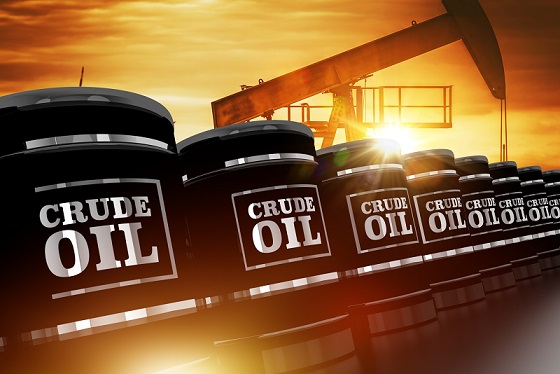
Benchmark Brent crude prices LCOc1 jumped by about 7.5% to more than $108 per barrel, with little reassurance from Trump's address about how the critical Strait of Hormuz energy conduit would reopen.
Stocks took a hit, with U.S. index futures EScv1 down 1.3% and European futures STXEc1 sinking over 2%. Almost all Asian bourses were in the red, with Japan's Nikkei .N225 down 2.4% and MSCI's index of other Asia-Pacific shares .MIAPJ0000PUS down more than 2%.
"If he (Trump) was trying to inspire confidence in the markets, he has not done that," said Russel Chesler, Head of Investments and Capital Markets at VanEck Australia. "The key question in all investors' minds is 'When is this going to be over?'"
Thousands of people have been killed across the Middle East since February 28, when the U.S. and Israel struck Iran, triggering Iranian attacks on Israel, U.S. bases and the Gulf states, while opening a new front in Lebanon.
Israel, which shoots down most Iranian missiles, reported new incoming salvoes on Thursday, Saudi Arabia said it had intercepted four drones and Abu Dhabi said it had intercepted a missile, with minor damage near an economic zone.
The U.S. embassy in Baghdad urged its citizens to leave Iraq, warning of attacks in the capital by Iran-allied militia in the next 24 to 48 hours.
Iranian attacks have all but closed the Strait of Hormuz, the conduit for about a fifth of global oil and liquefied natural gas, pushing up energy costs and weighing on Trump's approval ratings ahead of midterm congressional elections.
Trump blamed the higher costs on Iran's "deranged terror attacks against commercial oil tankers", said the U.S. did not need the strait and challenged allies who rely on oil in the region to work towards reopening it.
European countries have said they will only help secure the strait if there is a ceasefire. Gulf states, which have not responded militarily to repeated attacks by Iran over the past month to avoid any escalation, say they reserve the right to self-defence.
The International Monetary Fund, World Bank and International Energy Agency on Wednesday warned the war was having "substantial, global and highly asymmetric" effects and said they would coordinate their response, including through potential financial support to those countries hit hardest.
PROSPECTS ELUSIVE FOR NEAR-TERM RESOLUTION
In an interview with Reuters earlier on Wednesday, Trump said U.S.-Israeli strikes had ensured Iran would not obtain nuclear weapons, adding that U.S. forces could return with "spot hits" if the threat resurfaces.
"We are systematically dismantling the regime's ability to threaten America or project power outside of their borders," he said.
Prior to Trump's remarks, Iranian President Masoud Pezeshkian said in a letter addressed to the American people that his country harbours no enmity towards ordinary Americans.
Trump said discussions were ongoing with Iranian leaders he considered less radical than previous leaders.
A senior Iranian source told Reuters on Wednesday that Tehran is demanding a guaranteed ceasefire to halt its attacks and said no talks have taken place through intermediaries on a temporary truce.
Some analysts say if Trump were to end the war without a deal, Iran could emerge more emboldened, with greater leverage.
U.S. Vice President JD Vance communicated with Pakistani intermediaries about the Iran conflict as recently as Tuesday, according to a source briefed on the matter, making clear Trump was open to a ceasefire if certain demands were met.
Pakistan, which has good relations with the U.S. and Iran, had said it hoped to host direct talks between the warring sides soon but its foreign ministry spokesperson said on Thursday there was no confirmation so far of any U.S. plans to attend.