Reuters Sustainable Finance Newsletter - A 'corporate welfare' claim vs Walmart and Amazon over worker benefits

By Ross Kerber
March 11 (Reuters) - This is the weekly Reuters Sustainable Finance Newsletter, which you can sign up for here .
Few people would support direct federal payments to big corporations like Walmart or Amazon meant to pay their employees. But that may be happening in effect, since many of their workers benefit from U.S. medical and food assistance programs, a new study suggests. This analysis comes amid a broader political debate over affordability issues. You can read more in my column this week, linked below.
I've also provided links to our coverage of Exxon's corporate departure from New Jersey, Anthropic's dispute with the Pentagon over the role of AI, and a look at battery storage prices.
Please follow me on LinkedIn and/or Bluesky. You can reach me via ross.kerber@thomsonreuters.com
A 'corporate welfare' claim vs Walmart and Amazon over worker benefits
Providing low-paid workers with government benefits like health insurance and food assistance is usually considered to be socially minded policy. But another way to look at the payments is as subsidies giving big businesses access to a large pool of labor able to work for less-than-living wages.
That's the critique of Sarah Anderson, Global Economy Project Director at the Institute for Policy Studies, a progressive-leaning think tank in Washington, D.C. In a new report she reviewed pay practices of companies she dubbed "The Low-Wage 20," or the 20 largest employers of low-wage U.S. workers.
Among her top findings: more than half of these firms reported 2024 median pay that would make a family of three eligible for food benefits under the federal Supplemental Nutrition Assistance Program, also known as SNAP, and for government-subsidized Medicaid health insurance benefits in most states. All the while, most of their CEOs earned hundreds of times as much per year.
You can click here to read my Q&A with Anderson and to watch a video of our discussion.
Company news
Fuhgeddaboudit - Exxon will leave its New Jersey registration and re-domicile in Texas, pending shareholder approval, the energy giant said.
Amazon-backed AI company Anthropic escalated its dispute with the Pentagon, framing the government's actions as retaliation for refusing to remove safety limits on its Claude model.
Wells Fargo has sufficiently overhauled its operations, the U.S. Federal Reserve said as it announced termination of its enforcement action against the bank over its fake accounts scandal.
On my radar
Ticketmaster parent Live Nation was told by a judge to negotiate with 26 states accusing it of anticompetitive conduct, a day after settling claims by the U.S. Justice Department.
Falling battery storage costs have made more solar-power projects viable by allowing their developers to guarantee they will provide steady electricity even when the sun is not shining.
Mercedes-Benz was fined 11.2 billion won ($7.61 million) by South Korea's antitrust regulator for misrepresenting the suppliers of batteries for its electric vehicles.
Related Articles
Ahead of CPI Release, Credit Crisis Panic Haunts Markets, Wall Street Eyes How Inflation Data Will Impact US Stocks
TradingKey - At 8:30 AM ET on Wednesday, the U.S. Bureau of Labor Statistics will release the February Consumer Price Index (CPI) report, which traders view as setting the tone for investment direction.
Trump Wants TACO? The Script for an Iran War May No Longer Be His to Write
TradingKey - As the US-Israel-Iran conflict enters its second week, new developments have emerged in the situation. On March 9 local time, U.S. President Trump sent a clear signal during a press conference, stating that military operations against Iran would end "soon" but would not be completed within this week. This statement has been interpreted by observers as a direct signal that the U.S. is seeking a "graceful exit." In response to the de-escalatory signals from the U.S., Iran’s stance remains defiant.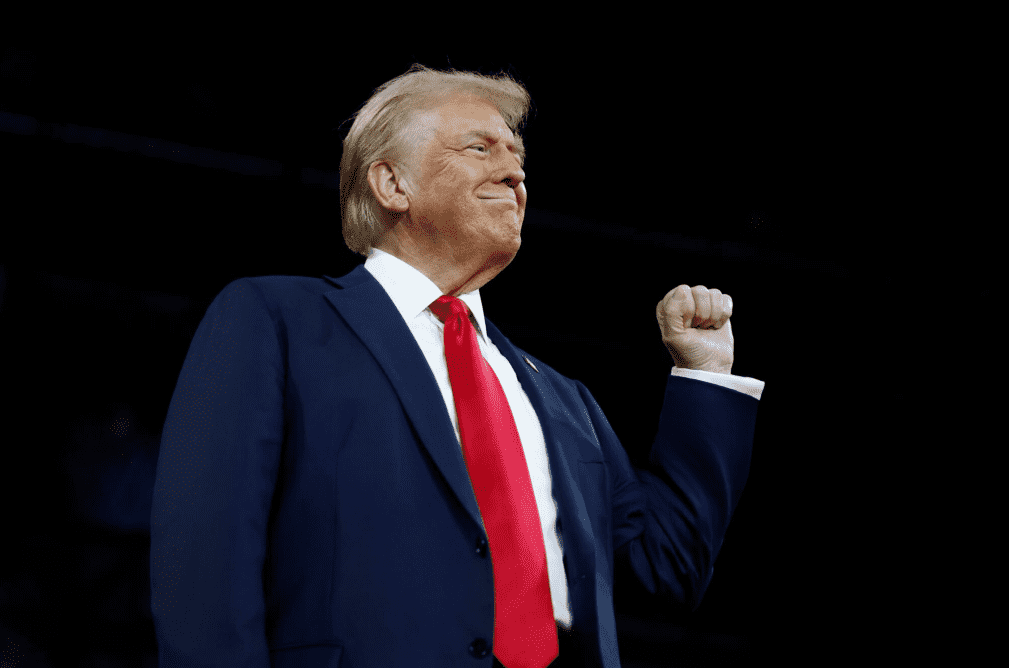
Bitcoin Price Analysis: BTC Eyes $72K Breakout Amid Mideast Supply Shocks and Short Squeeze Risk
BTC faces a critical $72K resistance amid Middle East supply shocks and a $4.3B short squeeze risk. Explore the latest btc price trends, institutional ETF outflows, and the impact of the upcoming "Clarity Act" on bitcoin’s market forecast.
Micron vs. Samsung vs. SK Hynix: Is MU Stock the Best Memory Stock for 2026?
TradingKey - Relying on strong AI demand, more memory per system, and sluggish supply response, 2026 will be the memory cycle. Micron Technology (MU) is now in an excellent competitive position today with HBM3E and looking to ramp HBM4E into Nvidia’s Vera Rubin platforms in the second half of 2026.