Some Gulf states reviewing sovereign investments to offset economic shock of Iran war, official says

By Andrew Mills, Rachna Uppal and Federico Maccioni
DOHA/DUBAI, March 11 (Reuters) - Some of the Gulf’s economic powerhouses are reassessing ways to deploy their trillions of dollars sovereign wealth funds to offset war‑related losses, a Gulf official told Reuters, as the oil‑ and gas‑rich region braces for the financial shock triggered by the U.S.-Israeli war with Iran.
“Three of the big four economies in the GCC (Gulf Cooperation Council) are all assessing future and current investments and sponsorships if this lasts long," the official said, requesting anonymity due to the sensitivity of the matter and without identifying which states.
"A review of their sovereign wealth fund investment strategies has already started."
Funds are reviewing possible reversals of investment pledges, divestments and a re‑evaluation of global sponsorship deals as they assess how to absorb the financial shock of the war, the Gulf official said.
Talks were held between high-level representatives of governments, not among the funds themselves, and the assessments are not coordinated, the official added.
Saudi Arabia, the United Arab Emirates, Qatar and Kuwait are the top economies in the GCC.
"The UAE has adopted forward-looking economic strategies that enhance its capacity to absorb any geopolitical and economic pressures” the Ministry of Foreign Affairs told Reuters in a statement. “In this regard, there is no change to investment plans or long-term economic priorities."
Saudi Arabia's Public Investment Fund is instrumental to the kingdom's economic transformation agenda and is not expected to revise long-term investment plans due to the current geopolitical landscape, a Saudi source told Reuters.
Saudi Arabia's finance ministry was not immediately available for comment. Qatar's Finance Ministry did not respond to Reuters' request for comment. Reuters was unable to get a comment from Kuwait's Ministry of Economic Affairs and Investment.
In just 12 days, the conflict has delivered a severe economic blow to the Gulf's largest economies, crippling Gulf aviation, tourism, ports and logistics networks, severing key commercial arteries.
“Once the war is over, we will see the balance sheet and then figure out how to cover the losses,” the official said.
JPMorgan analysts last week cut their growth forecasts for non‑oil sectors across by 1.2 percentage points for GCC economies and a 2.3‑point revision for the UAE, the steepest in the bloc. They warned that while the hydrocarbon sector could recover later in the year depending on how long the conflict lasts, some damage to non‑hydrocarbon activity would persist and could impact the region’s diversification plans.
Analysts have said a fiscal shock may lead to a rethink of how the $5 trillion in sovereign wealth funds from the region may deploy money.
Related Articles
Ahead of CPI Release, Credit Crisis Panic Haunts Markets, Wall Street Eyes How Inflation Data Will Impact US Stocks
TradingKey - At 8:30 AM ET on Wednesday, the U.S. Bureau of Labor Statistics will release the February Consumer Price Index (CPI) report, which traders view as setting the tone for investment direction.
Trump Wants TACO? The Script for an Iran War May No Longer Be His to Write
TradingKey - As the US-Israel-Iran conflict enters its second week, new developments have emerged in the situation. On March 9 local time, U.S. President Trump sent a clear signal during a press conference, stating that military operations against Iran would end "soon" but would not be completed within this week. This statement has been interpreted by observers as a direct signal that the U.S. is seeking a "graceful exit." In response to the de-escalatory signals from the U.S., Iran’s stance remains defiant.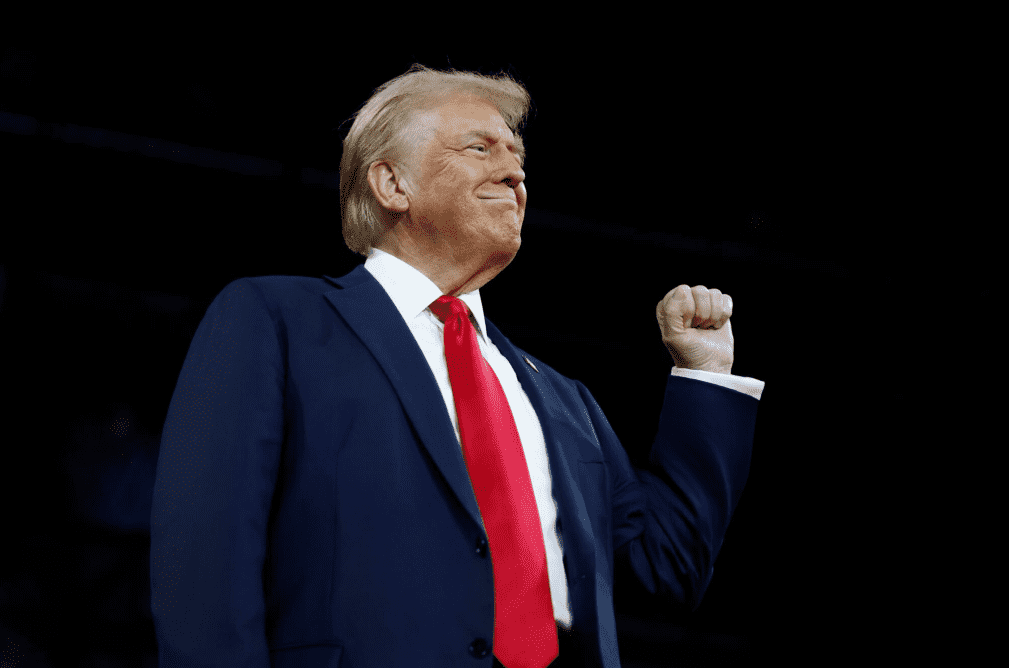
Bitcoin Price Analysis: BTC Eyes $72K Breakout Amid Mideast Supply Shocks and Short Squeeze Risk
BTC faces a critical $72K resistance amid Middle East supply shocks and a $4.3B short squeeze risk. Explore the latest btc price trends, institutional ETF outflows, and the impact of the upcoming "Clarity Act" on bitcoin’s market forecast.
Micron vs. Samsung vs. SK Hynix: Is MU Stock the Best Memory Stock for 2026?
TradingKey - Relying on strong AI demand, more memory per system, and sluggish supply response, 2026 will be the memory cycle. Micron Technology (MU) is now in an excellent competitive position today with HBM3E and looking to ramp HBM4E into Nvidia’s Vera Rubin platforms in the second half of 2026.