More US states weigh bypassing bar exam to license lawyers

By Karen Sloan
March 4 (Reuters) - Connecticut and New Mexico have joined the growing list of states offering or considering lawyer licensing pathways that don’t require a traditional bar exam, amid concerns that public service lawyers and attorneys in rural areas are in scarce supply.
The Connecticut Bar Foundation this month launched an alternative licensing task force to create a pipeline of attorneys committed to public service careers. The group will examine programs in other states that allow law graduates to become licensed after working under supervision or after an assessment of their legal work.
The Supreme Court of New Mexico has also convened a committee to develop a supervised practice licensing pathway, with a final report expected later this spring. Law graduates in the state would receive a conditional license to practice under supervision and then would submit their work to the New Mexico Board of Bar Examiners to be fully admitted.
The efforts reflect growing skepticism that the traditional bar exam is the best or only way to gauge the practice-readiness of law graduates. Much of the concern has come from advocates of expanding legal services for poor or underserved communities: According to a 2025 report from the Legal Services Corporation, 41% of U.S. counties are "legal deserts" with few or no lawyers to serve residents.
Connecticut's task force is "an opportunity to align licensure with the realities of practice while directly addressing our well documented access to justice challenges," Brian Gallini, dean of the University of Connecticut School of Law and co-chair of the task force, said in a statement.
Oregon jump-started the current licensure reform movement in 2023 when it adopted an apprenticeship pathway for law school graduates that does not require taking the bar. Washington followed with a similar approach in 2024, the same year Arizona put a plan in motion that lets law grads who fail the bar exam obtain a license through a practical skills program.
South Dakota in 2025 adopted a pilot program that allows a limited number of local law graduates to become licensed without the bar exam after working under supervision, provided they commit to public service careers. Utah last year also launched a supervised practice-based alternative licensure pathway. Delaware and Minnesota are currently studying bar exam alternatives.
Such programs have yet to gain traction in large states, however, where the supervision of a significant number of law graduates would pose a bigger challenge. Some proponents of the traditional bar exam argue the test has decades of success in assessing the competence of new lawyers.
The California Supreme Court in 2024 rejected a proposed alternative pathway that would have enabled law school graduates to become licensed after spending four to six months working under the supervision of an experienced attorney and submitting an acceptable portfolio of legal work.
The court said the proposal would have implicated an "array of ethical and practical problems.”
Read more:
No bar exam required to practice law in Oregon starting next year
Washington adopts new lawyer licensing paths as other states mull bar exam bypasses
Related Articles
Is GE Vernova an Energy Stock You Should Buy in 2026?
TradingKey - GE Vernova (GEV), the global energy infrastructure company, was spun off from General Electric (GE) in 2024. It develops, produces, and services equipment for the generation and transmission of electricity, including gas and steam turbines, wind turbines, as well as grid infrastructure
Here Are US Stock Winners Following the Iran Attacks
Tradingkey - On Tuesday, U.S. equities extended their slide as rising oil prices and the specter of war in Iran rippled through global markets. The Dow Jones Industrial Average at one point plunged more than 1,000 points.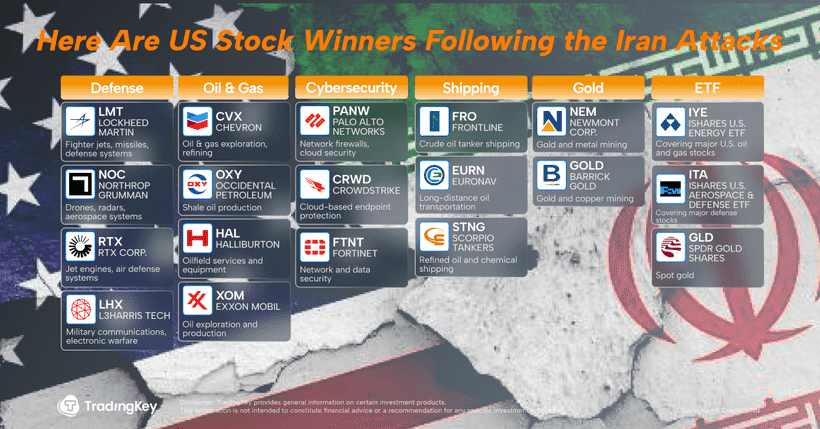
Middle East Conflict Escalates, Global Stocks and Bonds Fall, Was It Really Caused by One Sentence From Trump?
TradingKey - On Tuesday local time, the escalation of conflict in the Middle East triggered intense global market volatility. Gold (XAUUSD), bonds, and stocks fell in tandem, an unconventional movement that shattered the conventional logic of "buying safe havens during turmoil and trading stocks during stability."
Gold’s $5,000 Breaking Point: Why the Middle East Crisis Isn't Saving the Bulls
As US-Iran tensions continue to escalate, gold prices saw a sudden plunge. Has the metal already peaked?
AGI Approaches: 2026 May Be Artificial Intelligence Turning Point, Musk Warns White-Collar Class Will Bear the Brunt
TradingKey — Have you noticed that the pace of artificial intelligence evolution is exceeding the limits of human intuitive perception? From the debut of ChatGPT to the rapid rise of multimodal AI systems, the development of AI technology has demonstrated a non-linear, exponential acceleration in ju