BREAKINGVIEWS-Hormuz reopening is not solely in Trump’s gift

By Yawen Chen
LONDON, March 4 (Reuters Breakingviews) - Donald Trump is waking up to the fact that cutting off the world's largest oil and gas shipping route has dire consequences. That's clear from his scramble to restart flows through the Strait of Hormuz by offering insurance for tankers and dispatching U.S. Navy escorts. The idea evokes the late-1980s “Tanker War”, when Washington protected oil shipments during the Iran-Iraq War. But this time a quick fix is unlikely.
Traders rely on the narrow channel at the end of the Arabian Gulf to transport a fifth of the world’s oil and gas. Just days after an audacious attack on Iran that effectively halted trade flows, Trump rushed to reassure them of U.S. help. Firstly, he is offering to underwrite risks that private insurers no longer want to bear via the U.S. International Development Finance Corporation (DFC). The entity is authorised to provide $1 billion in political risk insurance per entity, well above the value of a typical new tanker costing up to $120 million, per Evercore analysts. It currently has a total maximum liability of $205 billion.
In theory, such coverage could coax reluctant tanker owners back into the Gulf. In practice, the opposite looks likely. Freight rates for very large crude carriers have nearly doubled since January, while many war-risk insurers are pulling back entirely. A government guarantee might cover financial losses, but it does little to counter threats of drones, sea mines and Iranian-led forces. A subsidiary of China’s state-owned COSCO Shipping, hours after the DFC announcement, suspended all new booking services for relevant routes.
Operational snags loom as well. The DFC's insurance product may still require lengthy approvals, Evercore reckons. Tanker operators, meanwhile, must decide now whether it is worth the danger.
And even if financial cover materialised quickly, military protection may be even trickier to pull off. During the 1980s Iran-Iraq war, the U.S. led escort operations but had a larger fleet and could present itself as a semi-neutral guardian of shipping lanes. Today the U.S. Navy has fewer available assets, according to AXSMarine analysts, while Washington is a direct participant in the confrontation. That makes escorted tankers more likely to become targets.
The strategic backdrop is even less forgiving. Attacks on export infrastructure in the United Arab Emirates have shown even backup routes are vulnerable. Saudi Aramco is exploring alternatives through the Red Sea, but that route itself faced threats and harassments from Iran-aligned Houthi militants and has been effectively closed since 2024. In fact, the risk is so high that container shipowners stayed away even after Trump brought the Houthis to a peace deal last May and they have only recently stated their intention to return.
If the chokepoint stays disrupted, oil prices will rocket further. A full closure without any offsets could remove roughly 20 million barrels a day from global supply, Goldman Sachs analysts reckon. Apply Goldman’s rule of thumb that every million barrels per day of lost oil supply for a year adds $8 to oil prices, based on data since 1998. If the Hormuz disruption lasts three months, that formula suggests crude could jump $40 per barrel. In that scenario, $100 oil would become the new normal.
Follow Yawen Chen on Bluesky and LinkedIn.
CONTEXT NEWS
The U.S. Navy could begin escorting oil tankers through the Strait of Hormuz if necessary, President Donald Trump said on March 3, adding he had ordered the U.S. International Development Finance Corporation (DFC) to provide political risk insurance and financial guarantees for maritime trade in the Gulf.
The DFC said on March 3 it is ready to mobilize its Political Risk Insurance and Guaranty products to stabilize international commerce and support American and allied businesses operating in the Middle East during this period of conflict with the Iranian regime. Brent crude rose 3.3% to $84 a barrel by 0659 GMT on March 4, after closing on March 3 at its highest since January 2025.
Oil investors are betting the conflict ends quickly 
Related Articles
Here Are US Stock Winners Following the Iran Attacks
Tradingkey - On Tuesday, U.S. equities extended their slide as rising oil prices and the specter of war in Iran rippled through global markets. The Dow Jones Industrial Average at one point plunged more than 1,000 points.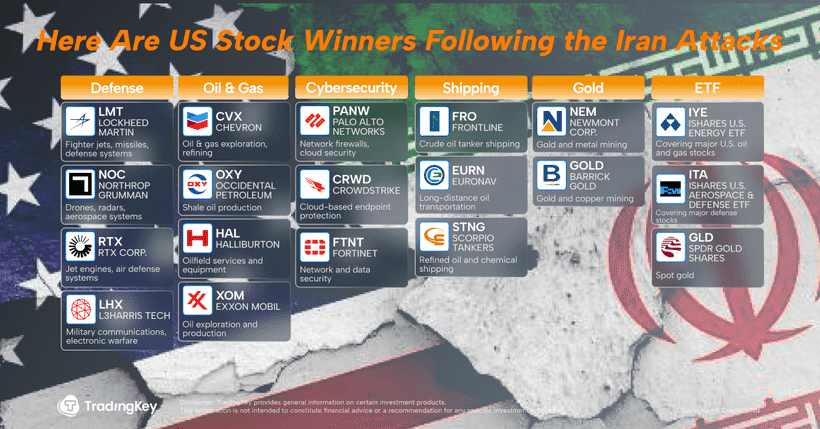
Middle East Conflict Escalates, Global Stocks and Bonds Fall, Was It Really Caused by One Sentence From Trump?
TradingKey - On Tuesday local time, the escalation of conflict in the Middle East triggered intense global market volatility. Gold (XAUUSD), bonds, and stocks fell in tandem, an unconventional movement that shattered the conventional logic of "buying safe havens during turmoil and trading stocks during stability."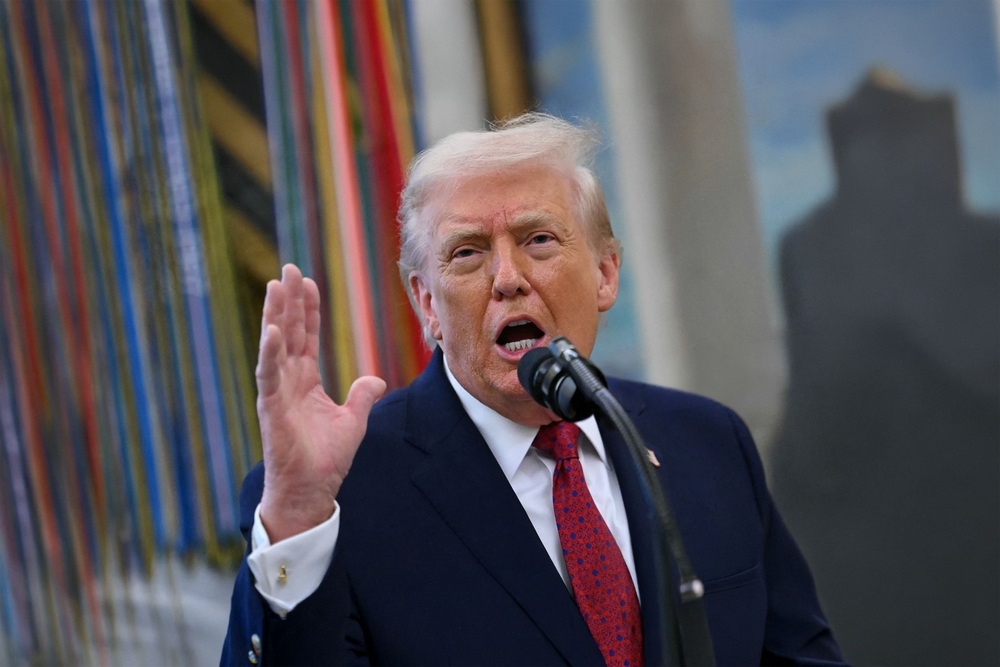
Gold’s $5,000 Breaking Point: Why the Middle East Crisis Isn't Saving the Bulls
As US-Iran tensions continue to escalate, gold prices saw a sudden plunge. Has the metal already peaked?
Partnering With Lumentum and Coherent, Can Nvidia’s $4 Billion CPO Bet Support the Future of AI Computing Power?
TradingKey - On Monday, March 2 local time, NVIDIA (NVDA) announced that it has entered into a deep strategic partnership with optical technology manufacturers Lumentum (LITE) and Coherent (COHR). NVIDIA will invest $2 billion in each company, totaling a massive $4 billion investment. This move advances NVIDIA's strategic layout in the field of AI data center network architecture to a new stage.
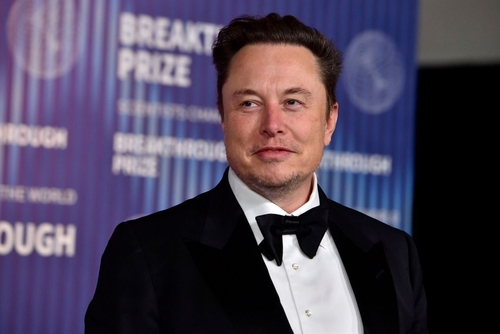
AGI Approaches: 2026 May Be Artificial Intelligence Turning Point, Musk Warns White-Collar Class Will Bear the Brunt
TradingKey — Have you noticed that the pace of artificial intelligence evolution is exceeding the limits of human intuitive perception? From the debut of ChatGPT to the rapid rise of multimodal AI systems, the development of AI technology has demonstrated a non-linear, exponential acceleration in ju