Sportswear brand On sees possible boost from lower US tariff rate

By Helen Reid
March 3 (Reuters) - On Holding ONON.N sees lower U.S. tariff rates after the Supreme Court struck down the government's emergency levies as a possible boost for the fast-growing Swiss sportswear brand, CEO Martin Hoffmann said on Tuesday as it delivered strong quarterly results.
The company, which sells running shoes for $150 and up, forecast at least 23% sales growth in 2026 on a constant-currency basis — moderating from the 30% growth reported in 2025, yet outpacing bigger rivals Nike NKE.N and Adidas ADSGn.DE.
On also sees annual profit margin increasing to at least 63% from 62.8% in 2025, with the outlook not yet factoring in a lower U.S. tariff rate.
The U.S., On's biggest market, began collecting a temporary new 10% blanket tariff on imports last week, with plans to lift it to 15%. Even then, it would remain well below the additional 20% duty imposed last year on countries such as Vietnam and Indonesia, key sourcing hubs for On.
"If we see 15% becoming the new reality, this would be an additional upside to the guidance that we gave," Hoffmann told Reuters.
On's fourth-quarter sales rose 22.6% to 743.8 million Swiss francs ($949.69 million), helped by limited discounting during the holiday season. Analysts' on average estimated 724.3 million francs, according to data compiled by LSEG.
A focus on affluent shoppers has helped the company, while brands targeting lower-income consumers have been burned as they cut spending in an increasingly polarized economy, especially in the U.S.
"The strong product pipeline that we have, the innovation that we bring to the market, and that premium position is really building momentum globally, and is resonating with the customer globally," Hoffmann said, adding that the brand plans 10 to 15 store openings this year.
Quarterly adjusted earnings before interest, taxes, depreciation and amortization rose 31.8% to 131 million francs.
Hoffmann also said On was among the companies that have filed for tariff refunds and that any proceeds would be reinvested in the business rather than passed on to consumers.
($1 = 0.7832 Swiss francs)
Related Articles
How Much Impact Will Global Economy Face If Strait of Hormuz Is Blocked Long-Term?
TradingKey - Over the past year, even against a backdrop where the Trump administration frequently instigated trade frictions, undermined trust in international institutions, and created diplomatic uncertainty, the global economy demonstrated greater-than-expected resilience. The market seemed to signal that geopolitics and economic growth could "follow separate paths." However, a fundamental shift occurred when military actions by the U.S. and Israel against Iran escalated into a regional conflict.
Bitcoin Stuck in Range Struggle, Can US-Iran Conflict Help a Breakout?
As the US-Iran conflict continues to escalate, Bitcoin prices remain range-bound and are losing their war premium.
JPMorgan Warns Hormuz Blockade Risks Oil Shutdown in 25 Days, But How Will the US-Iran Conflict Shape Global Oil Prices?
TradingKey - Following the announcement on the night of February 28 banning all vessels from passing through the Strait of Hormuz, JPMorgan Chase issued a warning: if the Strait of Hormuz is completely blocked, the combined onshore and offshore storage capacity of Middle Eastern oil-producing nation
US-Iran Conflict Ignites, Global Arms Race Heats Up, Will Defense Stocks See a New Round of Gains?
TradingKey - On February 28 local time, the United States and Israel launched joint large-scale airstrikes against Iran, targeting its nuclear facilities, missile industry, and naval forces. This marks another sharp escalation in the conflict following the US military strikes on Iranian nuclear facilities in June last year. The military operation not only exacerbates already strained geopolitical tensions but has also sent shockwaves through global capital markets, which is expected to further boost defense stocks.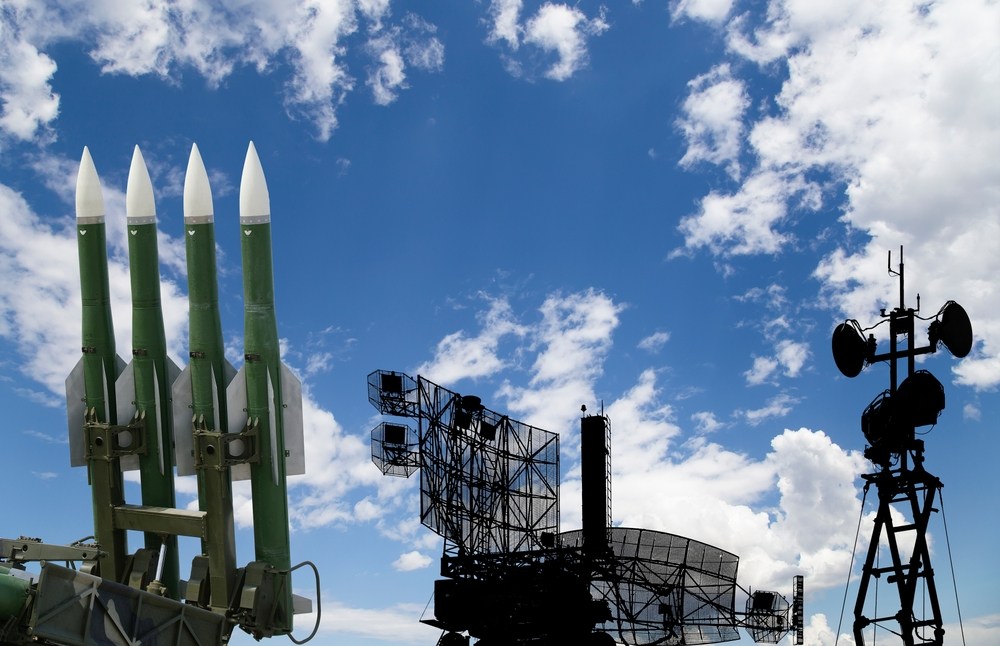
The Hyperliquid Phenomenon: HYPE Ecosystem’s Path to $250
Explore the Hyperliquid (HYPE) 2026 outlook as it evolves from a high-speed DEX into a powerful Layer 1 ecosystem. This analysis breaks down the $2.95 trillion trading volume, the impact of the HIP-4 prediction market launch, and the HYPE token's technical resilience at the $31.77 level amidst globa