



UPDATE-Bund yields edge higher, carry trade supports spreads

By Stefano Rebaudo
Jan 27 (Reuters) - Bund yields inched higher on Tuesday after ending a seven-day climb the day before, keeping close to their highest levels since last March, when German political leaders agreed to sharply increase fiscal spending.
Global trade tensions lingered in the background after U.S. President Donald Trump said on Monday he would raise tariffs on South Korean goods.
Germany’s 10-year government bond yield DE10YT=RR, the euro area’s benchmark, rose one basis point to 2.88%, after hitting 2.9070% on Friday. It reached 2.94% in mid-March.
Germany's net borrowing in 2025 came in well below the level set out in its budget plan, helped by lower-than-expected spending and higher-than-expected revenues, the finance ministry said on Friday.
German 2-year yields DE2YT=RR, more sensitive to expectations for policy rates, were flat at 2.11%.
The 30-year yield DE30YT=RR was up 1.5 bps at 3.49%. It rose to 3.556% in late December, its highest since summer 2011.
ECB ON HOLD DAMPENS VOLATILITY
Strategists said market volatility has eased from the levels seen when tensions over Greenland escalated, as investors shifted their focus back to the European Central Bank’s steady policy stance. In this context, demand for higher‑yielding bonds has picked up again.
Money markets keep pricing a 15% chance of an ECB rate cut this summer EURESTECBM5X6=ICAP and about 35% chance of a rate hike by April 2027 EURESTECBM11X12=ICAP.
"The carry-positive environment is also reflected in the tight spreads on European government bonds," said Michiel Tukker, rate strategist at ING.
Carry refers to the extra return investors earn by holding higher‑yielding sovereign debt, such as Italian or French bonds, while funding the position at lower euro money‑market rates.
"The spread between 10-year Italian and German government bonds is hitting new lows and French budget wins quickly translate to tighter spreads too," he said.
Tukker said he expected spreads to widen eventually, but that catalysts for such a move are missing for now.
The yield gap between French government bonds and safe-haven Bunds DE10FR10=RR - a market gauge of the risk premium investors demand to hold French debt - slightly widened to 56 bps after hitting a fresh 19-month low at 55.50 bps on Monday.
"When you look at the details of the French budget, it doesn’t really imply that the public deficit will shrink a lot or that public debt will come down," said Marco Wagner, economist at Commerzbank.
"But I think the main point, from the markets’ perspective, is that with this budget they’re basically buying themselves a year of added political stability," he said.
The French government survived two votes of no-confidence in parliament on Friday over its decision to ram through the income part of the 2026 budget.
Italy’s 10-year government bond yields IT10YT=RR rose one bp to 3.48%. The gap against Bunds was at 57 bps, after tightening to 53.50 in mid-January, its lowest level since August 2008.
Related Articles
Coca Cola (KO) Q4 Earnings Preview: Look for the Upside in the AI Initiatives, not in the Revenue and the EPS
Coca-Cola (KO) enters its fourth-quarter 2025 earnings call tomorrow with significant momentum. However, a fundamental shift is occurring.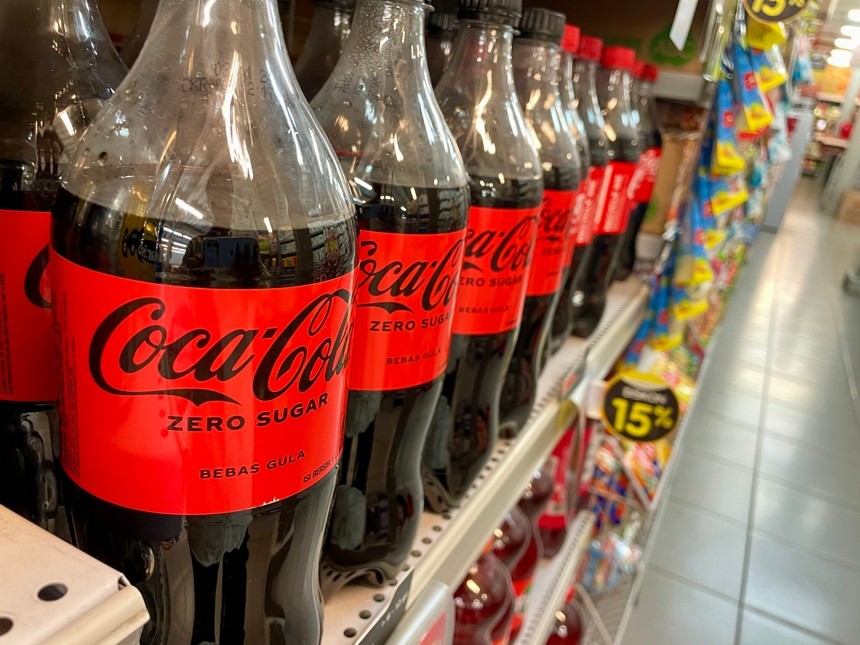
Warsh’s Fed Era Signals a Death Knell for QE, Jolting the $30 Trillion Treasury Market
With Warsh’s nomination, his past proposals for governing the Federal Reserve are being brought to the forefront. A central issue is the formulation of a new "1951 Accord" to restructure the relationship between the Fed and the Treasury. Analysts suggest such a move could impact the $30 trillion Tre
Amazon Stock Predictions for 2026 to 2030: Will They Exceed Expectations and Achieve Major Long-Term Goals?
TradingKey - As we head into 2026, many investors are questioning where Amazon (AMZN) fits into the technology world.
A Crash After a Surge: Why Silver Lost 40% in a Week?
TradingKey - Spot silver (XAGUSD) prices continue to decline. Silver plunged 20% on Thursday, breaking below $71 per ounce, with the sell-off intensifying on Friday as prices fell further below $64. Compared to the all-time high set on January 29, silver prices have retraced more than 40%, wiping out nearly all gains accumulated over the previous month.

