


Palladium (XPDUSD) Is up 2.01% on Jun 16: What Is Driving the Move?



Palladium (XPDUSD) is up 2.01% at Jun 16 09:15(ET), now at $1366.46, with a 7-day up of 11.38%.
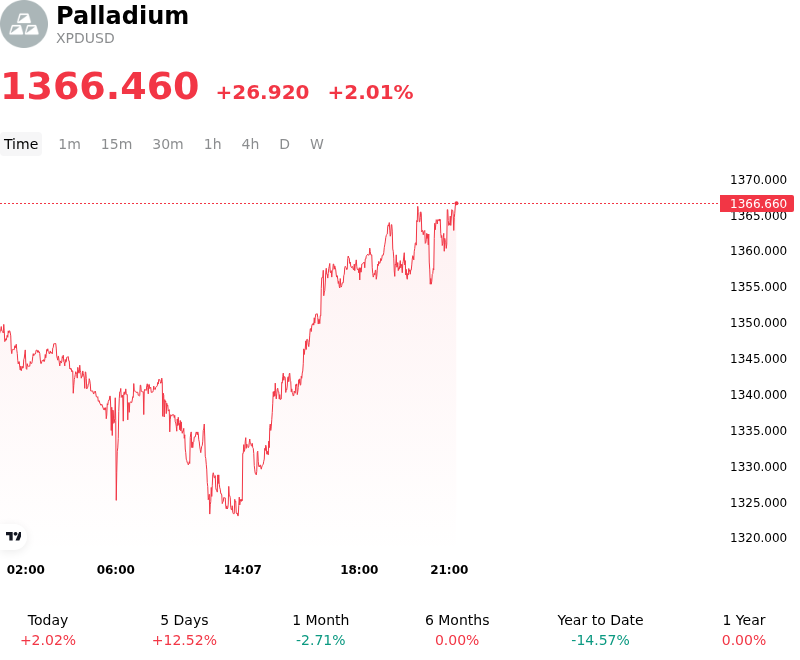
What is driving Palladium (XPDUSD)’s stock price up today?
The primary driver behind the intraday advance in palladium was a significant shift in macroeconomic sentiment and monetary policy expectations. The announcement of a preliminary peace agreement between the United States and Iran significantly eased geopolitical tensions in the Middle East, leading to a sharp decline in energy prices and cooling global inflationary concerns. This development prompted market participants to scale back expectations for restrictive central bank policies. Specifically, odds of upcoming interest rate hikes were pared down just as the Federal Reserve commenced its June policy meeting under its new leadership. The resulting relief in interest rate expectations and a softer outlook for the US dollar created a highly favorable environment for the precious metals complex, encouraging capital inflows into non-yielding assets like palladium.
On the supply side, the market continues to reprice tight structural conditions in key producing nations. Russia, which accounts for approximately forty percent of global palladium output, faces constrained production, with the major state-backed producer guiding its annual output to its lowest levels in twenty years. This structural supply tightness is mirrored in South Africa, where mining operations are grappling with persistent inflationary pressures, including double-digit jumps in labor and energy costs alongside state utility tariff hikes. Furthermore, the recent conclusion of the U.S. trade investigation into Russian unwrought palladium ended months of regulatory uncertainty regarding potential prohibitive tariffs. With the threat of a major trade disruption removed, physical market participants and institutional investors are focusing back on tight physical market balances.
From a demand perspective, the industrial outlook for palladium remains resilient despite historical concerns over electric vehicle adoption. Because the automotive sector accounts for nearly eighty percent of global palladium demand for use in catalytic converters, the metal is highly sensitive to shifts in vehicle manufacturing. The reality of a slower-than-expected transition to battery-only electric vehicles, coupled with accelerating global market share for hybrid vehicles—which require substantial platinum-group metal loadings—has forced a reassessment of long-term demand models. Easing macroeconomic headwinds and improving risk sentiment have bolstered industrial expectations, providing a solid foundation for palladium as it tests key technical support levels.
Technical Analysis of Palladium (XPDUSD)
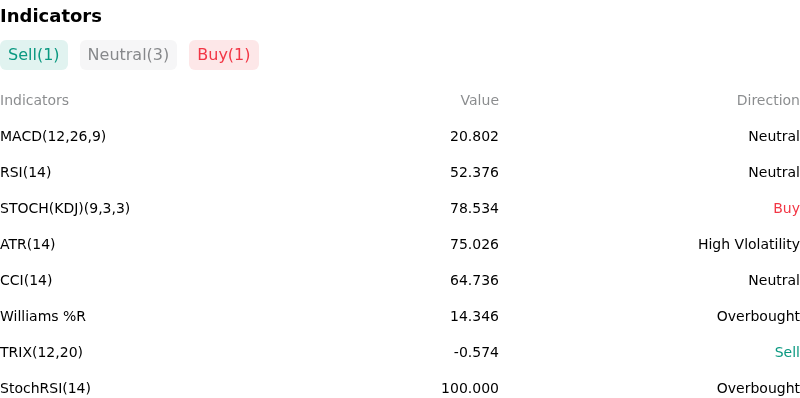
Technically, Palladium (XPDUSD) shows a MACD (12,26,9) value of 20.802, indicating a neutral signal. The RSI at 52.376 suggests neutral condition and the Williams %R at 14.346 suggests overbought condition. Please monitor closely.
More details about Palladium (XPDUSD)
Recent Events and Risks:
- **Structural Demand Destruction from the EV Transition:** The accelerating global transition toward battery electric vehicles (BEVs), particularly in China, is structurally reducing demand for internal combustion engine catalytic converters. Analysts expect this shift to widen the palladium market's surplus, which is actively suppressing long-term price recovery and triggering speculative liquidations of long positions.
- **Severe Producer Margin Squeezes in South Africa:** Escalating mining costs in South Africa—exacerbated by Eskom's 8.76% electricity tariff hike and high diesel costs—have forced major producers like Sibanye-Stillwater to report double-digit year-over-year increases in unit operating costs. This margin pressure raises the risk of abrupt mine closures, operations restructuring, or emergency inventory liquidations to meet cash-flow requirements, driving spot volatility.
- **Macro-Driven Selling and PGM Complex Weakness:** Spot palladium has faced severe near-term technical damage, dropping below $1,340/oz as part of a broader sell-off across the precious and industrial metals complex. Institutional strategists note that high-for-longer interest rates and macroeconomic headwinds are actively dampening industrial demand, prompting money managers to increase short-side positioning.
- **Disruptive Trade Friction and Russian Redirection Risks:** Following the finalization of a 133% anti-dumping duty and a 109% countervailing duty by the U.S. on Russian palladium, there is heightened risk that Russian producers will aggressively discount and reroute heavy physical inventories to non-Western hubs. This potential offloading in Asian markets threatens to create regional supply gluts, placing further downward pressure on global benchmark spot prices (XPDUSD).
This article may include AI-generated content that is human-reviewed, which is for reference and general information purposes only and does not constitute investment advice.
Recommended Articles







Comments (0)
Click the $ button, enter the symbol, and select to link a stock, ETF, or other ticker.