


Banco Bilbao Vizcaya Argentaria SA Stock (BBVA) Moved Down by 3.07% on Apr 23: Facts Behind the Movement



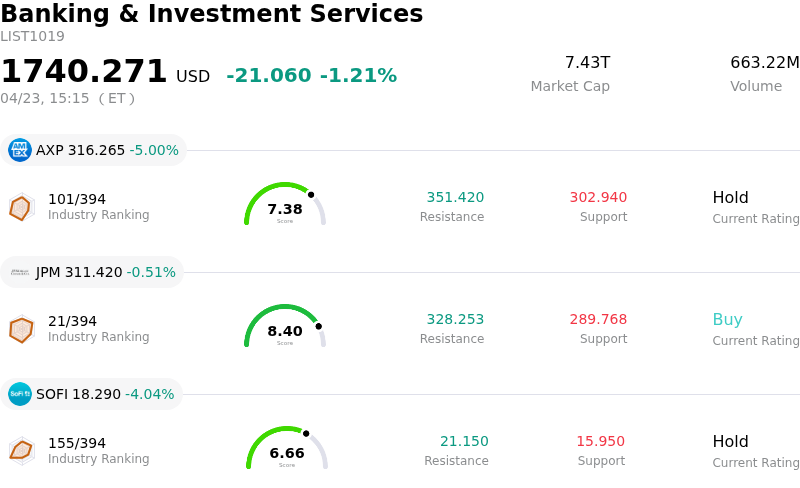
Banco Bilbao Vizcaya Argentaria SA (BBVA) moved down by 3.07%. The Banking & Investment Services sector is down by 1.21%. The company underperformed the industry. Top 3 stocks by turnover in the sector: American Express Co (AXP) down 5.00%; JPMorgan Chase & Co (JPM) down 0.51%; SoFi Technologies Inc (SOFI) down 4.04%.
What is driving Banco Bilbao Vizcaya Argentaria SA (BBVA)’s stock price down today?
BBVA's share price experienced a decline today, primarily influenced by recent analyst sentiment adjustments and ongoing macroeconomic and geopolitical concerns. A significant factor contributing to this negative movement is the series of recent analyst downgrades. UBS Group notably shifted its rating for BBVA from a "Buy" to a "Neutral" stance on April 20, concurrently lowering its price target. This decision was based on a perceived limited potential for further earnings per share (EPS) upgrades and constrained valuation rerating, alongside heightened risks associated with the bank's operations in Turkey. Similarly, Barclays downgraded BBVA's stock rating from "Overweight" to "Equalweight," also reducing its price target, citing the bank's increased exposure to external variables such as emerging market macroeconomic conditions, interest rates, and foreign exchange rates, noting limited scope for internal improvements at the Spanish bank.
These downgrades arrive amidst broader macroeconomic and geopolitical uncertainties that are affecting the European banking sector. Concerns persist regarding macroeconomic instability in Turkey, particularly with rising oil prices threatening the disinflation path and potentially leading to higher policy rate expectations, which could negatively impact BBVA's Turkish unit earnings. Geopolitical tensions have also contributed to expectations of structurally higher energy costs, fueling inflation and potential interest rate pressures across Europe, with the European Central Bank revising its inflation forecasts upwards. An IMF report from April 2026 also highlighted a deteriorated outlook for euro area growth, projecting 1.1% amid elevated risks due to new energy supply shocks linked to conflicts in the Middle East, further exacerbating a cautious market environment.
While BBVA recently completed another tranche of its extraordinary share buyback program, demonstrating a commitment to shareholder returns, and executed two synthetic securitisations to release regulatory capital and boost lending capacity, these positive developments appear to be overshadowed by the combined impact of analyst re-ratings and a challenging global economic environment. Additionally, short-term technical indicators and options data from mid-April had already suggested a potential for bearish sentiment. Investors are also looking ahead to BBVA's Q1 2026 earnings presentation scheduled for April 30, which will be scrutinized in light of these recent downgrades and macro concerns.
Technical Analysis of Banco Bilbao Vizcaya Argentaria SA (BBVA)
Technically, Banco Bilbao Vizcaya Argentaria SA (BBVA) shows a MACD (12,26,9) value of [0.26], indicating a buy signal. The RSI at 48.49 suggests neutral condition and the Williams %R at -60.39 suggests oversold condition. Please monitor closely.
Fundamental Analysis of Banco Bilbao Vizcaya Argentaria SA (BBVA)
Banco Bilbao Vizcaya Argentaria SA (BBVA) is in the Banking & Investment Services industry. Its latest annual revenue is $44.16B, ranking 10 in the industry. The net profit is $11.40B, ranking 9 in the industry. Company Profile
Over the past month, multiple analysts have rated the company as Buy, with an average price target of $25.29, a high of $28.56, and a low of $22.03.
More details about Banco Bilbao Vizcaya Argentaria SA (BBVA)
Company Specific Risks:
- Recent analyst downgrades by UBS and Barclays, citing valuation concerns, limited scope for earnings per share revisions, and perceived overvaluation at current levels.
- Significant exposure to macroeconomic headwinds in key emerging markets, particularly Turkey, where rising oil prices threaten disinflation, and Mexico, due to uncertainty surrounding the USMCA review, impacting earnings volatility.
- Ongoing legal and regulatory uncertainty associated with the "Cenyt Case" investigation, including the Spanish High Court's dismissal of BBVA's appeal and the formal request for substantial financial penalties.
- Undisclosed earnings per share and revenue forecasts in the recent Q4 2025 earnings report, creating a gap in comparison against analyst expectations and contributing to market uncertainty.
This article may include AI-generated content that is human-reviewed, which is for reference and general information purposes only and does not constitute investment advice.
Recommended Articles







Comments (0)
Click the $ button, enter the symbol, and select to link a stock, ETF, or other ticker.