


International Business Machines Corp Stock (IBM) Opened Down by 8.70% on Apr 23: What Signal Does It Send?



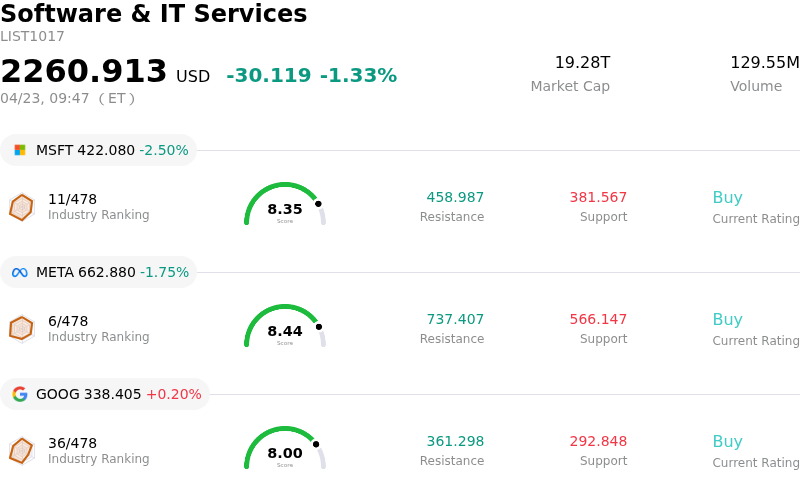
International Business Machines Corp (IBM) opened down by 8.70%. The Software & IT Services sector is down by 1.33%. The company underperformed the industry. Top 3 stocks by turnover in the sector: Microsoft Corp (MSFT) down 2.50%; Meta Platforms Inc (META) down 1.75%; Alphabet Inc Class C (GOOG) up 0.20%.
What is driving International Business Machines Corp (IBM)’s stock price down today?
IBM's share price experienced significant downward pressure today, largely attributed to investor reaction following the release of its first-quarter 2026 earnings report. Despite the company surpassing analyst expectations on both revenue and adjusted earnings per share for the quarter, the stock declined due to IBM's decision to reiterate its full-year 2026 guidance for revenue and free cash flow, rather than raising it.
The technology giant reported first-quarter revenue of $15.9 billion, exceeding consensus estimates that ranged between $15.6 billion and $15.7 billion. Additionally, adjusted earnings per share reached $1.91, outperforming analyst projections of $1.81 to $1.82. This strong quarterly performance, particularly in its software and infrastructure segments, highlighted growth fueled by AI adoption and key product demand.
However, the management's "prudent" approach to maintaining its existing full-year outlook, citing macroeconomic uncertainties and geopolitical headwinds, created disappointment among investors who had anticipated an upward revision. This cautious stance, despite a solid start to the year, led to concerns about the company's growth trajectory. Some analysts also adjusted their price targets downward, reflecting factors such as potential dilution from the Confluent acquisition and anticipated softness in the consulting business.
Furthermore, broader industry dynamics, specifically renewed fears about AI-driven disruption across the software sector, may have contributed to the negative sentiment. While IBM's CEO emphasized AI as a tailwind for the business, the market continues to assess the impact of evolving AI technologies on traditional software models and consulting services.
Technical Analysis of International Business Machines Corp (IBM)
Technically, International Business Machines Corp (IBM) shows a MACD (12,26,9) value of [-1.79], indicating a neutral signal. The RSI at 54.23 suggests neutral condition and the Williams %R at -23.72 suggests oversold condition. Please monitor closely.
Fundamental Analysis of International Business Machines Corp (IBM)
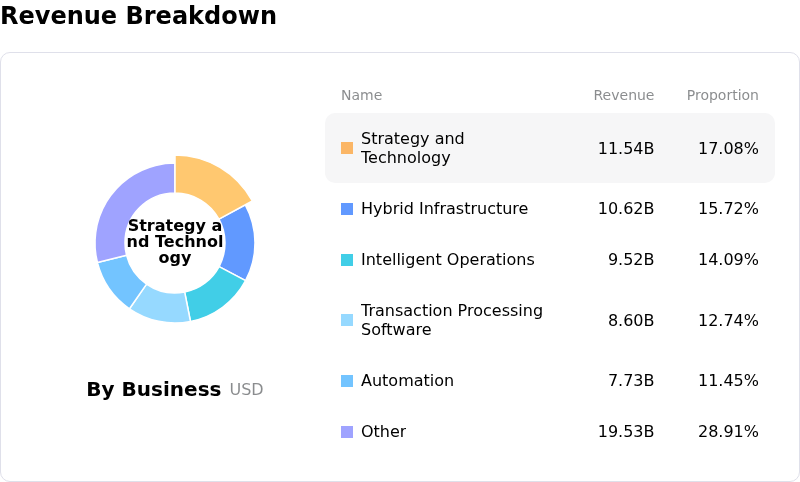
International Business Machines Corp (IBM) is in the Software & IT Services industry. Its latest annual revenue is $67.53B, ranking 7 in the industry. The net profit is $10.59B, ranking 11 in the industry. Company Profile
Over the past month, multiple analysts have rated the company as Buy, with an average price target of $289.14, a high of $365.00, and a low of $215.00.
More details about International Business Machines Corp (IBM)
Company Specific Risks:
- IBM's recent $17 million settlement with the Department of Justice over allegations of discrimination in its federal contract-related employment practices, the first under a new Civil Rights Fraud Initiative, exposes the company to heightened regulatory scrutiny and potential reputational damage impacting future government business.
- Despite exceeding Q1 2026 revenue and EPS estimates, IBM's stock experienced a significant decline following its earnings report due to management's decision to maintain, rather than raise, full-year guidance, signaling investor disappointment and concern over a conservative outlook amidst macro uncertainties.
- The reported deceleration in IBM's software segment growth, from 14% year-over-year in the prior quarter to 11% in Q1 2026, raises concerns about the core business segment's vitality and its ability to sustain future revenue expansion.
- Increased debt, which rose $5.1 billion year-to-date to $66.4 billion, partly stemming from the $11.6 billion acquisition of Confluent, introduces greater financial leverage and potential pressure on free cash flow, especially when considering refinancing in a high-interest rate environment.
This article may include AI-generated content that is human-reviewed, which is for reference and general information purposes only and does not constitute investment advice.
Recommended Articles










Comments (0)
Click the $ button, enter the symbol, and select to link a stock, ETF, or other ticker.