


Avis Budget Group Inc Stock (CAR) Moved Up by 9.85% on Apr 20: Drivers Behind the Movement



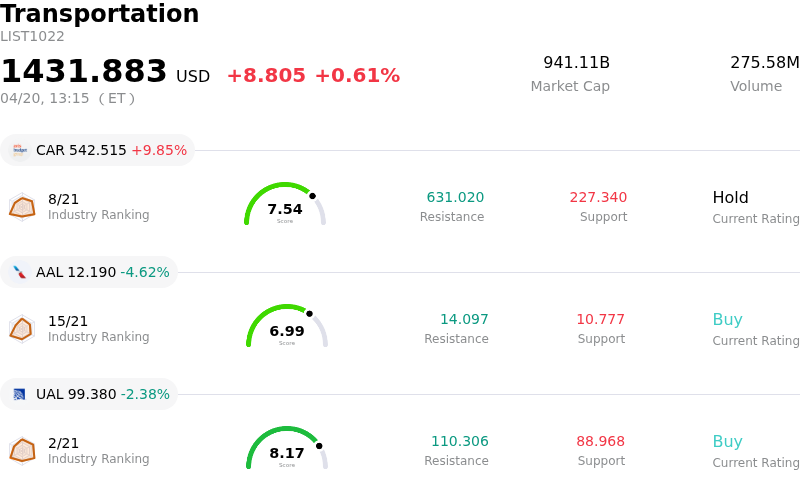
Avis Budget Group Inc (CAR) moved up by 9.85%. The Transportation sector is up by 0.61%. The company outperformed the industry. Top 3 stocks by turnover in the sector: Avis Budget Group Inc (CAR) up 9.85%; American Airlines Group Inc (AAL) down 4.62%; United Airlines Holdings Inc (UAL) down 2.38%.
What is driving Avis Budget Group Inc (CAR)’s stock price up today?
Avis Budget Group (CAR) experienced significant intraday volatility today, with its share price moving upward. This movement appears to be primarily driven by a powerful short squeeze, fueled by the company's substantial short interest. High short interest can lead to rapid price increases as short sellers are compelled to buy shares to cover their positions, intensifying upward momentum.
Adding to this upward pressure are favorable industry dynamics. Recent disruptions at major U.S. airports, including TSA staffing issues, have reportedly diverted a considerable number of travelers toward rental car services. This macro catalyst has boosted expectations for increased rental volumes and pricing, positively impacting the car rental sector. The rental car industry is also showing broader signs of recovery, benefiting from stronger pricing trends and resilient travel demand. This combination of market mechanics and improved, albeit potentially temporary, industry conditions has attracted momentum-focused traders.
However, the rally unfolds against a backdrop of considerable caution from financial analysts. Multiple firms have recently downgraded CAR, citing significant valuation concerns that are not justified by underlying business fundamentals. The company has faced substantial net losses in its most recent fiscal year and fourth quarter, coupled with negative total equity and a large debt load, as well as a significant impairment charge related to its electric vehicle fleet. Analysts widely view the stock as overvalued, with price targets suggesting a substantial downside from current levels.
Furthermore, the company's announcement of an At-the-Market equity offering poses a risk of dilution for existing shareholders. Technical indicators also suggest that the stock is in extremely overbought territory, increasing the likelihood of sharp pullbacks. Therefore, while current market sentiment and a short squeeze are propelling the stock higher, underlying financial risks and analyst skepticism point to potential instability.
Technical Analysis of Avis Budget Group Inc (CAR)
Technically, Avis Budget Group Inc (CAR) shows a MACD (12,26,9) value of [57.81], indicating a buy signal. The RSI at 92.58 suggests overbought condition and the Williams %R at -2.10 suggests oversold condition. Please monitor closely.
Fundamental Analysis of Avis Budget Group Inc (CAR)
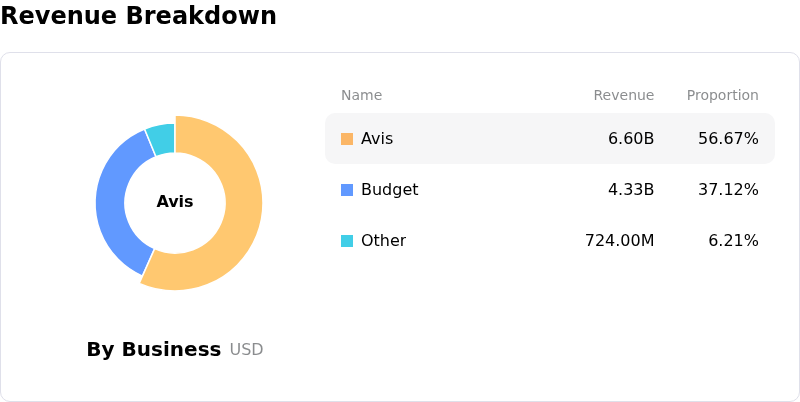
Avis Budget Group Inc (CAR) is in the Transportation industry. Its latest annual revenue is $11.65B, ranking 8 in the industry. The net profit is $-889.00M, ranking 25 in the industry. Company Profile
Over the past month, multiple analysts have rated the company as Hold, with an average price target of $103.67, a high of $128.00, and a low of $85.00.
More details about Avis Budget Group Inc (CAR)
Company Specific Risks:
- Avis Budget Group's current stock valuation is significantly detached from underlying fundamentals, with analysts, including Barclays on April 20, 2026, downgrading the stock to "Sell" and citing unjustifiable valuations largely driven by an unsustainable short squeeze rather than improved business performance.
- The recent dramatic surge in CAR's stock price, including over 400% in the last six weeks, is primarily attributed to a short squeeze and technical trading factors, with short interest nearing 100% of the float, creating extreme volatility and a high risk of a sharp reversal once the technical pressures subside.
- The company has prepared for potential share dilution through an "at-the-market" equity offering of up to 5,000,000 shares, as detailed in an 8-K filing on March 27, 2026, which could be utilized to capitalize on the elevated stock price but would dilute existing shareholders.
- Underlying financial weaknesses persist, including concerns about debt management, negative profitability indicators, and a low financial strength score, which could pose long-term challenges despite short-term demand tailwinds.
This article may include AI-generated content that is human-reviewed, which is for reference and general information purposes only and does not constitute investment advice.
Recommended Articles









Comments (0)
Click the $ button, enter the symbol, and select to link a stock, ETF, or other ticker.