


Procter & Gamble Co Stock (PG) Moved Up by 3.07% on Apr 17: Key Drivers Unveiled



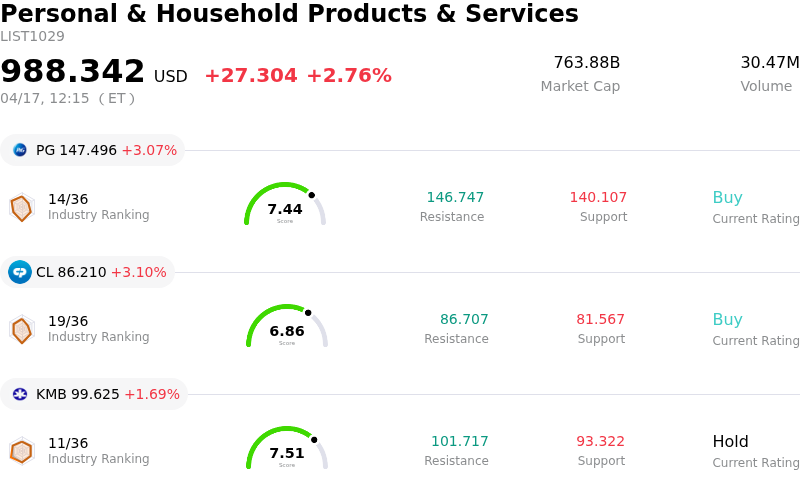
Procter & Gamble Co (PG) moved up by 3.07%. The Personal & Household Products & Services sector is up by 2.76%. The company outperformed the industry. Top 3 stocks by turnover in the sector: Procter & Gamble Co (PG) up 3.07%; Colgate-Palmolive Co (CL) up 3.10%; Kimberly-Clark Corp (KMB) up 1.69%.
What is driving Procter & Gamble Co (PG)’s stock price up today?
Procter & Gamble (PG) experienced an upward movement on April 17, 2026, driven primarily by positive sentiment surrounding its shareholder return program and encouraging analyst perspectives ahead of its upcoming earnings report. The company recently announced an increase in its quarterly dividend for the 70th consecutive year, a significant event that often appeals to income-focused investors and signals financial stability and confidence from management. This dividend hike, combined with plans for substantial share buybacks, underscores P&G's commitment to returning capital to shareholders, which can act as a strong catalyst for stock performance.
Moreover, the market's anticipation of the company's third-quarter 2026 earnings, scheduled for release on April 24, also contributed to the positive price action. Analysts generally expect a year-over-year increase in both earnings per share and revenue for the quarter. While some firms recently adjusted price targets downward, the overall consensus from analysts remains a "Moderate Buy" or "Buy" rating, with many viewing the stock as potentially undervalued at current levels.
Analysts from firms such as UBS reiterated a "Buy" rating for PG on the very day of the price increase, forecasting sequential progress in organic sales growth for the upcoming quarter. This type of reaffirmation from institutional analysts can bolster investor confidence and lead to positive trading activity. The prevailing sentiment among some market observers suggests that the stock is trading at a historically attractive valuation, offering a compelling opportunity for long-term investors.
Additionally, recent business developments, such as the expansion of P&G's professional cleaning portfolio with the Mr. Clean PRO launch and a new multi-year NHL partnership in Canada, point to strategic initiatives that could enhance brand visibility and contribute to future revenue growth, further supporting the positive outlook for the stock.
Technical Analysis of Procter & Gamble Co (PG)
Technically, Procter & Gamble Co (PG) shows a MACD (12,26,9) value of [-2.43], indicating a neutral signal. The RSI at 40.52 suggests neutral condition and the Williams %R at -61.77 suggests oversold condition. Please monitor closely.
Fundamental Analysis of Procter & Gamble Co (PG)
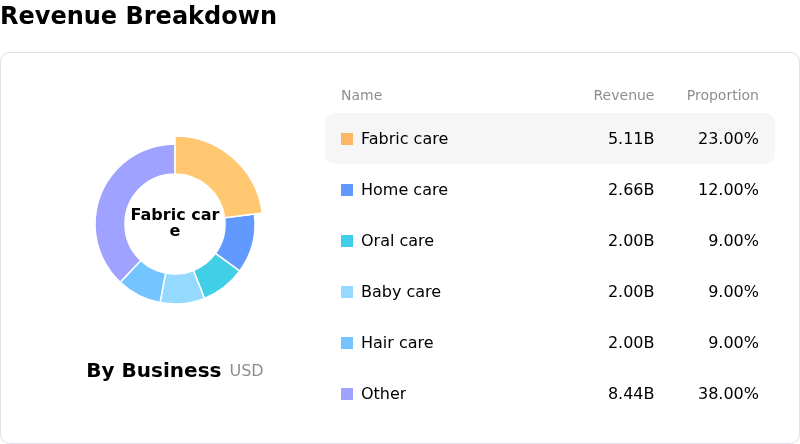
Procter & Gamble Co (PG) is in the Personal & Household Products & Services industry. Its latest annual revenue is $84.28B, ranking 1 in the industry. The net profit is $15.68B, ranking 1 in the industry. Company Profile
Over the past month, multiple analysts have rated the company as Buy, with an average price target of $164.53, a high of $186.00, and a low of $142.00.
More details about Procter & Gamble Co (PG)
Company Specific Risks:
- Multiple analyst firms, including Barclays, Bank of America, and Wells Fargo, have recently lowered price targets for PG, indicating a cautious outlook and concerns over the stock's premium valuation relative to industry averages.
- The company faces persistent input cost inflation, particularly from oil-related expenses exacerbated by geopolitical events, which it struggles to fully offset due to waning pricing power and increasing consumer resistance to further price increases.
- Procter & Gamble reported flat headline organic sales growth and a 1% decline in overall sales volumes in its latest quarter, reflecting a challenging consumer environment where stretched household budgets lead to value-driven purchasing and reduced demand for core categories.
- Recent insider selling, totaling approximately 348,618 shares worth about $55.5 million over the past 90 days, suggests a potential decrease in internal confidence regarding the company's near-term prospects.
This article may include AI-generated content that is human-reviewed, which is for reference and general information purposes only and does not constitute investment advice.
Recommended Articles







Comments (0)
Click the $ button, enter the symbol, and select to link a stock, ETF, or other ticker.