


Dell Technologies Inc Stock (DELL) Moved Down by 4.09% on Apr 14: What Investors Need To Know



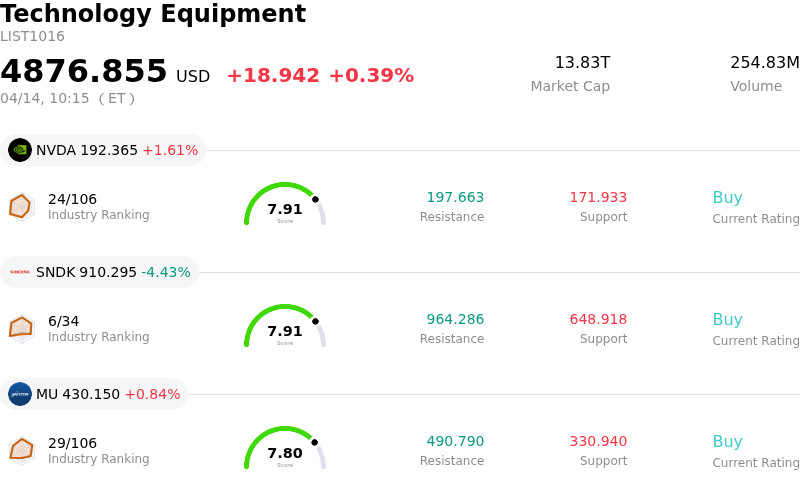
Dell Technologies Inc (DELL) moved down by 4.09%. The Technology Equipment sector is up by 0.39%. The company underperformed the industry. Top 3 stocks by turnover in the sector: NVIDIA Corp (NVDA) up 1.61%; SanDisk Corporation (SNDK) down 4.43%; Micron Technology Inc (MU) up 0.84%.
What is driving Dell Technologies Inc (DELL)’s stock price down today?
Dell Technologies experienced a notable decline today, driven primarily by the dissipation of a recent speculative surge. The stock had seen an earlier rise following unsourced reports suggesting that Nvidia might be pursuing a significant acquisition in the PC sector, which included Dell as a potential target. However, Nvidia explicitly denied these acquisition rumors, leading to a swift reversal of those gains and contributing to today's downward movement.
This retraction of takeover speculation occurred against a backdrop of several recent analyst adjustments. Earlier in April, Weiss Ratings downgraded Dell Technologies from a "buy" to a "hold" rating, and another analyst team excluded the company from their top stock recommendations, citing concerns about its competitive positioning. While some analysts, such as BofA Securities, recently raised their price targets on Dell due to strong AI infrastructure momentum, the cautious sentiment from other firms regarding the company's competitive landscape and the broader market likely weighed on investor confidence.
Furthermore, the broader personal computer market faces headwinds. Industry forecasts from early March indicated a projected decline in worldwide PC shipments for 2026, partly due to rising memory costs and an anticipated increase in PC lifetimes. There have also been reports suggesting that consumer demand for new AI-powered PCs may not be as robust as initially anticipated, with Dell executives reportedly acknowledging that customers prioritize traditional factors like price and performance over advanced AI features. This could imply a softer demand environment for Dell's higher-margin AI-driven products.
Adding to these pressures, recent insider selling activity, including a disposition of shares by Dell's CFO earlier this month, may also have contributed to a sense of profit-taking among investors, especially after the stock had reached a new 12-month high. Despite strong financial results and positive fiscal 2027 guidance reported in February, and an announced dividend increase and share repurchase program, the immediate impact of the debunked acquisition rumor and the prevailing market sentiment appear to have overshadowed these underlying strengths.
Technical Analysis of Dell Technologies Inc (DELL)
Technically, Dell Technologies Inc (DELL) shows a MACD (12,26,9) value of [10.07], indicating a buy signal. The RSI at 68.35 suggests neutral condition and the Williams %R at -4.38 suggests oversold condition. Please monitor closely.
Fundamental Analysis of Dell Technologies Inc (DELL)
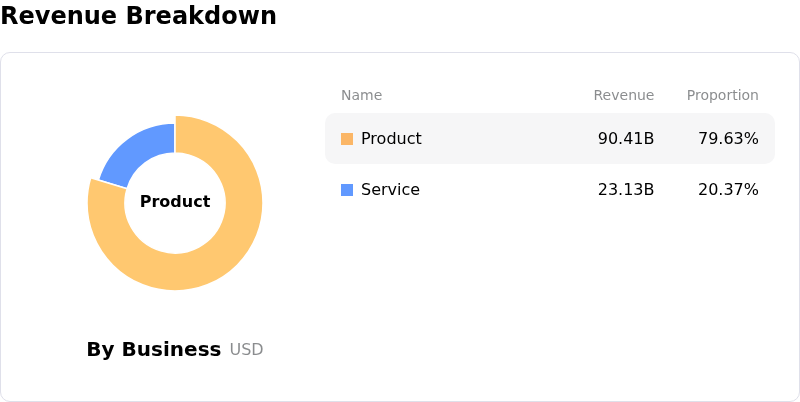
Dell Technologies Inc (DELL) is in the Technology Equipment industry. Its latest annual revenue is $113.54B, ranking 2 in the industry. The net profit is $5.94B, ranking 3 in the industry. Company Profile
Over the past month, multiple analysts have rated the company as Buy, with an average price target of $171.77, a high of $220.00, and a low of $110.00.
More details about Dell Technologies Inc (DELL)
Company Specific Risks:
- The company experienced significant intraday volatility and a 3.3% decline in after-hours trading on April 13, 2026, following Nvidia's public denial of acquisition negotiations, which had previously caused an intraday surge in Dell's stock.
- Analysts express ongoing concerns about margin compression stemming from the increasing mix of lower-margin AI servers and persistently rising component costs, such as memory chips, which are also affecting the profitability of the traditional PC business.
- Dell Technologies has recorded significant insider selling totaling $754.7 million in shares over the past three months, with no corresponding insider buying, which may signal a lack of executive confidence.
- A financial health analysis as of February 2026 highlighted suboptimal liquidity, with a current ratio of 0.85 and a quick ratio of 0.72, alongside a high debt-to-equity ratio of -11.93, indicating elevated leverage.
This article may include AI-generated content that is human-reviewed, which is for reference and general information purposes only and does not constitute investment advice.
Recommended Articles






Comments (0)
Click the $ button, enter the symbol, and select to link a stock, ETF, or other ticker.