REFILE-FOREX-US dollar dips from multimonth highs on Middle East optimism

By Gertrude Chavez-Dreyfuss
NEW YORK, March 4 (Reuters) - The U.S. dollar slipped on Wednesday, pulling back from the multimonth highs it touched in the previous session, as investors unwound safe‑haven positions on rising hopes that the Middle East conflict may prove shorter‑lived than initially feared.
Improved sentiment was underpinned by a New York Times report on Wednesday that Iran's Ministry of Intelligence had signalled to the U.S. Central Intelligence Agency a willingness to explore talks to end the war, citing officials briefed on the matter.
The report lifted risk appetite and weighed on the dollar.
"We're seeing a bit of improvement in risk sentiment across the board, mostly headline-driven, but FX is not exclusive there. So basically, we're retracing some of the safety that we've seen throughout this week," said Eugene Epstein, head of trading and structured products at Moneycorp in New Jersey.
"The conflict in Iran is certainly not over and there's a lot we're waiting for in terms of information to see how it plays out. And prior to that, we had a lot of AI-related concerns. I don't think they're over. Certainly there could be impetus for further reduction in risk, or risk-off or flight to safety."
In afternoon trading, the euro EUR= edged up 0.2% to $1.1632, having hit its weakest level since late November on Tuesday. That followed data released on Tuesday that showed euro zone inflation accelerated more quickly than expected in February, before the start of the Iran conflict.
The dollar index =USD, which tracks the U.S. currency's performance against six others, fell 0.3% to 98.83, having earlier reached its strongest level since November 28. Against the yen JPY=, the dollar slid 0.4% to 157.02 yen. On Tuesday, the greenback had ascended to its highest level since January 23, when the New York Federal Reserve reportedly conducted rate checks on the dollar/yen pair.
With the Iran war still raging, U.S. economic data on Wednesday took a back seat.
The dollar showed little reaction to data showing U.S. private payrolls increased by the most in seven months in February, though data for the prior month was revised sharply lower.
Private employment rose by 63,000 jobs last month, the largest gain since July 2025, after a downwardly revised 11,000 increase in January.
A report showing U.S. services sector activity surging to more than a 3-1/2-year high in February also had marginal impact on the currency market.
The Institute for Supply Management said its nonmanufacturing purchasing managers index increased to 56.1 last month, the highest reading since July 2022, from 53.8 in January. Economists polled by Reuters had forecast the services PMI easing to 53.5.
OPTIONS MARKET SIGNALS EURO WEAKNESS
The options market shows traders are at their most bearish toward the euro in at least a year, having flipped from an overwhelmingly bullish position just six weeks ago.
CIBC Capital Markets head of G10 FX strategy Jeremy Stretch said it is all about natural gas prices in Europe. "If there comes to be more of a supply, as well as a price, issue, then obviously that becomes much more problematic for the euro zone."
The cost of buying options to sell the euro against the dollar over the next three months relative to the cost of options to buy it is at its largest premium since March last year EUR3MRR=, according to LSEG data. That reflected a view in the options market that the euro has further to fall.
Elsewhere, the pound GBP= was up 0.1% at $1.3368. On Tuesday, it touched its weakest level since December. Sterling has been hit hard by the prospect of a protracted rise in energy prices given that British inflation, at 3%, is still well above the Bank of England's 2% target.
Against the Chinese yuan, the U.S. currency slid 0.4% CNH= to 6.8920 in offshore trade, after PMI data for February diverged, with official gauges recording a slump in activity even as a private-sector counterpart blew past estimates.
Bitcoin also recovered, along with other risk-sensitive currencies, hitting a one-month peak. It was last up 8.4% at $73,741 BTC=.
"There’s a growing sense that markets may have gone too far in repricing global inflation and monetary policy expectations and a number of asset classes look vulnerable to a 'mean reversion' process," said Karl Schamotta, chief market strategist at Corpay in Toronto.
Related Articles
Is GE Vernova an Energy Stock You Should Buy in 2026?
TradingKey - GE Vernova (GEV), the global energy infrastructure company, was spun off from General Electric (GE) in 2024. It develops, produces, and services equipment for the generation and transmission of electricity, including gas and steam turbines, wind turbines, as well as grid infrastructure
Here Are US Stock Winners Following the Iran Attacks
Tradingkey - On Tuesday, U.S. equities extended their slide as rising oil prices and the specter of war in Iran rippled through global markets. The Dow Jones Industrial Average at one point plunged more than 1,000 points.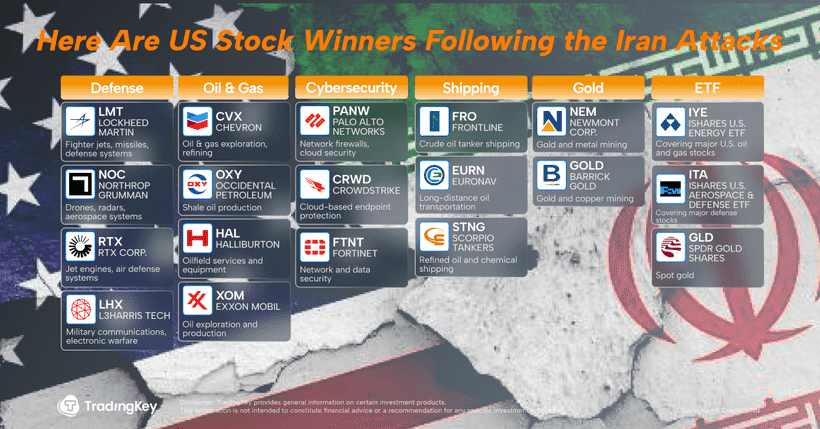
Middle East Conflict Escalates, Global Stocks and Bonds Fall, Was It Really Caused by One Sentence From Trump?
TradingKey - On Tuesday local time, the escalation of conflict in the Middle East triggered intense global market volatility. Gold (XAUUSD), bonds, and stocks fell in tandem, an unconventional movement that shattered the conventional logic of "buying safe havens during turmoil and trading stocks during stability."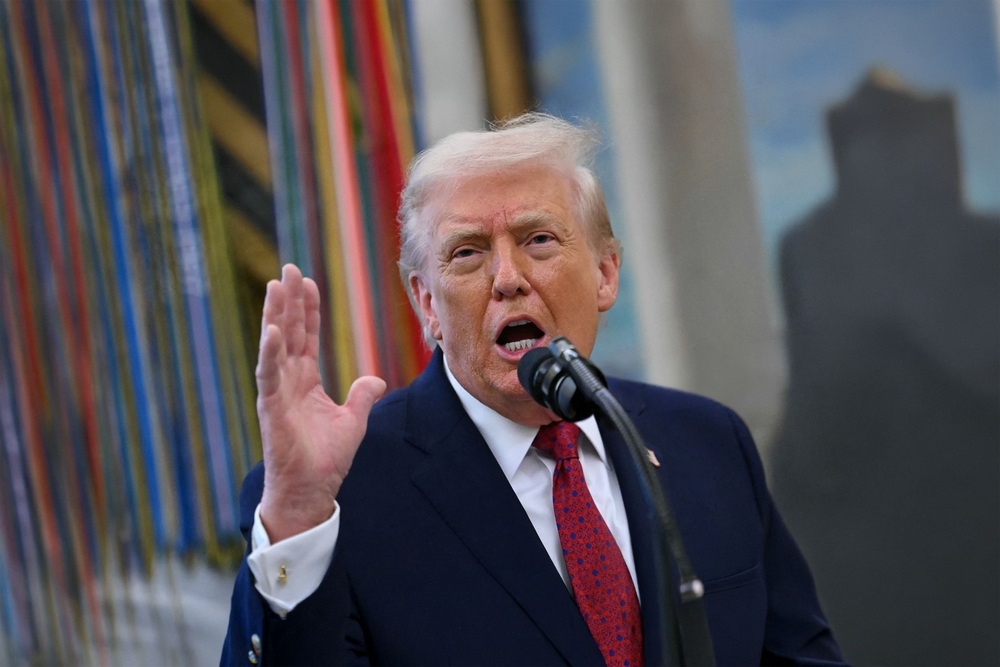
Gold’s $5,000 Breaking Point: Why the Middle East Crisis Isn't Saving the Bulls
As US-Iran tensions continue to escalate, gold prices saw a sudden plunge. Has the metal already peaked?
AGI Approaches: 2026 May Be Artificial Intelligence Turning Point, Musk Warns White-Collar Class Will Bear the Brunt
TradingKey — Have you noticed that the pace of artificial intelligence evolution is exceeding the limits of human intuitive perception? From the debut of ChatGPT to the rapid rise of multimodal AI systems, the development of AI technology has demonstrated a non-linear, exponential acceleration in ju