EMERGING MARKETS-EM stocks, FX drop to three-week lows as Middle East war fuels inflation fears

By Twesha Dikshit
March 3(Reuters) - Emerging market equities and currencies extended losses on Tuesday to three-week lows as the U.S.-Israeli war on Iran showed no sign of easing, driving oil prices higher and stoking concerns about the global economic impact.
U.S. President Donald Trump justified a broad, open-ended war on Iran while Israel's Benjamin Netanyahu said the war was "not going to take years."
Israel attacked Iran-backed Hezbollah targets in Lebanon, and Tehran hit Gulf states hosting U.S. bases, widening the conflict.
Iran's targeting of ships transiting the Strait of Hormuz, according to ship data and industry sources, has driven global oil and gas shipping rates sharply higher. The waterway carries about one-fifth of global oil consumption and large volumes of liquefied natural gas.
The MSCI emerging markets index .MSCIEF fell 3.2%, while a currency gauge .MIEM00000CUS dropped 0.8% as the dollar gained on safe-haven demand. Both were on track for their worst week since March 2022, when Russia invaded Ukraine, if losses persist.
"Given investors went into this crisis with large overweight positions in Europe and emerging markets – in currencies and equities – both currency blocs look susceptible to further unwinding should energy prices stay high," said Chris Turner, ING's global head of markets, in a note.
STOCKS, CURRENCIES SINK AS OIL SUPPLY CONCERNS REMAIN
Equity indexes in Qatar .QSI, Oman .MSX30 and Egypt .EGX30 fell 0.8% to 1.6%. A fuel tank at Oman's Duqm commercial port was hit, the state news agency said.
LNG and oil refinery output were halted on Monday in countries including Qatar, Saudi Arabia and Israel as Iran targeted infrastructure.
Bourses in the United Arab Emirates remained closed for a second day due to the strikes, while Israel's market was shut for a holiday.
In emerging Europe, Poland's blue-chip index .WIG20 dropped 2.1%, while stocks in the Czech Republic .PX and Hungary .BUX fell 2% and 2.3%, respectively.
Turkish inflation cooled to 2.96% on a monthly basis in February, in line with expectations.
With a central bank rate decision due next week, analysts said the easing cycle could be halted. Stocks .XU100 and FX TRY= ticked lower.
Gold-exporter South Africa's benchmark index .JTOPI dropped 2.7%. The precious metal eased from an over four-week highs due to a stronger dollar.
The Hungarian forint EURHUF= remained under pressure, weakening 1.5% against the euro. The Polish zloty EURPLN fell 0.5%. ING analysts expect CEE currencies to be impacted by the global gas supply shortage with storage at record lows due to a colder winter in Europe.
In Asia, oil-import dependent Korea's benchmark index .KS11 tumbled 7.2%, returning from a holiday on Monday. Taiwan's stocks .TWII fell 2.2%.
The International Monetary Fund said it was closely monitoring developments in the Middle East, but it was too early to assess the economic impact on the region or globally.
JP Morgan revised its EM corporate 2026 default rate forecast to 4.3% from 3% driven by two Latin American situations.
Meanwhile, British EM asset manager Aberdeen ABDN.L reported a 4% rise in annual profit aided by cost cuts and an asset boost from rallying markets in 2025.
For TOP NEWS across emerging markets nTOPEMRG
For CENTRAL EUROPE market report, see CEE/
For TURKISH market report, see .IS
For RUSSIAN market report, see RU/RUB
Related Articles
Spot Silver Prices Volatile, Losses Narrow After 7% Plunge, Has Safe-Haven and Industrial Narrative Failed?
TradingKey - During the Asian trading session, spot silver's intraday decline widened to as much as 7%, reaching $83.05/oz, before subsequently narrowing. As of press time, silver was trading at $85.8/oz. Influenced by recent severe tensions in the Middle East and a complex, volatile international landscape, global commodities—particularly pure benzene, liquefied petroleum gas (LPG), ethylene glycol, styrene, and polypropylene—have experienced significant volatility.
Bitcoin Stuck in Range Struggle, Can US-Iran Conflict Help a Breakout?
As the US-Iran conflict continues to escalate, Bitcoin prices remain range-bound and are losing their war premium.
JPMorgan Warns Hormuz Blockade Risks Oil Shutdown in 25 Days, But How Will the US-Iran Conflict Shape Global Oil Prices?
TradingKey - Following the announcement on the night of February 28 banning all vessels from passing through the Strait of Hormuz, JPMorgan Chase issued a warning: if the Strait of Hormuz is completely blocked, the combined onshore and offshore storage capacity of Middle Eastern oil-producing nation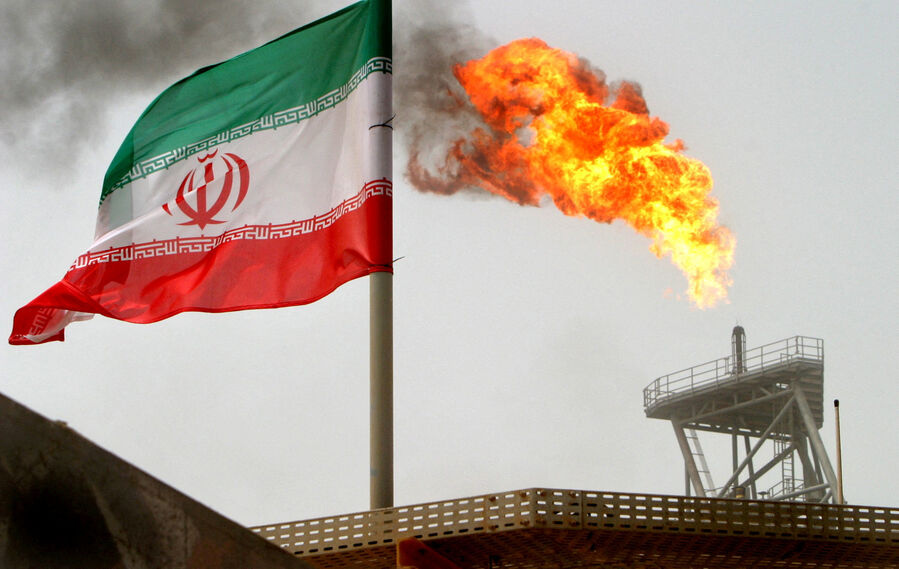
US-Iran Conflict Ignites, Global Arms Race Heats Up, Will Defense Stocks See a New Round of Gains?
TradingKey - On February 28 local time, the United States and Israel launched joint large-scale airstrikes against Iran, targeting its nuclear facilities, missile industry, and naval forces. This marks another sharp escalation in the conflict following the US military strikes on Iranian nuclear facilities in June last year. The military operation not only exacerbates already strained geopolitical tensions but has also sent shockwaves through global capital markets, which is expected to further boost defense stocks.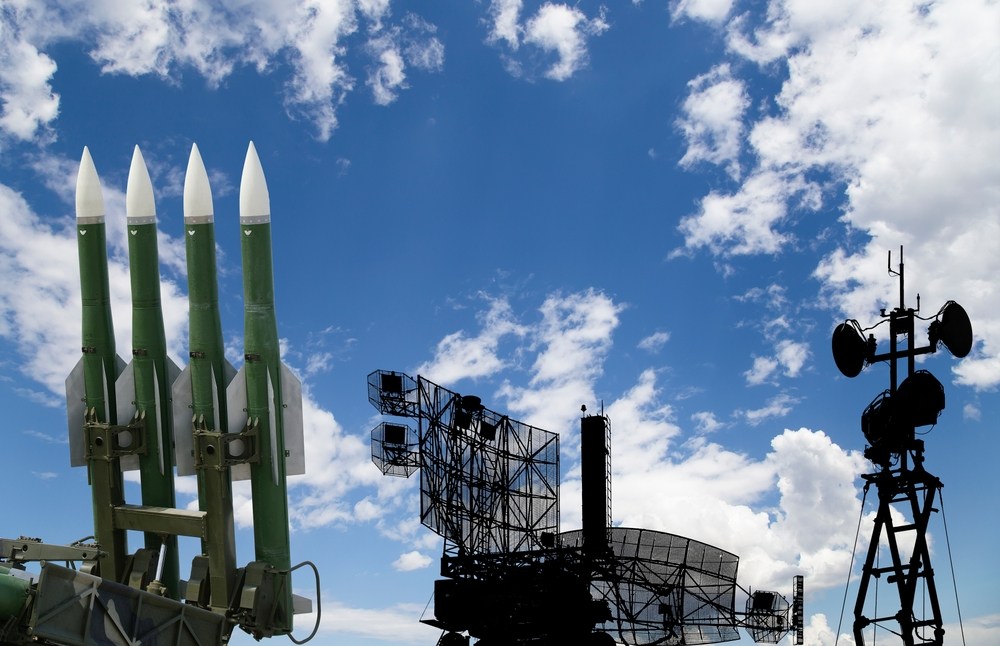
The Hyperliquid Phenomenon: HYPE Ecosystem’s Path to $250
Explore the Hyperliquid (HYPE) 2026 outlook as it evolves from a high-speed DEX into a powerful Layer 1 ecosystem. This analysis breaks down the $2.95 trillion trading volume, the impact of the HIP-4 prediction market launch, and the HYPE token's technical resilience at the $31.77 level amidst globa