


Analysts See Long‑Term ‘Post‑War’ Strain Ahead as Natural Gas Prices Spike



Tradingkey - Recent attacks by Iran on key energy infrastructure across the Gulf have damaged Ras Laffan Industrial City — one of the world’s largest liquefied natural gas (LNG) export hubs in Qatar — driving oil and gas prices sharply higher.
According to The Wall Street Journal, U.S. President Donald Trump said he had prior knowledge of Israel’s strike on Iran’s South Pars oil field but does not want Israel to launch further attacks on Iranian energy facilities.
The news sparked turmoil in markets: European benchmark natural gas futures surged more than 30% intraday on Thursday, at one point jumping nearly 35% — one of the biggest single‑day swings since the outbreak of the war. Since late February, when conflict with Iran erupted, European gas contracts have climbed over 70%, Asian LNG forward prices are up nearly 90%, and U.S. domestic natural gas prices have followed the same upward trend.
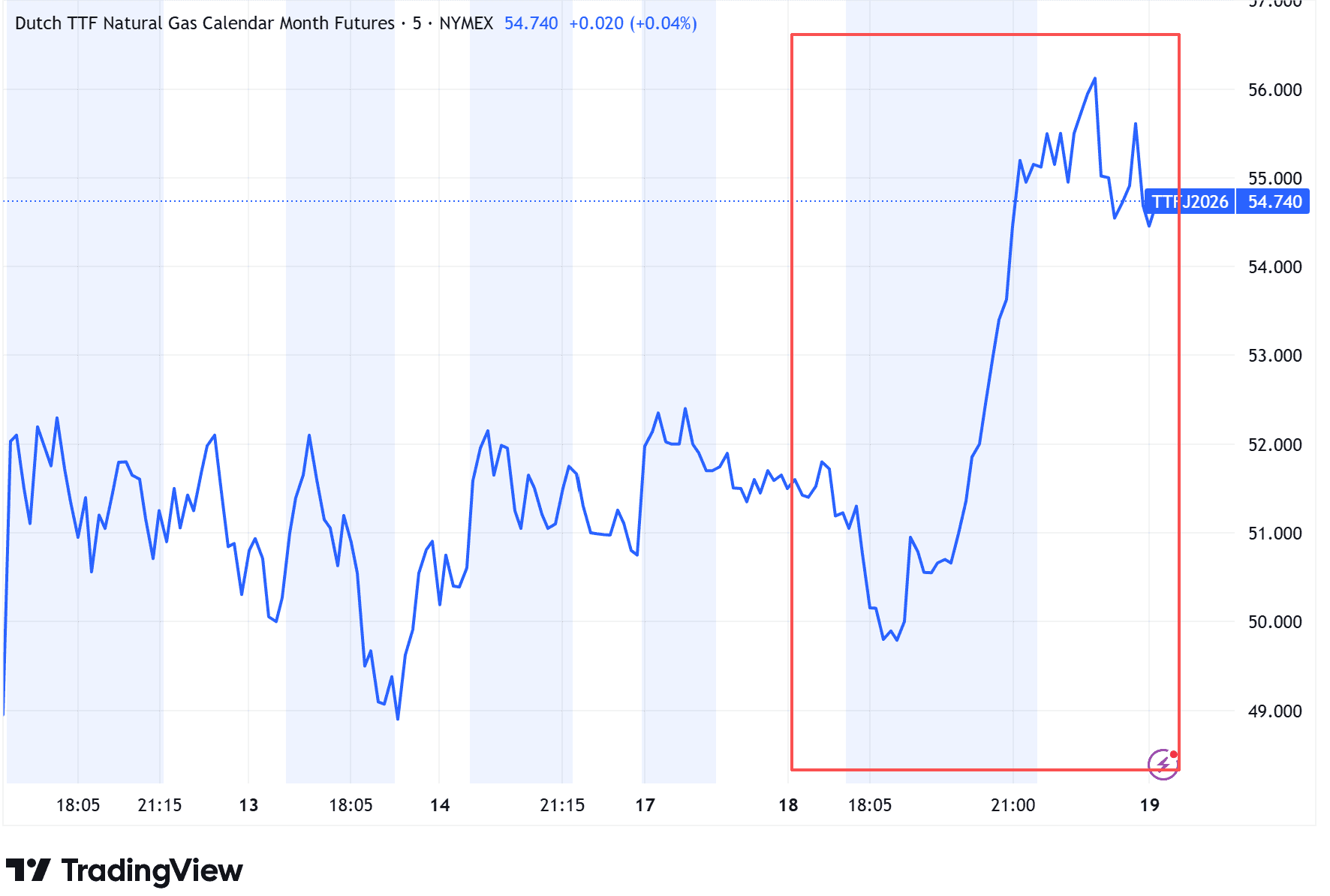
Asia remains the primary buyer of Middle Eastern LNG, with long‑term contracts securing large volumes from Qatar and its neighbors. However, this latest disruption poses a particular challenge for Europe. The region has just come out of the winter heating season with inventories notably drawn down. As it enters the summer replenishment period, Europe now faces the need to restock amid tight supply and strong Asian demand, forcing it to compete for a shrinking pool of spot cargoes.
Analysts at several institutions warn that even if a cease‑fire is reached in the Middle East or shipping through the Strait of Hormuz returns to normal, the natural gas market will continue to suffer from lasting “post‑war” effects. Strikes on massive LNG facilities like Ras Laffan could lead to capacity losses lasting months, if not longer, with repair and reconstruction cycles measured in years rather than weeks. As a result, both Europe and Asia are expected to face higher gas price baselines and greater supply uncertainty over the coming quarters.
Meanwhile, since the conflict erupted on February 28, oil prices have surged about 50%.
Recommended Articles





Comments (0)
Click the $ button, enter the symbol, and select to link a stock, ETF, or other ticker.