Reuters Gulf Currents-Iran war tests Gulf fundamentals

Andrew Mills, deputy bureau chief, Gulf
It’s hard to grasp how abruptly life in the Gulf has been upended in just five days of war.
Members of the Reuters Gulf team, like so many of our neighbours in the region, have huddled in stairwells and windowless bathrooms, listening to volleys of missiles being intercepted above our homes while trying to soothe frightened kids and field messages of concern from abroad.
We’ve become newly alert to where a window might blow in, how to track down difficult-to-find supplies of basics like chicken or bananas and how every rumble – even a neighbour closing a cupboard – can send the heart racing.
Across a region whose newly treacherous airspace is closed and where the only viable escape route is a long cross-desert drive through territory under Iranian attack, we’re all weighing the same impossible questions: stay or go, and how?
Federico Maccioni, a member of our finance team in Dubai, said that for the first time he perceived a hint of doubt about what lies ahead for the city. Still, Rachna Uppal, our Abu Dhabi-based chief economics correspondent, said she was struck by how normal life continued, with people shopping, attending dental appointments and even jetskiing.
Meanwhile, as reporters, we’re stretched across the Gulf to make sense of it all. This week in Gulf Currents, Iran’s drones are proving relentless – punching through Gulf defences and striking airports, hotels and data centres. Tourism is buckling, business hubs are paralysed and decades of Gulf state-building are suddenly in doubt. Our briefing unpacks the economic shock, the strategic stakes and what this war may change forever.
Also, tune in on Reddit where I’m answering audience questions about the Iran war.
Welcome to more than a thousand new readers joining us from the Reuters Iran Briefing this week. This expanded newsletter gives you the latest headlines from the war in Iran six days a week – plus this Wednesday edition of Gulf Currents, where I break down the geopolitical and financial forces reshaping a region at a crossroads. You can sign up here to receive the Iran Briefing.
NEWS BRIEFING
With missile supplies uncertain, drones remain Iran’s most sustainable and effective weapon of attack and perhaps the Gulf Arab states’ biggest threat. Tehran can produce around 10,000 a month and many facilities can be retooled to boost output. Shahed-136 drones can strike anywhere along the southern Gulf coast and have repeatedly pierced Gulf air defences. At least 65 have entered the UAE since fighting began, hitting Amazon data centres, Dubai International Airport and a Fairmont hotel, with all the Gulf states reporting drone strikes.
Middle East tourism, a $367 billion industry, is reeling as the conflict shuts airports and halts travel through key Gulf hubs. The turmoil threatens years of work by Gulf states to position themselves as safe, high-end destinations. Air travel is largely grounded, cancellations in the UAE have more than doubled, and airlines report a collapse in bookings.
Iran’s strikes have triggered the Gulf’s worst business disruption since COVID-19, shutting airports, halting port operations and shaking financial markets. The attacks hit at the heart of a region that has spent decades – and billions – building a reputation as a dependable centre of global business. Markets tumbled, exchanges closed and Ramadan networking events were cancelled.
ANALYSIS: Has the Gulf changed forever?
Five days of war have upended the foundations of the modern Arab Gulf.
For decades, the Gulf’s rise rested on two core assumptions: that its cities offered safe haven in an unstable region and that vast wealth from uninterrupted energy exports would keep flowing. This week’s events have shaken both pillars at once – perhaps irreversibly.
First to falter was the idea of the Gulf as a sanctuary insulated from the region’s violence. Dubai, the flagship embodiment of that promise, was built on the premise that turmoil stopped at its borders. But days of Iranian missile and drone strikes on airports, ports and luxury landmarks punctured that carefully constructed brand.
UAE President Sheikh Mohammed bin Zayed tried to project business-as-usual as he strolled through Dubai Mall on Monday evening, yet outside, flights were grounded, financial markets shut and jumpy residents queued for supplies all while deep thuds rolled through the skyscrapers as air defences intercepted barrage after barrage.
The psychological blow raises doubts about whether cities like Dubai, Abu Dhabi and Riyadh - the success of which has been built on confidence, mobility and positive perceptions - can maintain premium appeal when they suddenly prove vulnerable to regional turmoil.
The second rupture is economic, and deeper still.
The closure of the Strait of Hormuz and the shutdown of QatarEnergy’s vast LNG operations – supplier of a fifth of global LNG and long proud of never missing a shipment – have unleashed a supply shock once considered inconceivable. Iraq has slashed production; Saudi Arabia is rerouting crude; hundreds of tankers sit idle near the port of Fujairah, which is still burning after an attack, without safe passage. Prices for oil, gas and related commodities have surged.
The Gulf’s ability to bankroll diversification, mega-investments and generous social contracts depends on secure energy exports. That assumption is suddenly fragile.
Some of this damage cannot be undone.
But this war has unlocked a larger unknown: what will relations between the Arab Gulf and Iran look like after this?
After years of tentative détente, Gulf Arab states had begun recalibrating ties with Iran, acknowledging geography and mutual interest. That fragile trust has now been ruptured. The scale of Iran’s attacks – striking civilian targets in six U.S.-aligned states – has erased the political space Gulf leaders had carved out for dialogue. Having been attacked directly, Gulf capitals must now confront a harder question: even if the fighting stops, can trust in Iran as a neighbour ever be rebuilt – or has the relationship entered a long, hostile freeze?
The implications are profound. The Gulf’s economic model, energy security and regional diplomacy – long treated as constants – have all been destabilised. Even if the fighting stops soon, the era of hedging with Iran is over. And a more guarded, security-driven Gulf lies ahead.
THE LAST WAVE: War puts Dubai’s aviation hub to the test
Escalating conflict in the Middle East has laid bare how heavily global air travel relies on a handful of hubs led by Dubai, the world’s busiest international airport, after the shutdown of Gulf airspace rippled quickly across airline networks worldwide.
Four decades after the Gulf's trading capital set out to exploit its strategic location by setting up Emirates with two rented jets and two routes, Dubai stands at the centre of a global network spanning 110 nations and 454,000 flights a year. Read the full analysis from my colleagues Federico Maccioni and Tim Hepher.
Related Articles
Is GE Vernova an Energy Stock You Should Buy in 2026?
TradingKey - GE Vernova (GEV), the global energy infrastructure company, was spun off from General Electric (GE) in 2024. It develops, produces, and services equipment for the generation and transmission of electricity, including gas and steam turbines, wind turbines, as well as grid infrastructure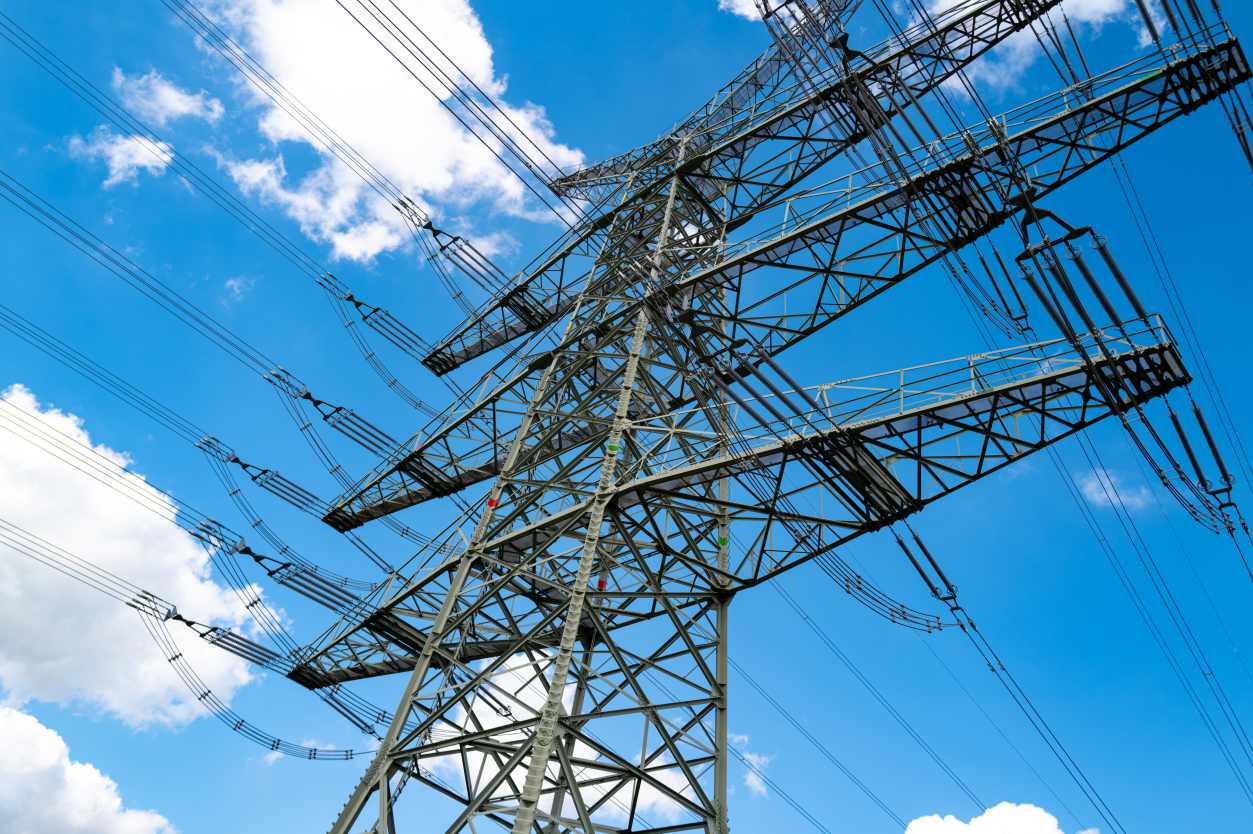
Here Are US Stock Winners Following the Iran Attacks
Tradingkey - On Tuesday, U.S. equities extended their slide as rising oil prices and the specter of war in Iran rippled through global markets. The Dow Jones Industrial Average at one point plunged more than 1,000 points.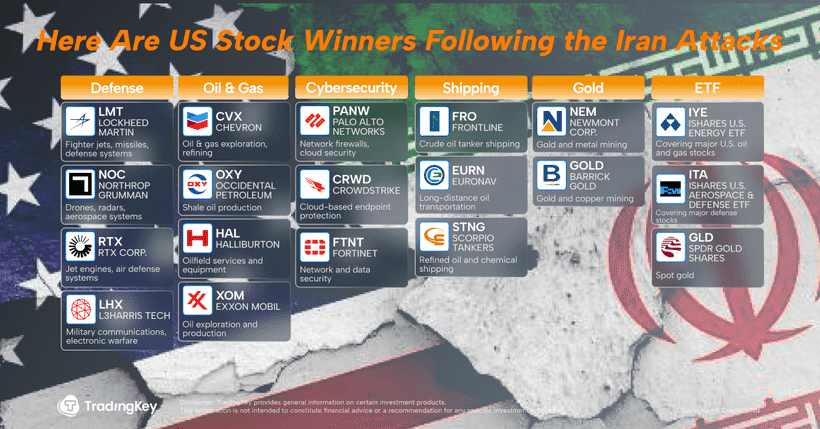
Middle East Conflict Escalates, Global Stocks and Bonds Fall, Was It Really Caused by One Sentence From Trump?
TradingKey - On Tuesday local time, the escalation of conflict in the Middle East triggered intense global market volatility. Gold (XAUUSD), bonds, and stocks fell in tandem, an unconventional movement that shattered the conventional logic of "buying safe havens during turmoil and trading stocks during stability."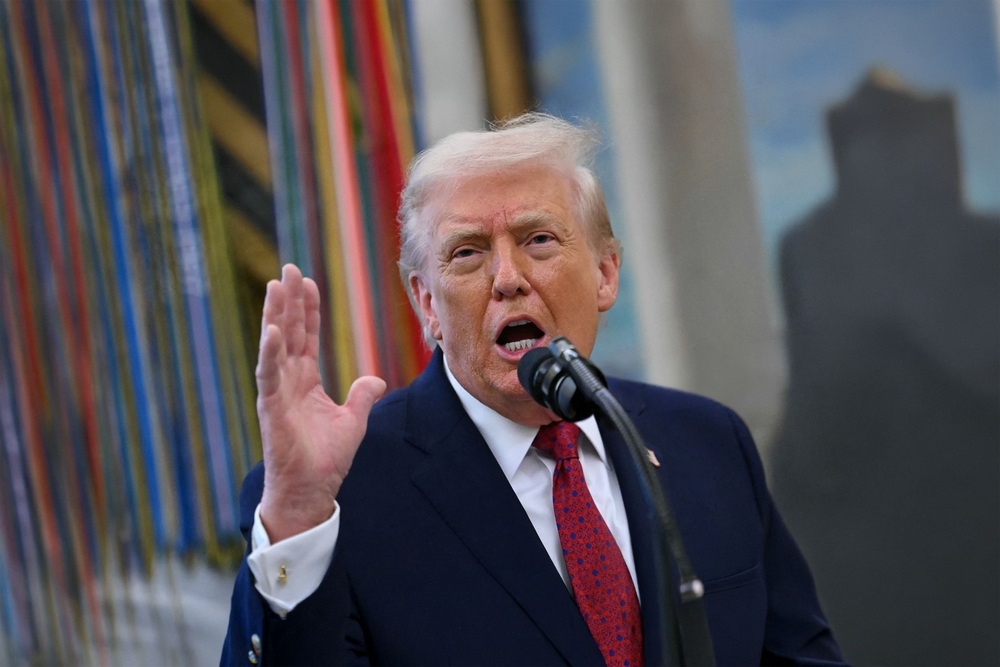
Gold’s $5,000 Breaking Point: Why the Middle East Crisis Isn't Saving the Bulls
As US-Iran tensions continue to escalate, gold prices saw a sudden plunge. Has the metal already peaked?
AGI Approaches: 2026 May Be Artificial Intelligence Turning Point, Musk Warns White-Collar Class Will Bear the Brunt
TradingKey — Have you noticed that the pace of artificial intelligence evolution is exceeding the limits of human intuitive perception? From the debut of ChatGPT to the rapid rise of multimodal AI systems, the development of AI technology has demonstrated a non-linear, exponential acceleration in ju