COLUMN-Uncorking a scandal: Inside the sommelier lawsuit over exam cheating

By Jenna Greene
March 4(Reuters) - Six glasses of wine sit on a table, three white and three red.
Based on taste, smell and appearance alone, a candidate vying for the title of master sommelier -- one of the most prestigious credentials in the wine industry -- must identify the wine's variety, geographic origin and vintage year.
It’s a legendarily difficult test – and the backdrop to bitter litigation unfolding in California, sparked by cheating allegations that voided the results of the 2018 exam.
A trio of would-be master sommeliers who say they passed honestly have sued the non-profit organization that oversees the test, with a five-day jury trial scheduled for later this year in San Francisco federal court. At stake are not just three careers but the credibility of one of the leading gatekeepers in fine wine.
There are fewer than 300 master sommeliers worldwide. Sporting discreet red-and-gold lapel pins, they command elite industry jobs, lucrative salaries and outsized influence over oenophiles.
For 35 days, Peter Bothwell was one of them -- until his phone rang while walking in a Napa Valley vineyard in 2018. Organizers had invalidated the tasting exam he'd just passed after eight years of trying, citing concerns that some candidates had been tipped off to the answers.
Gregory Van Wagner had just returned from a bike ride near his home in Aspen when he got the same message. “Shattering,” is how he described it.
As did Daniel Pilkey in Chicago, who said passing the master sommelier exam was “the proudest day of my life, aside from the birth of my children.”
None were personally accused of wrongdoing, but they were among the 23 who had their titles unceremoniously stripped by the Court of Master Sommeliers, Americas, or CMS, which oversaw the exam.
Bothwell, Van Wagner and Pilkey sued the American chapter of the England-founded organization, saying it failed to conduct a full investigation into the alleged cheating before voiding the test results. Alleging breach of contract as well as unfair competition and other violations, they say they’ve been deprived of future income and opportunities the master sommelier credential could bring.
CMS and its lawyers from Gordon Rees Scully Mansukhani declined to comment, citing the pending litigation. The organization and its former directors in court papers deny wrongdoing and say throwing out the 2018 tasting exam was the only option under the circumstances.
The litigation raises a broader legal question. CMS is a California mutual benefit corporation – a nonprofit formed for the benefit of its members (like a homeowners’ association, for example) as opposed to the general public. What duty does such an entity owe its members? Did CMS violate the basic tenets of good faith, fair dealing and due process when it suspended the plaintiffs’ memberships?
"HEADS UP"
The 2018 master sommelier exam took place over three days in September at the Four Seasons hotel in St. Louis. It was near the height of wine's popularity in the U.S. – sales have declined since 2021 -- and more than 100 hopefuls attempted to pass some or all of the three-part test.
There’s the "theory" portion, which tests knowledge of global wine and spirits production, and practical service, where would-be sommeliers perform in a restaurant setting. And the ultimate challenge: the blind tasting.
That’s where the trouble began. Both sides agree that an exam proctor, who was also a CMS board member, sent several candidates an allegedly unsolicited email shortly before the tasting with the subject line “Heads up.”
The body of the email contained only two abbreviations, “PG&CNDP.” To wine insiders, the shorthand signals Pinot Grigio – a crisp, light white often produced in Northeastern Italy -- and Châteauneuf-du-Pape -- a full-bodied red from the Southern Rhône Valley of France.
According to court records, one email recipient who failed the exam went on to report the message to the board. Two other email recipients, both of whom passed the test, were also identified.
Because the tasting exam was conducted individually while candidates milled around the hotel, CMS concluded there was no way to know if anyone else might have been tipped off.
Test-takers “could have communicated the answers in hallways, restrooms, the examination room, parking lots, during breaks and so forth,” CMS lawyers wrote. “Given the “impossibility of determining how and to whom the disclosures were made,” the board determined that the wine-tasting portion of the exam had to be thrown out.
Those who'd taken the test were refunded the $897.50 exam fee and allowed to re-test for free.
Passing once, however, is no guarantee of passing again. The universe of wines is vast, and six is a tiny sample. Even the most discerning palate can falter on an unfamiliar bottle.
Bothwell, Van Wagner and Pilkey each retook the tasting exam. On-site reporters covering the story, which had made a splash in the trade press and beyond, added to the pressure, they said. As Van Wagner put it, “having to ‘test for your innocence’ is a destructive mindset to try to perform in.”
All failed.
IN VINO VERITAS?
After unsuccessful negotiations with CMS, the trio filed suit in 2022.
They allege the board spent less than 72 hours investigating the cheating before deciding to void the test. CMS leaders and outside counsel from Davis Wright Tremaine did not interview anyone who passed the tasting exam or question the email’s author, the plaintiffs allege, nor did they ask to review email, text or phone records.
A Davis Wright spokesperson said that “clients regularly call on us to conduct investigations that are in-depth and impartial.” The lawyer who led the probe has since moved to another firm.
CMS in court papers argues that even if it had left no stone unturned, the plaintiffs still haven’t established how their “proposed extensive, costly and time consuming hypothetical investigation” could have conclusively determined which candidates received the insider information and which did not.
But a lawyer for the examinees, Clark Hill partner Michael Laszlo, wrote that CMS “did not afford the Plaintiffs, or any of the successful 2018 candidates for that matter, even the most fundamental process they were due as members” of the organization.
The plaintiffs allege CMS's former U.S.-based leaders had an ulterior motive in eschewing a more thorough probe. They assert that such an investigation would have exposed additional, unrelated misdeeds within CMS, including alleged sexual harassment and a supposed incident of cheating on an earlier exam that they say was swept under the rug.
The complaint does not provide details of the allegations. However, CMS Americas elected a new board of directors in 2020 following media reports of sexual harassment by master sommeliers. A CMS internal investigation in 2021 substantiated harassment allegations but found the “behaviors did not impact examination outcomes.”
The former board members, who were initially named in the Bothwell, Van Wagner and Pilkey complaint but later dropped, deny wrongdoing and call the coverup allegations "baseless."
In refusing to dismiss portions of the suit, U.S. District Judge Edward Chen wrote in 2023, “A reasonable jury could find that the investigation that was done was lacking.” But it also wasn't yet evident, he added, “that an investigation could have ferreted out which test takers obtained the inside information” and whether all the cheaters could have reasonably been identified.
It may ultimately be a question for the jury in a novel test of the age-old saying: “In wine, there is truth.”
Related Articles
Here Are US Stock Winners Following the Iran Attacks
Tradingkey - On Tuesday, U.S. equities extended their slide as rising oil prices and the specter of war in Iran rippled through global markets. The Dow Jones Industrial Average at one point plunged more than 1,000 points.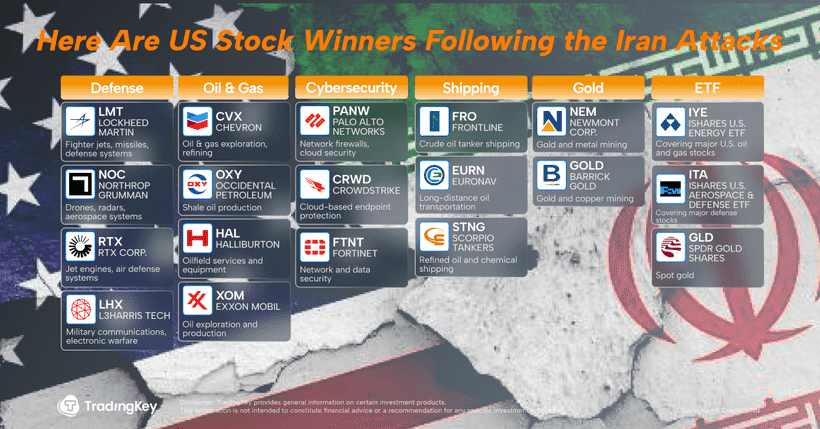
Middle East Conflict Escalates, Global Stocks and Bonds Fall, Was It Really Caused by One Sentence From Trump?
TradingKey - On Tuesday local time, the escalation of conflict in the Middle East triggered intense global market volatility. Gold (XAUUSD), bonds, and stocks fell in tandem, an unconventional movement that shattered the conventional logic of "buying safe havens during turmoil and trading stocks during stability."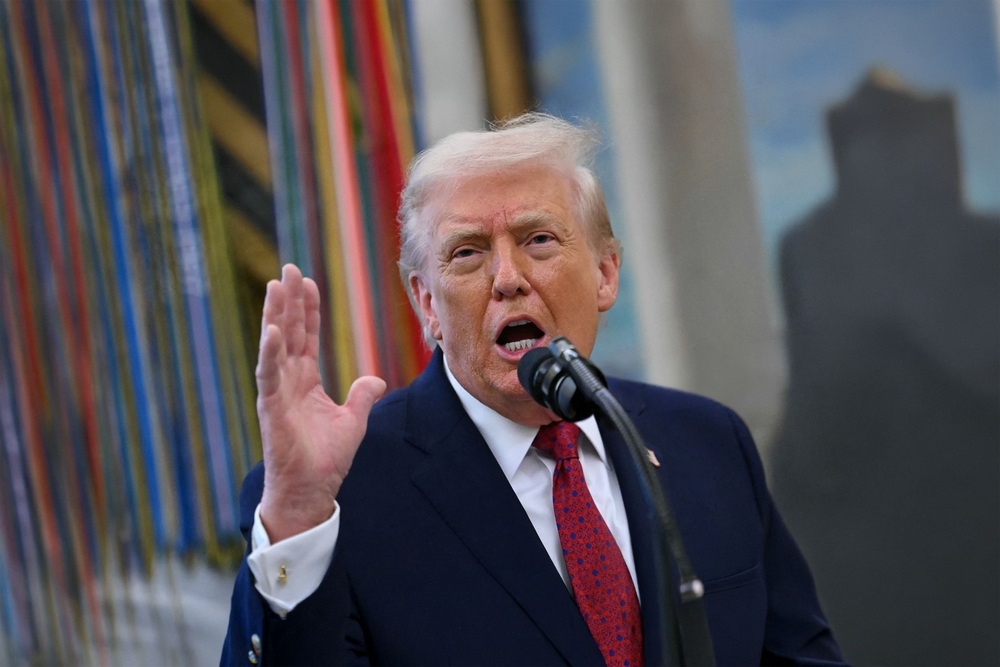
Gold’s $5,000 Breaking Point: Why the Middle East Crisis Isn't Saving the Bulls
As US-Iran tensions continue to escalate, gold prices saw a sudden plunge. Has the metal already peaked?
Partnering With Lumentum and Coherent, Can Nvidia’s $4 Billion CPO Bet Support the Future of AI Computing Power?
TradingKey - On Monday, March 2 local time, NVIDIA (NVDA) announced that it has entered into a deep strategic partnership with optical technology manufacturers Lumentum (LITE) and Coherent (COHR). NVIDIA will invest $2 billion in each company, totaling a massive $4 billion investment. This move advances NVIDIA's strategic layout in the field of AI data center network architecture to a new stage.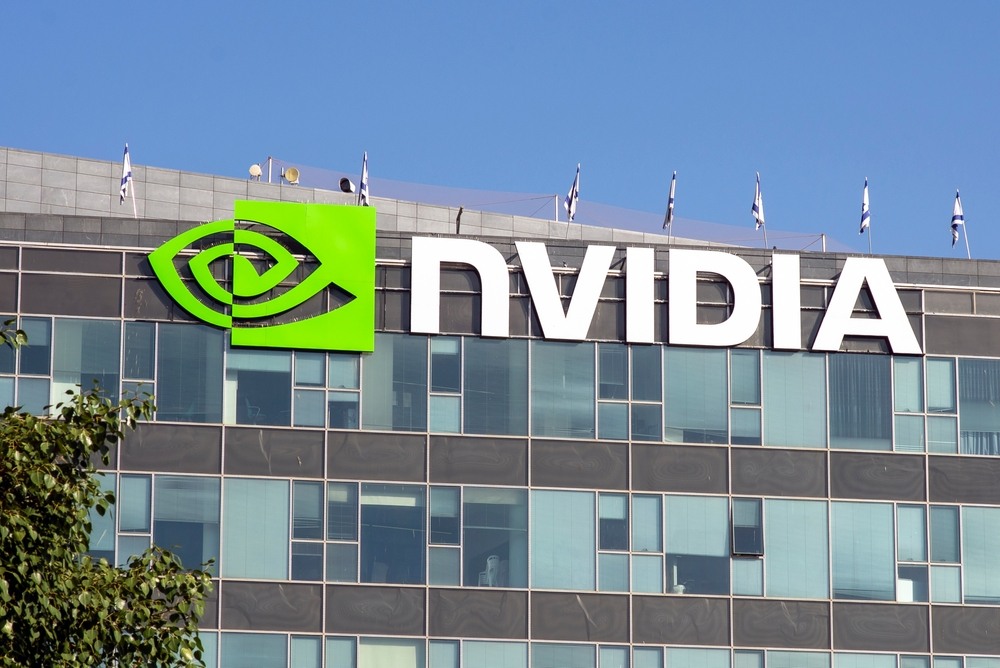
AGI Approaches: 2026 May Be Artificial Intelligence Turning Point, Musk Warns White-Collar Class Will Bear the Brunt
TradingKey — Have you noticed that the pace of artificial intelligence evolution is exceeding the limits of human intuitive perception? From the debut of ChatGPT to the rapid rise of multimodal AI systems, the development of AI technology has demonstrated a non-linear, exponential acceleration in ju