NatWest Group PLC Stock (NWG) Moved Down by 3.30% on Mar 19: What Signal Does It Send?

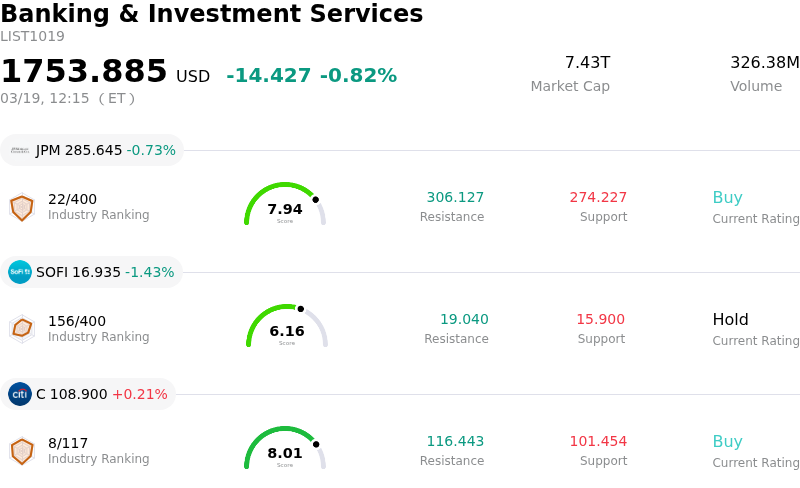
NatWest Group PLC (NWG) moved down by 3.30%. The Banking & Investment Services sector is down by 0.82%. The company underperformed the industry. Top 3 stocks by turnover in the sector: JPMorgan Chase & Co (JPM) down 0.73%; SoFi Technologies Inc (SOFI) down 1.43%; Citigroup Inc (C) up 0.21%.
What is driving NatWest Group PLC (NWG)’s stock price down today?
The stock experienced a decline today amid significant intraday volatility. This movement appears to be influenced by a confluence of broader market concerns and specific company actions.
A primary driver for the negative sentiment across equities, including the banking sector, stems from the escalation of conflict in the Middle East. This geopolitical tension has pushed up oil prices and generally dampened risk appetite in the markets, leading investors to become more cautious. Additionally, recent macroeconomic data, such as a higher-than-anticipated Producer Price Index, has fueled concerns about persistent inflation. This suggests central banks might need to maintain a restrictive monetary policy stance for an extended period, which could impact economic growth and bank profitability in the future.
The UK banking sector, to which NatWest Group belongs, has been operating under pressure throughout March. This includes ongoing anxieties related to the private credit market and a general outlook of subdued economic growth in the UK. While not solely responsible for today's movement, these underlying conditions contribute to a fragile environment for financial institutions.
Furthermore, the company recently announced its intention to redeem £500 million in Fixed to Fixed Rate Notes ahead of schedule on March 28, 2026. While this decision reflects active capital management and efforts to optimize the bank's debt structure, such actions can sometimes trigger short-term reactions from the market, particularly among institutional investors holding these notes who may face reinvestment challenges.
Regulatory developments also play a continuous role in shaping the financial landscape. The Financial Conduct Authority and Prudential Regulation Authority have been issuing various updates and priorities for the sector, including enhanced supervisory oversight, new rules on operational resilience, and consultations on liquidity. While these are often forward-looking, the constant stream of regulatory changes can contribute to a cautious sentiment among investors regarding potential compliance costs or operational adjustments for banks.
Technical Analysis of NatWest Group PLC (NWG)
Technically, NatWest Group PLC (NWG) shows a MACD (12,26,9) value of [-0.44], indicating a sell signal. The RSI at 38.38 suggests neutral condition and the Williams %R at -81.45 suggests oversold condition. Please monitor closely.
Fundamental Analysis of NatWest Group PLC (NWG)
NatWest Group PLC (NWG) is in the Banking & Investment Services industry. Its latest annual revenue is $21.81B, ranking 26 in the industry. The net profit is $7.22B, ranking 15 in the industry. Company Profile
Over the past month, multiple analysts have rated the company as Strong Buy, with an average price target of $20.63, a high of $20.63, and a low of $20.63.
More details about NatWest Group PLC (NWG)
Company Specific Risks:
- NatWest's shares recently experienced intraday decline due to specific market events including an "Oil Shock" and the launch of "Revolut UK Bank," indicating increased competitive pressure and sensitivity to external shocks.
- The company faces heightened loan impairment risks for its customers, stemming from rising living costs and general warnings within the UK banking sector regarding potential bad loans, directly impacting its financial performance.
- NatWest's increase in residential and buy-to-let mortgage rates, influenced by rising swap rates due to geopolitical events, poses a risk of stifled lending growth and potential pressure on the broader housing market.
- An identified weak and volatile cash flow could compromise NatWest's financial flexibility and overall stability, posing a fundamental weakness in its operational liquidity.