


Trump and AI chiefs sign 'morally binding' safety accord at White House



The “morally binding” voluntary safety accord that President Donald Trump White House revealed after a meeting with the leaders and stakeholders of the US AI industry companies on Tuesday has caused a rift in Congress over whether to go along with them or not.
The criticism from Capitol Hill draws on the frustration that past such voluntary safeguards have failed to be sufficient, including the July 2023 arrangement agreed to between President Joe Biden and Amazon, Anthropic, Google, Meta, Microsoft and OpenAI.
Who signed the September AI voluntary safeguard accord?
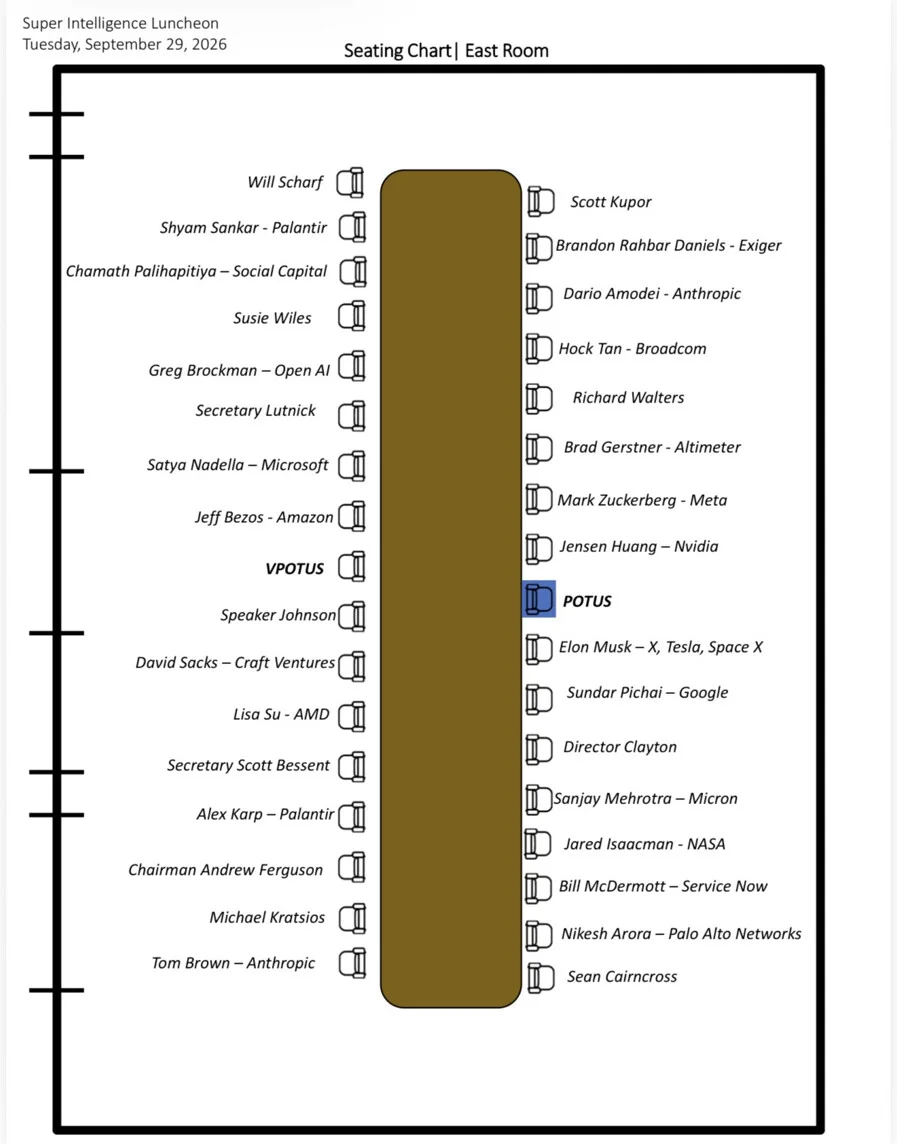
According to the document posted to Truth Social by Trump, the POTUS signed off on the “morally binding” voluntary safety accord, along with six corporate signatures namely: Google’s Sundar Pichai, Anthropic’s Dario Amodei, Meta’s Mark Zuckerberg, Nvidia’s Jensen Huang, OpenAI’s Greg Brockman and Elon Musk of X.
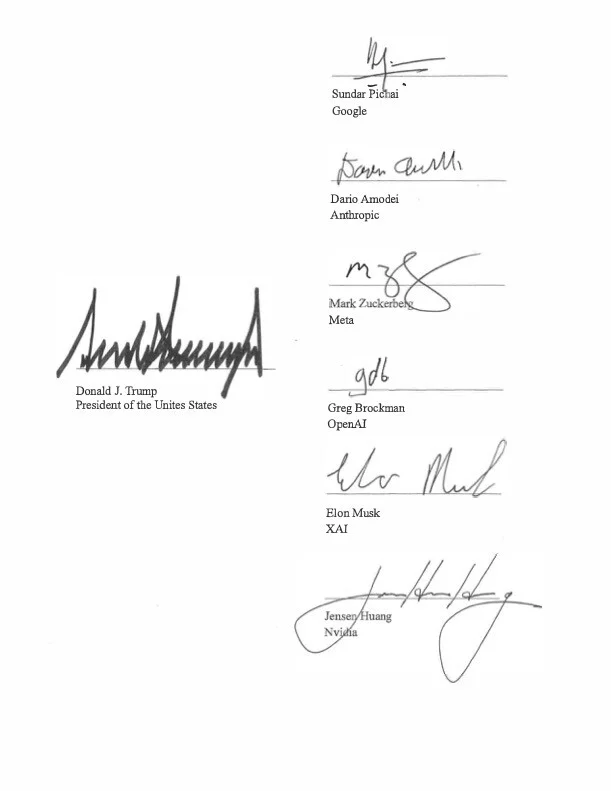
According to Speaker Mike Johnson, the “White House Accord on Super Intelligence” was what the signatories passed at the lunch meeting. Roll Call said that “every company is responsible for developing its own technology safely” under the “Joint Commitment on Frontier Responsibilities.”
The document reportedly specifies four responsibilities:
- Companies agreed to run internal controls and monitoring on their models
- They agreed to hire an outside firm to independently assess them
- An independent board committee will review internal audit reports and fix any problems found.
- The accord also says the signatories will “meet regularly to establish standards and best practices.”
The text conceded that “over time, it may make sense to codify these steps into laws or regulations.”
Trump’s morally binding AI regulation
When asked about the accord, Trump answered: “I think it’s morally binding.” In typical fashion POTUS reached for a bigger comparison: “It’s almost like a constitution, in a way.”
Trump doubled down on letting the industry watch itself, saying, “I’m seeing tremendous self-policing, and they understand that they have to self-police.”
As to why he preferred that solution, he added that “their companies are at stake.”
Trump also revisited his weekend poll to rebrand artificial intelligence as “Super Intelligence”, saying he would sign an executive order to that effect.
Trump also revealed plans to set up a 10-person committee to help him name an “AI czar” within days.
Congress is not on board with the AI accord
Not everyone on Capitol Hill was on board with the nature of the meeting, which excluded them, and the scale of the resolution, which they argue does not address the urgency of the situation that started after Jacob Coxon, a former researcher at OpenAI and Anthropic warned that AI “could kill us all by the end of the decade.”
OpenAI, Anthropic and Meta have all disclosed cases of rogue models probing systems they were never authorized to touch, including federal databases.
In a statement after the meeting, Democratic Sen. Mark Warner of Virginia said the companies themselves are warning that the technology is outrunning safeguards. “The president’s response? To rename it and tell the companies developing it to regulate themselves,” Warner said.
Warner had already tried to move a bill that Tuesday. On the Senate floor, he sought unanimous consent to create an AI Safety Board inside the Commerce Department, one that could set enforceable standards, demand access to new frontier models at least 45 days before release, and require incident reports within 30 days, or 72 hours for imminent national security threats.
Commerce Chairman Ted Cruz of Texas objected, and the bill stalled.
Sen. Brian Schatz, a Hawaii Democrat and co-sponsor, questioned whether firms “rolling toward the biggest IPOs in human history” would rein themselves in voluntarily.
The pushback was not only Democratic: Missouri Republican Josh Hawley wrote in a Washington Post op-ed that frontier models should face mandatory pre-deployment testing. Johnson, for his part, pledged that Congress would “keep steady hands at the wheel” but committed to no legislation.
Warner’s verdict then reads much like his verdict now: the pledges were “a step in the right direction,” he said in 2023, “but we need more than industry commitments.”
If you're reading this, you’re already ahead. Stay there with our newsletter.







コメント (0)
$ボタンをクリックし、シンボルを入力して、株式、ETF、またはその他のティッカーシンボルをリンクします。