


US Memory Stocks Tumble Again Overnight as SanDisk, Micron Fall Over 4%, Western Digital Drops Over 3%



AI Podcast


On November 16, the US memory sector extended its decline, with SanDisk and Micron falling over 4% and Western Digital dropping over 3%. This weakness stems from broader tech pullbacks, diminished risk appetite for the AI supply chain, and uncertainty surrounding Nvidia's recent management changes and data center financing sustainability. While HBM and enterprise SSDs still benefit from AI server construction, earnings growth expectations are being reassessed. Nvidia’s upcoming quarterly earnings report and guidance on AI chip demand and capital expenditures will be crucial in determining whether the memory sector finds support or faces continued volatility.
TradingKey - TradingKey - On November 16, the US memory sector extended its decline in overnight trading. According to TradingView market data, SanDisk (SNDK) and Micron (MU) shares both fell more than 4%, while Western Digital (WDC) also dropped over 3%. The US semiconductor sector had previously been under continuous pressure, and Nvidia (NVDA)'s management changes sparked AI industry uncertainty that, along with investor concerns over data center financing and capital expenditures, continued to weigh on the short-term performance of memory-related stocks.
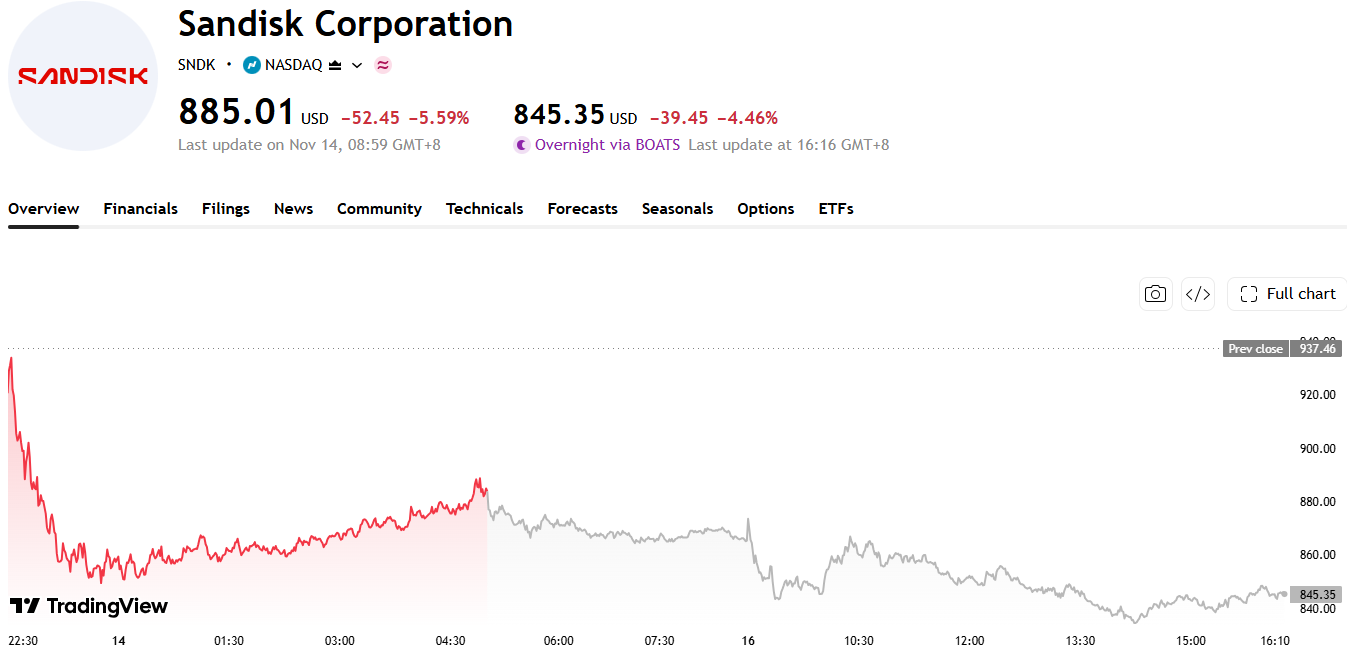
SanDisk overnight stock price chart, Source: TradingView
The continued weakness in the memory sector is closely tied to the recent broader pullback in tech stocks. Last Friday, the Philadelphia Semiconductor Index fell 3.43%, AMD dropped 8.75%, Nvidia slipped 2.01%, and Broadcom (AVGO) fell 4.76%. Market risk appetite for the AI supply chain has declined, putting correction pressure on select semiconductor and data storage companies that had previously posted large gains.
Recent management changes at Nvidia have further heightened uncertainty across the AI industry. According to Reuters, following Jensen Huang's resignation as Nvidia's CEO last week, the market has begun focusing on the company's future operational strategy and whether its business model of supporting AI infrastructure development through financing can be sustained. Given Nvidia's close partnerships with multiple cloud computing and data center companies, this uncertainty has also weighed on market expectations for firms across the AI supply chain.
Meanwhile, investor focus on the scale of AI data center buildouts, capital return cycles, and the sustainability of memory chip demand growth has not faded. Although HBM, DRAM, and enterprise SSDs continue to benefit from AI server construction, market expectations for memory companies' future earnings growth are being reassessed.
Looking ahead, Nvidia's quarterly earnings report scheduled for release this Tuesday will be a major event influencing the semiconductor and memory sectors. Investors will focus closely on Nvidia's earnings guidance, AI chip demand, and management's explanations regarding future capital expenditures and financing strategies. If this information helps alleviate market concerns, the memory sector could find some support; conversely, if uncertainty surrounding the AI investment outlook persists, stocks such as SanDisk, Micron, and Western Digital could face continued volatility.
This content was translated using AI and reviewed for clarity. It is for informational purposes only.
Recommended Articles








Comments (0)
Click the $ button, enter the symbol, and select to link a stock, ETF, or other ticker.