


SpaceX Successfully Catches Starship Returning From Orbit for First Time, Marking Turning Point for Starlink Deployment Costs



SpaceX achieved a milestone during Flight 15 by successfully recovering the Starship upper stage via launch tower arms and deploying 26 Starlink V3 satellites, though the Super Heavy booster recovery failed. Financially, heavy Starship R&D and capital expenditures caused a third-quarter space business operating loss of $7 million. However, the connectivity segment delivered robust results, generating $5.248 billion in revenue and a 45% operating margin. Reliable Starship operations are expected to lower marginal deployment costs, enhancing Starlink's network capacity and long-term profitability.
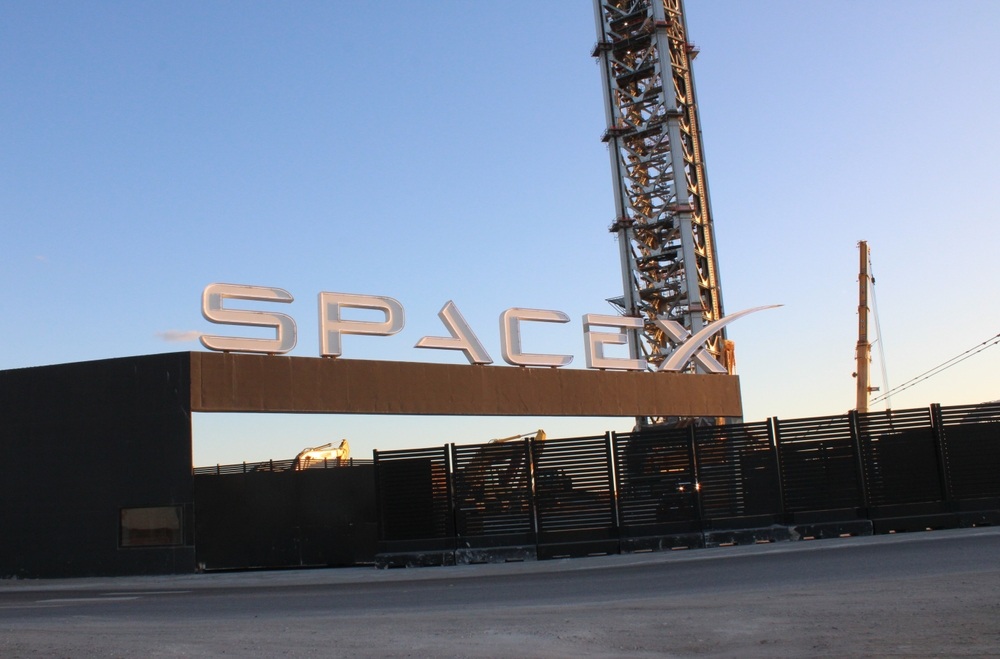
TradingKey - SpaceX (SPCX) achieved historic progress in its Starship reusability program. On November 14, the Starship upper stage, designated Ship 42, returned to Starbase, Texas, after completing approximately 14 orbits around Earth and was successfully caught by the launch tower's mechanical arms for the first time.
This marks the first time SpaceX has recovered a Starship upper stage returning from orbit. During the mission, which lasted more than 22 hours, the spacecraft also deployed 26 Starlink V3 satellites, demonstrating that Starship is capable of simultaneously handling commercial payload delivery, extended on-orbit operations, and returning to the launch site.
However, Flight 15 failed to achieve its original two-stage recovery goal. The Super Heavy booster triggered a low fuel mass alarm during its return, prematurely ending its return burn. After the guidance system confirmed that the booster could not safely approach the launch tower, it automatically aborted the catch and diverted toward the Gulf of Mexico, and the booster was ultimately lost.
Flight 15 Completes Most Difficult Catch, but Two-Stage Recovery Remains Unachieved
Recovering the Starship upper stage is far more difficult than recovering the Super Heavy booster. While the booster returns within minutes after launch, the upper stage must enter orbit, re-enter the atmosphere at higher speeds, and withstand plasma and extreme heat. Subsequently, the spacecraft must also complete a series of actions, including deceleration, a flip maneuver, engine ignition, and a precise approach to the tower.
During Flight 15, Ship 42 flew for approximately 22.5 hours, completing 14 orbits around Earth. After completing its deorbit burn, the spacecraft smoothly traversed the atmosphere, executed landing maneuvers over Starbase, and was ultimately caught by the launch tower's mechanical arms. Preliminary data indicates that the spacecraft and its heat shield generally performed normally throughout the return process.
This step resolves one of the most complex challenges in Starship's reusability technology. Previously, although SpaceX had caught early models of the Super Heavy booster three times, it had never attempted to recover an upper stage returning from orbit. Flight 15 proved for the first time that Starship can return to its original launch site after completing an actual satellite deployment.
The mission also placed 26 Starlink V3 satellites into orbit. Each V3 satellite is expected to add approximately 1 Tbps of capacity to the Starlink network, and the downlink capacity delivered by the entire batch is equivalent to Falcon 9 conducting roughly 10 V2 Mini satellite launch missions.
Starship Weighs on Space Business in Short Term, Long-Term Returns Mainly From Starlink
From a financial perspective, Starship currently remains a capital-intensive project.
SpaceX's third-quarter total revenue reached $14.575 billion, up 161% year-over-year, but revenue from its space operations segment was only $1.767 billion. The division recorded an operating loss of $7 million, compared with an operating profit of $259 million in the prior-year period. The company stated that accelerated R&D investment in Starship drove a $367 million year-over-year increase in space operations costs.
Capital expenditures for the segment reached $1.606 billion in the third quarter, equivalent to approximately 91% of space operations revenue for the same period. This indicates that until Starship enters routine operations, research and development, manufacturing, testing, and launch site construction will continue to consume capital.
SpaceX's recovery of a spacecraft for Flight 15 will not immediately eliminate these costs, as the company must also inspect Ship 42's engines, heat shield tiles, fuel systems, and structural integrity, and determine which components can continue to be used. If extensive disassembly and refurbishment are required, the economic value delivered by the recovery itself will be significantly reduced.
Starship's greatest future commercial payoff may not be reflected directly in external launch revenue, but rather through Starlink. SpaceX is its own most important launch customer. In the third quarter, the company delivered a total of 476 tons of payload into orbit, of which 358 tons were internal payloads, accounting for approximately 75% and consisting primarily of Starlink satellites.
The Connectivity business, to which Starlink belongs, has become a relatively stable source of profit for SpaceX. In the third quarter, the segment's revenue reached $5.248 billion, with operating profit reaching $2.367 billion and an operating margin of approximately 45%, while its customer count grew to 13.6 million, an increase of 1.6 million from the previous quarter.
If Starship can reliably transport larger, higher-capacity V3 satellites, SpaceX can expand Starlink's bandwidth with fewer launch missions. As the entire rocket achieves reusability, the marginal cost of satellite deployment is expected to decline further, thereby improving the relationship among Starlink's user growth, network capacity, and profit margins.
This content was translated using AI and reviewed for clarity. It is for informational purposes only.
Recommended Articles











Comments (0)
Click the $ button, enter the symbol, and select to link a stock, ETF, or other ticker.