


What You Need to Know About the SpaceX IPO: What Supports the 2 Trillion Valuation? Analysis of Debut Highlights



AI Podcast


SpaceX's IPO, anticipated to be the largest ever with a potential valuation of $1.75-$2 trillion, faces scrutiny over its disconnected valuation and fundamentals. A $2 trillion valuation implies a Price-to-Sales ratio of 107x, far exceeding tech medians. While Starlink revenue and subscriber growth are strong, ARPU is declining. The company's AI computing infrastructure, particularly its Colossus data center and Anthropic lease agreement, supports its "story premium" and shifts its peer group to tech giants. Short-term IPO performance may be boosted by AI enthusiasm and index fund inflows, but long-term prospects hinge on fundamental validation and the eventual release of lock-up restrictions. SpaceX's debut is a crucial bellwether for upcoming AI IPOs.
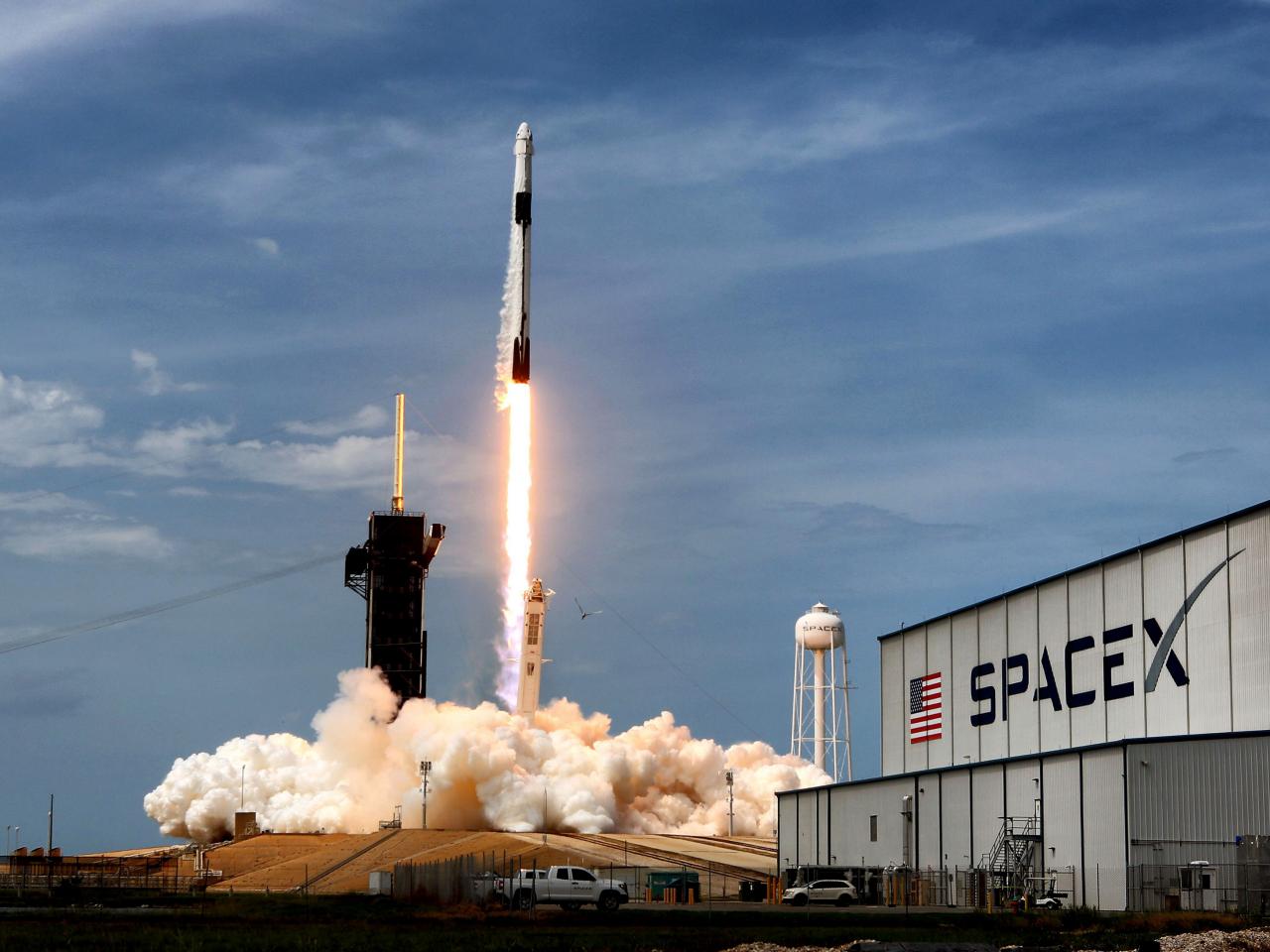
TradingKey - Since Elon Musk’s space company SpaceX filed its application on May 20, the market has been highly anticipatory of what could be the largest IPO in history, with investors currently expecting its valuation to range between $1.75 trillion and $2 trillion. According to the latest media reports, SpaceX is expected to finalize its pricing on June 11 and list on the Nasdaq on June 12, 2026, under the ticker symbol SPCX.
According to the latest market news, the general point of contention regarding this aerospace company lies in its massive multi-trillion-dollar valuation.
Price-to-Sales Ratio Hits 100x: The Disconnect Between Valuation and Fundamentals
Market enthusiasm for the rocket company's valuation has reached a fever pitch, with rumors of a peak valuation hitting $2 trillion, while investors generally view $1 trillion as a baseline forecast; this market consensus has generated not only massive trading volume but also significant risk.
Specifically, when market consensus is high, all positive news is exhausted and optimistic expectations are already priced into the stock. In such a scenario, once sentiment wavers, it can easily trigger a stampede-like sell-off.
The disconnect between valuation and fundamentals is a focal point of market discussion. Based on a $2 trillion valuation, the company's total revenue for 2025 is projected at only $18.67 billion, implying a Price-to-Sales (P/S) ratio of 107x—substantially higher than the valuation median of leading tech companies.
While investing is often a process of 'buying the expectation and selling the fact'—and Elon Musk is indeed skilled at the strategy of creating paper wealth (Tesla being the prime example)—the track record of his companies regarding actual profitability is not particularly strong.
This "future narrative"-driven valuation system can function smoothly in a market environment with ample liquidity, but once market styles shift and investors focus on actual profitability, free cash flow, and profit margins, its effectiveness will rapidly diminish.
Roger Ibbotson, Professor Emeritus of Finance at Yale University, noted that much of SpaceX's value is rooted in stories and narratives, but the issue is that these stories are ultimately difficult to realize.
Starlink is SpaceX’s core foundation.
From a medium-term perspective, SpaceX's high valuation continues to be supported by its connectivity segment (Starlink and satellite network services). Among these, Starlink is the company's primary source of cash flow.
According to data in the prospectus, SpaceX's total revenue in the first quarter of 2026 reached $4.69 billion, with the connectivity segment alone generating $3.26 billion, representing 69% of the company's total revenue.
As of the end of March 2026, Starlink's subscriber base reached 10.3 million, doubling from a year earlier. Furthermore, the company estimates that the combined total addressable market (TAM) for its mobile and broadband services is $1.6 trillion, equivalent to current global mobile and broadband spending excluding Russia and China.
Starlink's stellar 2025 performance has fully validated the viability of its business model: annual revenue reached $11.3 billion, a 50% year-on-year increase; operating profit was $4.4 billion, up 58% year-on-year; and the operating margin reached 39%.
From a long-term perspective, Starlink possesses significant earnings elasticity. Morningstar stated that, leveraging industry-leading cost advantages and a network marginal cost approaching zero, its annual revenue is expected to grow by tens of billions of dollars over the next decade, with long-term operating margins potentially exceeding 75%.
Notably, while SpaceX's revenue has maintained a growth rate of over 30% in recent years, the source of growth is primarily the continuous increase in Starlink users. Data show that Starlink's average revenue per user (ARPU) has declined by approximately 18% since 2023, reflecting an aggressive pricing strategy to quickly capture market share. Balancing user growth and profitability remains a core market concern.
For a company whose core valuation logic relies entirely on a growth narrative, the risk of a growth slowdown will be significantly magnified in public capital markets.
Cross-Sector AI Computing Infrastructure: Supporting the "Narrative Premium" of a 2-Trillion Market Cap
If Starlink is the foundation of SpaceX's valuation, then its cross-sector AI computing infrastructure represents the company's largest "story premium."
According to the prospectus, Anthropic has formally agreed to pay SpaceX $1.25 billion per month in computing service fees to lease tens of thousands of NVIDIA GPUs within its Colossus data center. This agreement will continue until May 2029, with a total contract value of nearly $45 billion.
The primary factor driving Anthropic's willingness to commit tens of billions of dollars is the unparalleled scale of computing power at SpaceX's Colossus data center. Reportedly, this data center hosts tens of thousands of NVIDIA GPU chips.
In the eyes of analysts, this is also the sole trump card that allows SpaceX to command valuation multiples on par with major tech giants.
Including Boeing ( BA ), traditional aerospace and defense contractors typically trade at price-to-sales (P/S) ratios of only 2 to 5 times. If SpaceX were valued on this basis, its valuation could potentially shrink by more than tenfold.
However, with the injection of xAI assets and the partnership with Anthropic, SpaceX's benchmarks in the secondary market have shifted instantly to computing giants like Amazon ( AMZN ), Microsoft ( MSFT ), and other computing titans.
Wall Street will no longer focus solely on the payload capacity of the Falcon 9, but rather on the Colossus data center and the volume of AI data throughput carried by the Starlink network.
Aptus Capital Advisors stated that it plans to build positions in stages within the first month after SpaceX's IPO, betting that massive allocation demand from passive index funds will drive up its share price. The firm noted that for SpaceX, traditional valuation logic does not apply.
What you need to know about SpaceX’s first day of trading
Despite market skepticism regarding SpaceX's high valuation, investors are more focused on the stock price performance following its debut.
In the short term, multiple tailwinds will continue to support SpaceX's share price performance during the early stages of its listing. First, current market enthusiasm for AI infrastructure allocation is high; second, the company will be eligible for inclusion in the Nasdaq 100 after 15 trading days, triggering massive inflows of passive index-tracking capital. Finally, shareholders are subject to a 180-day lock-up period post-IPO, resulting in limited selling pressure.
From a medium-to-long-term perspective, however, after the market hype subsides, SpaceX will eventually return to its fundamentals, and its narrative will require validation. Moreover, the wave of lock-up expirations for private equity investors and employee holdings is highly likely to put pressure on the stock price.
More crucially, SpaceX is the first of this year's three global AI heavyweight IPOs—including OpenAI and Anthropic—to debut in the capital markets, making its listing performance a significant industry bellwether.
According to media reports, AI chip company Cerebras ( CBRS )'s recent strong market performance has already stirred investor sentiment, providing a positive emotional backdrop for this wave of listings.
Similar to the IPO craze in the Hong Kong stock market in 2025, once this listing generates a 'wealth effect,' it will completely ignite a wave of speculation on new stock listings. Conversely, if SpaceX's debut is lackluster, the listing pace for subsequent AI giants may be forced to slow down, and the overall valuation levels will face significant downward revision pressure.
This content was translated using AI and reviewed for clarity. It is for informational purposes only.
Recommended Articles







Comments (0)
Click the $ button, enter the symbol, and select to link a stock, ETF, or other ticker.