


Increasing Holdings Cannot Reverse Nike Slump? Apple CEO Cook and Nike CEO Hill 2026 Floating Losses Exceed 25%.



AI Podcast


Apple CEO Tim Cook and Nike CEO Elliott Hill recently purchased significant Nike shares, totaling over $2 million, despite a ~25% paper loss from prior purchases. Nike's stock has fallen over 28% year-to-date, reaching a market cap of $63.5 billion. Q3 fiscal 2026 results showed flat revenue, a 35% net income drop, and contracting margins. The company anticipates a ~20% sales decline in Greater China for Q4. Analysts cite challenges in the lifestyle segment, eroding brand premium, and uncertain EBIT margin recovery. Geopolitical risks and inventory backlogs further complicate Nike's outlook, suggesting caution for investors.
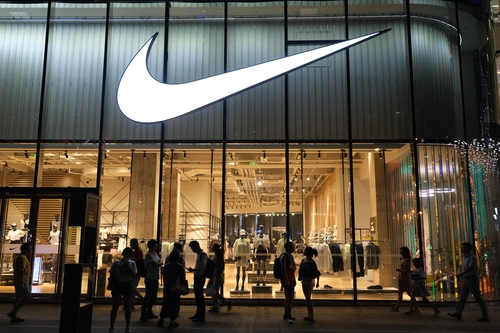
TradingKey - On April 10 local time, Apple CEO Tim Cook purchased 25,000 shares of Nike at a weighted average price of approximately $42.43 per share, totaling about $1.06 million. Following the transaction, Cook directly holds 130,480 shares of Nike.
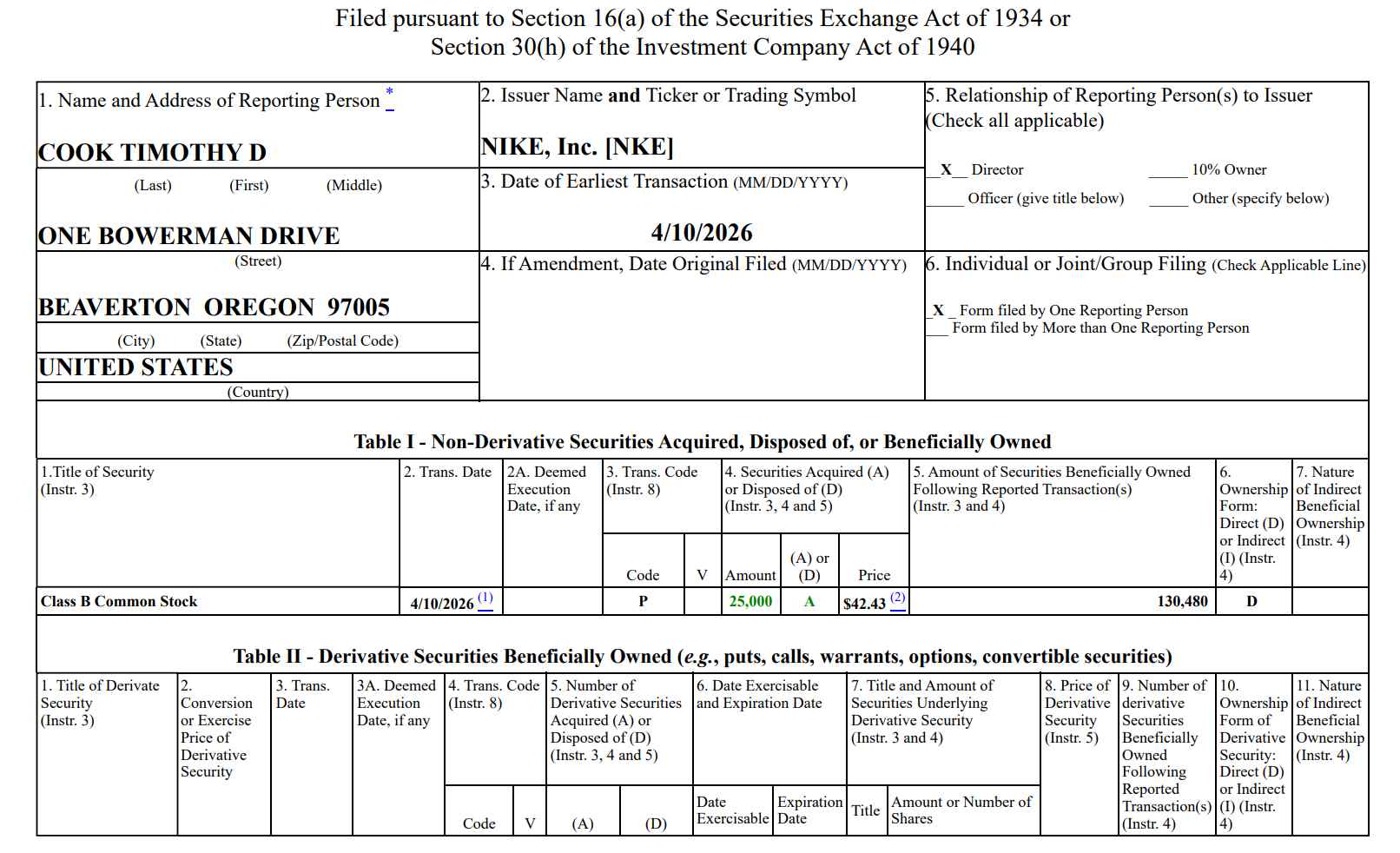
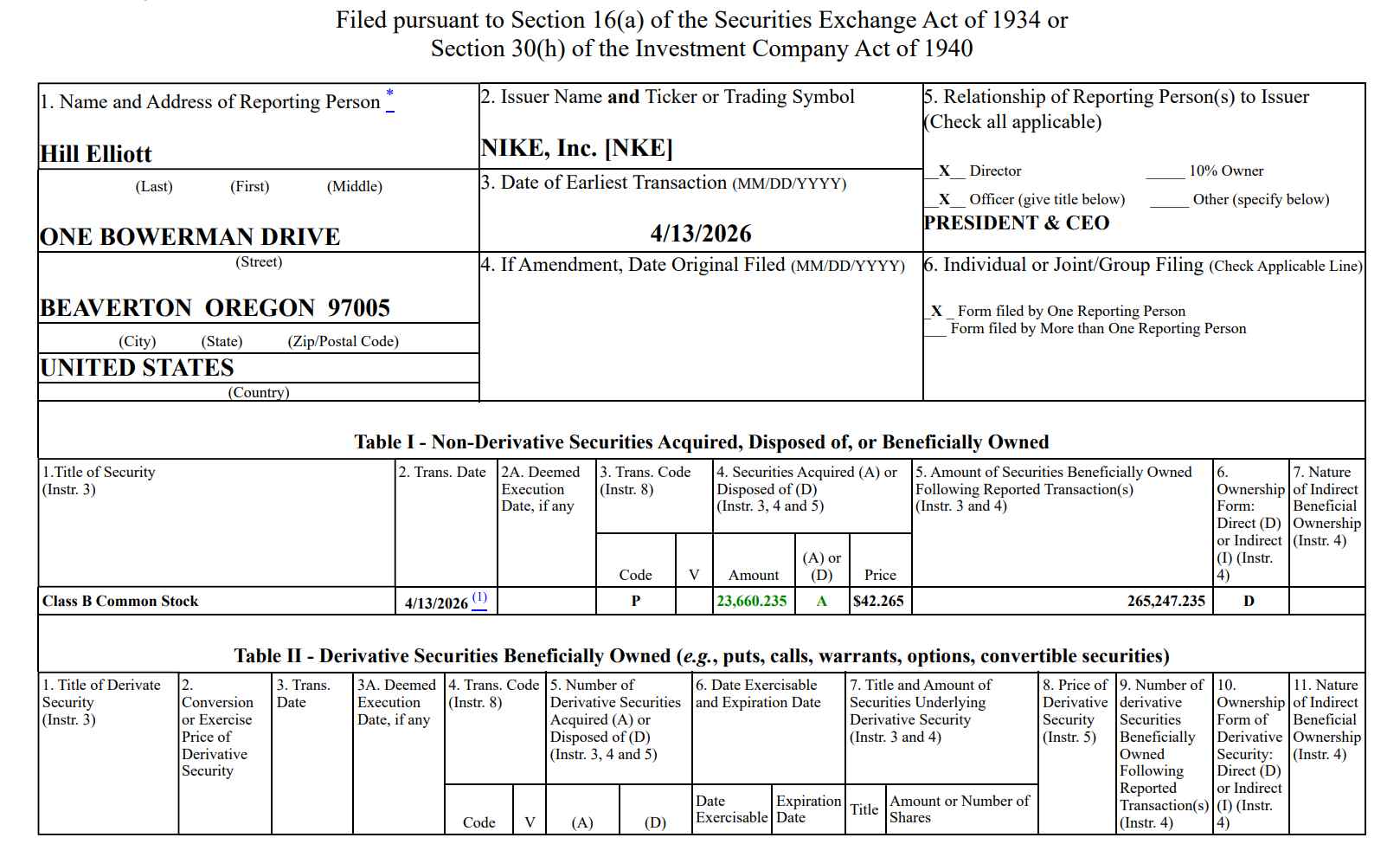
[ Apple CEO Tim Cook and Nike CEO Elliott Hill simultaneously increased holdings in Nike stock; Source: Nike Official Website ]
Meanwhile, Nike CEO Elliott Hill purchased approximately 23,660 shares at about $42.27 per share on April 13, spending roughly $1 million. The two had previously increased their holdings simultaneously last December, when Nike's stock price was in the $58 to $60 range. On the news, Nike shares jumped 2.8% Wednesday and were up nearly 0.9% in Thursday pre-market trading.
However, this marks their second move recently, and they have incurred a paper loss of 25% since the previous increase in holdings.
What caused the plunge in Nike's stock price?
Year-to-date, Nike's stock price has fallen more than 28% and is down over 70% from its 2021 peak, with its market capitalization shrinking to $63.5 billion.
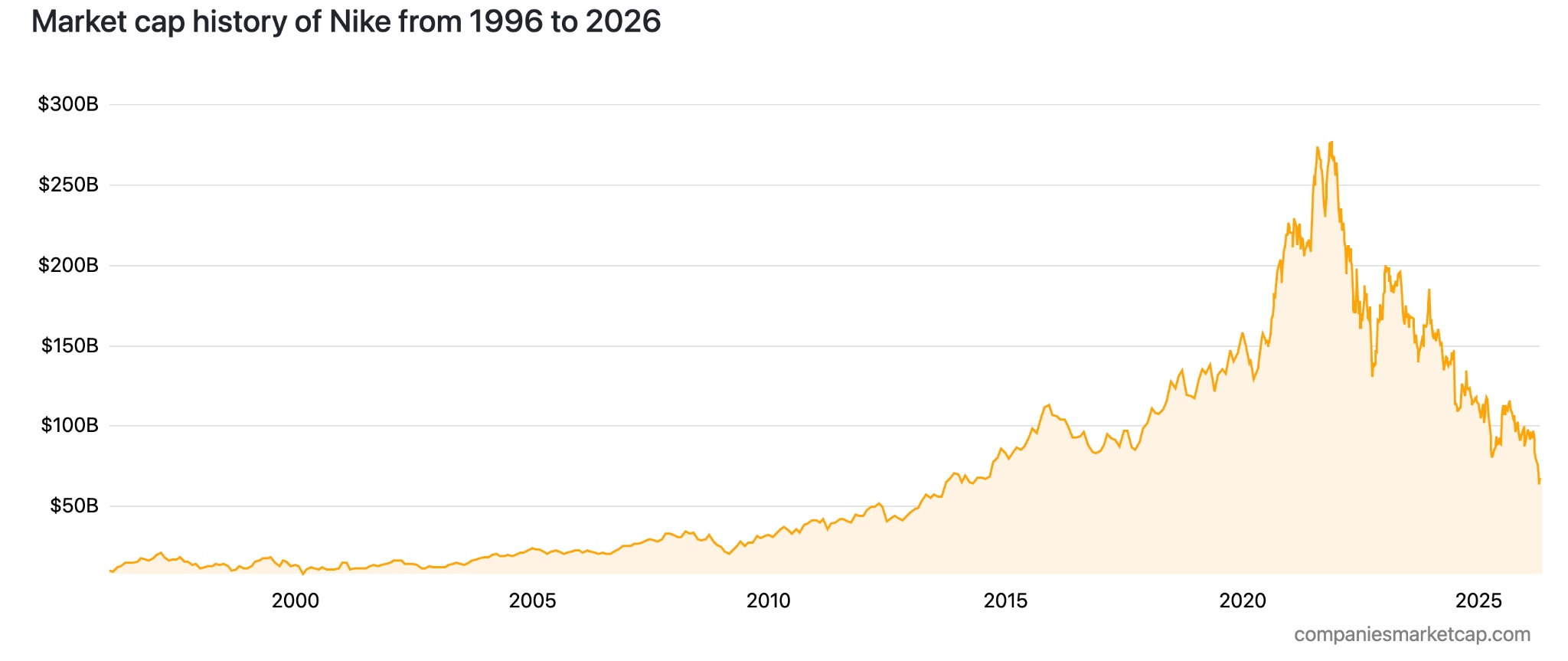
[Nike Historical Stock Price Trend, Source: Companiesmarketcap]
On April 1, Nike released its third-quarter results for fiscal 2026: global revenue was roughly flat at $11.3 billion, but net income tumbled 35% year-over-year to $520 million, with gross margin contracting to 40.2% and operating margin falling to 5.6%. Management issued a clear warning that sales in Greater China are expected to decline by approximately 20% year-over-year in the fourth quarter.
According to previous reports from Wallstreetcn, UBS listed three "decisive challenges" on Nike's path to recovery in its latest report: the lifestyle segment accounts for over 50% of the business but faces a pullback; brand premium capacity is being eroded by upstarts like On and Hoka; and it remains unclear what will drive EBIT margins back to 10%.
Nike CEO Elliott Hill stated that the recovery "will not be a straight line."
Is it time for investors to follow Cook's lead and buy Nike?
Investors still need to remain cautious regarding the decline in Nike's stock price. The impact of tariffs will persist, and coupled with inventory backlogs resulting from geopolitical risks, Nike's situation is not optimistic.
From the current perspective, although increasing holdings can boost investor confidence, given that Nike's strategy in Greater China is still in a phase of ineffectiveness, the sales uncertainty in the region has weighed on overall revenue and profits. In the short term, it remains difficult to see Nike recovering its previous growth rate.
Despite Nike's active efforts to push forward a transformation in Greater China, the implementation of its new strategy still faces challenges. Nike CEO Elliott Hill acknowledged during the earnings call that the business turnaround is taking longer than expected.
UBS analyst Jay Sole stated in his latest report: "The market consensus is that the decline has not yet bottomed out, and we agree. We believe Nike still has much to prove; in their view, sentiment and earnings expectations may continue to be corrected by reality."
Previously, in our "What Investors Should Watch Behind Nike’s Stock Price Plunge?" article, we informed investors of several key variables to watch regarding Nike: demand structure and regional recovery capabilities, the rebalancing of supply chains and cost structures, and the actual returns of digital transformation.
Cook's "25% unrealized loss" also serves as a reminder to the market that even insiders cannot precisely time the bottom. This acts more as a statement that he stands with the company during Nike's most difficult period.
This content was translated using AI and reviewed for clarity. It is for informational purposes only.
Recommended Articles









Comments (0)
Click the $ button, enter the symbol, and select to link a stock, ETF, or other ticker.