


SpaceX IPO Analysis: Why Terafab and Grok are the Real Reasons to Invest in SpaceX



AI Podcast


SpaceX has confidentially filed for an IPO targeting a $2 trillion valuation, with investor focus on launch operations and Starlink. However, its potential long-term growth driver is an integrated "Sovereign AI" infrastructure developed through xAI. SpaceX's monopoly in commercial launches, Starlink's global network, xAI's AI models like Grok, and Terafab's semiconductor manufacturing efforts with Tesla form this AI-first strategy. While launch cadence and Starlink subscriber growth offer near-term revenue, the success of this AI stack—addressing compute shortages and geopolitical risks—will determine long-term valuation and SpaceX's autonomous AI operation capability.
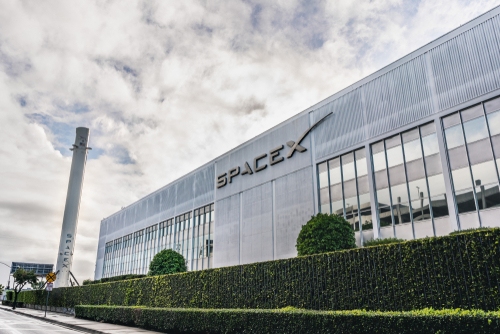
TradingKey - It has been reported that SpaceX has submitted an application to the SEC for an IPO on a confidential basis. The company's target price for the IPO is $2 trillion. Investors are getting excited about the IPO, and they are attempting to find value for SpaceX shares prior to them being listed.
Investors are mainly focused on SpaceX's launch operations and Starlink, which have both generated a lot of revenue and cash flow for the company. However, one of the potential drivers of long-term growth for SpaceX is likely to be overlooked, but may also be one of the biggest components of its future valuation: an artificial intelligence infrastructure being developed through xAI as well as overall support through an integrated stack, or system, for providing what are referred to by some analysts as "Sovereign AI."
What Is SpaceX? What Is xAI?
SpaceX is an aerospace and telecommunications business that was formed by Elon Musk and runs a variety of products and services. The SpaceX brand is associated with both Falcon rocket families and a global network of satellites, called Starlink, which provides internet service around the world.
In 2025, SpaceX provided rocket launches for both government and commercial customers, generating revenue exceeding $18.5 billion, based on the success of its many rocket launches and the installation of over 9 million Starlink users and more than 10,000 satellites in orbit.
xAI is an artificial intelligence company led by Elon Musk that has as part of its mission to develop advanced AI technologies. The AI development plan includes the Grok model and the use of real-time data to build AI systems and tools. Now xAI and SpaceX are no longer separate organizations; following the acquisition in February 2026, xAI operates as a wholly-owned subsidiary of SpaceX, creating a vertically integrated powerhouse of space infrastructure and artificial intelligence. This allows SpaceX to create an AI-first roadmap to integrate xAI resources into its technological and strategic development processes at a global level.
What Supports SpaceX’s Next Phase?
If you follow launch frequency and growth of Starlink users, there is no uncertainty surrounding SpaceX's immediate outlook. However, there is a much more extensive approach to SpaceX’s hardware, software, and service offerings. The first focus is access to space and all of the logistics required to achieve that.
SpaceX currently has a monopoly in the commercial launch industry, providing it with a significant advantage in the ability to install and replace hardware in orbit. This ability to replace and install hardware is critical for satellite production; however, it also allows SpaceX to create a new way of shipping data and computing power to other computers in space. By having total control over the commercial launch market, it will create the opportunity for computers and data centers in space, minimizing its reliance on third-party services, and creating a completely unique environment for performing sensitive data tasks.
The second pillar in support of SpaceX’s vision is the global implementation and success of its hyperscale network through Starlink. Starlink goes beyond simply providing an internet service for individual users; it will provide an enabling structure for global networking through communications and data transfer. As a result of running its global network from ground to orbit (end to end), SpaceX will be able to dictate the data movement, data processing, and compute of this highly sensitive and valuable information. Starlink users will benefit from the movement of this information at a very low latency rate, and customers who require this low latency for dedicated, sovereign paths for AI will have a unique and compelling choice through this capability.
The third pillar of SpaceX's consulting service platform is the model capability of the artificial intelligence (AI) component via xAI. Through access to the advanced models such as Grok, which have been trained using vast amounts of high-velocity data from both the X network and other external data sources, SpaceX receives real-time data to enhance model productivity and efficiency for time-sensitive tasks across all operations and communication channels, ultimately creating a feedback loop between both the networks and the AI components, where usage improves the quality of the models, and the models create more usage.
The fourth pillar of SpaceX's consulting service platform is the compute supply of hardware. There are currently many hardware limitations that affect the scalability of AI. SpaceX is involved in efforts to develop Terafab, which is an initiative developing a new high-performance semiconductor and systems manufacturing facility that is being developed with Tesla (TSLA). The goal of Terafab is to significantly increase compute output, with doses of compute production that will ultimately produce approximately one terawatt of compute capacity per calendar year. If even half of this goal is realized, it would help overcome compute shortages, provide reduced compute pricing, and help maintain AI stack vertical integration, all of which have historically resulted in maintaining higher margins and control.
Terafab and Grok May Be Overlooked
The physical limitations currently constraining the AI market—namely the bulk sourcing and high costs of chips and systems—are being alleviated by Terafab’s efforts to reshore design and manufacturing to the United States through its integration with SpaceX and Tesla. By reducing reliance on all external sources of supply, SpaceX and Tesla will be better able to tune their existing/next-generation hardware designs to suit the exact requirements of hardware going into space as well as hardware deployed on Earth. This is relevant for Sovereign AI because governments and large enterprises desire predictable availability of compute which is free from geopolitical disruptions, export restrictions, and supply chain issues. Thereby, providing a credible route to internal compute manufacturing will enhance SpaceX's value to both customers.
Grok has two layers: the data and the software. Because Grok has been trained using rapidly changing, real-time data feeds, Grok is well suited for situations that require very current information, such as network optimization, detection of anomalies, or dynamic content offerings. If Grok is able to fine-tune its functioning and to more tightly integrate with the Starlink network telemetry and user data, Grok can assist in automating various aspects of managing the network, improving the quality of service to the customer, and personalizing the user's experience as they switch between devices. In the future, it is likely that by providing an edge-cloud, Starlink will be able to transform from providing connectivity into providing an intelligent edge-cloud, whereby the inference occurs in close proximity to the user with minimum latency. The combination of Grok's modeling capabilities and Starlink's coverage will create a service that will be very difficult for terrestrial ISPs and cloud providers to replicate.
How to Realign Portfolio in Response to Overheated SpaceX IPO
It's easy to see why there is so much excitement in the marketplace—SpaceX has created an ecosystem of revenue-generating businesses with a very ambitious long-term roadmap that goes into the heart of the growing AI economy. However, those looking for SpaceX stock must be aware that their upside case rests on disciplined execution throughout the area of hardware, software, and networking. The valuation whisperings suggest that expectations are fairly high already; therefore, the question of "is there enough margin for error?" will greatly depend upon how quickly SpaceX can execute on its integrated AI strategy, generating fees from customers outside of consumer broadband services.
A good way to approach this is to segment near-term and long-term drivers. We'll look at measurable near-term drivers first: launch cadence and Starlink subscriber growth—which can generate the cash flow needed for future expansion.
On the other hand, there are four long-term elements of the Sovereign AI stack (launch logistics, Starlink as a global ISP, Grok's real-time model layer, Terafab's compute supply) that could provide a differentiated classification of workload by both governments and large enterprises for mission-critical applications.
However, there are risks at each layer, including regulatory approvals, geopolitical constraints, the complexity of chip manufacturing, and the pace of AI model development. Therefore, SpaceX investors can weigh their conviction related to the integration of these elements of the Sovereign AI stack while determining what valuation they are willing to pay, knowing the reward will depend on the company's execution over a multi-year period.
Elon Musk is going to generate lots of headlines; Starlink will add users for many more years. However, the real value will likely come from the less visible work of creating a seamless, AI-first network and computing platform that functions both on the ground and in orbit. If SpaceX is able to perform well, the primary catalyst for producing long-term returns will likely not be Starlink or the brand of Elon Musk; it will more likely be the AI-based infrastructure of xAI, Grok, and Terafab that ultimately provides an avenue for SpaceX to operate as a globally-scaled autonomous entity of AI technology.
Recommended Articles







Comments (0)
Click the $ button, enter the symbol, and select to link a stock, ETF, or other ticker.