


Nvidia Hit with $1B Crypto Fraud Lawsuit as U.S. Court Approves Class Action



AI Podcast


A federal judge has certified a class-action lawsuit against Nvidia, alleging the company concealed over $1 billion in cryptocurrency mining revenue. Investors claim Nvidia's GeForce GPUs were significantly impacted by crypto market volatility, despite the company downplaying these sales. This ruling, following an SEC fine in 2022, could expose Nvidia to substantial financial damages potentially reaching hundreds of millions or billions of dollars, beyond the initial $5.5 million penalty. Future court proceedings may necessitate enhanced data transparency and could impact Nvidia's stock price.

TradingKey - Nvidia officially faces a shareholder class-action lawsuit for concealing $1 billion in "mining card" revenue.
On Wednesday ET, California Federal Judge Haywood S. Gilliam Jr., in a case involving U.S. tech giant Nvidia ( NVDA) issued a ruling on an eight-year-old lawsuit, finding that Nvidia failed to prove its statements regarding crypto mining revenue were unrelated to its stock price, thus certifying the class-action lawsuit. Following the announcement, Nvidia's stock price showed a muted reaction, rising nearly 2% yesterday and slipping slightly in pre-market trading today.
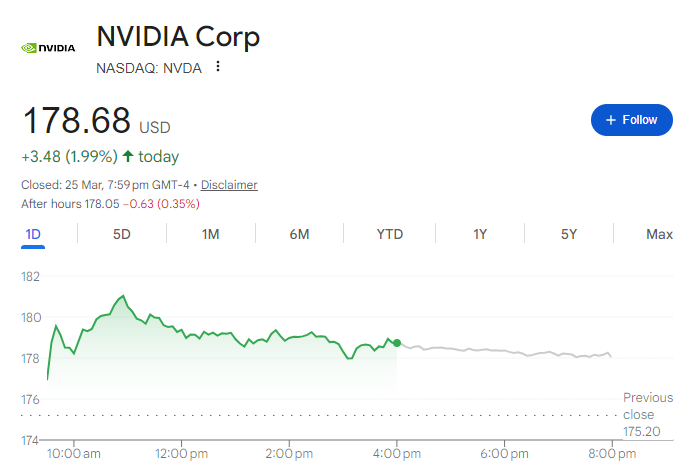 Nvidia stock price chart; Source: Google
In 2018, investors filed charges against Nvidia and its CEO Jensen Huang, alleging that the company concealed over $1 billion in cryptocurrency mining GPU revenue and that Huang downplayed the situation. The plaintiffs stated, "A significant portion of cryptocurrency-related revenue flowed into Nvidia's GeForce gaming GPUs, much of which was accounted for within its gaming division, making the company vulnerable to volatility associated with cryptocurrency market cycles."
In response to the investor lawsuit, Nvidia firmly maintained that "cryptocurrency mining accounted for only a small fraction of its business, and most mining-related sales were tallied separately from its core gaming division." From Nvidia's statement, it appeared to be an unintended admission, first acknowledging mining revenue and then emphasizing separate reporting without providing definitive evidence.
Furthermore, Nvidia emphasized that "its supply chain was under control and could smoothly clear excess graphics card inventory." While this response seemed evasive on the surface, it effectively served as an indirect acknowledgment of these transactions—a point that had been confirmed long ago.
In 2022, the U.S. Securities and Exchange Commission (SEC) fined Nvidia $5.5 million for failing to disclose the impact of cryptocurrency mining on its business. Nvidia agreed to pay the fine and accepted the SEC's "cease-and-desist" order, promising not to violate relevant disclosure terms in the future, while neither admitting nor denying the SEC's findings.
While this class-action lawsuit is unlikely to shake Nvidia's current dominance in the AI field, it will inevitably impact legal risk, financial outlays, and corporate integrity. At the time, Nvidia's stock price plunged over 28% in two days following disclosures of declining demand, causing massive losses for investors who may now seek damages. If Nvidia ultimately loses the case or opts for a high-value settlement, the compensation could far exceed the $5.5 million SEC fine, potentially reaching hundreds of millions or even billions of dollars.
The certification of this case as a "class action" will force Nvidia to provide more transparent and precise data disclosures in future earnings reports, and the court may review Nvidia's internal emails and executive communication records. Additionally, although Nvidia's current market capitalization is extremely high and the impact of short-term legal expenses and fines on earnings per share (EPS) is limited, subsequent progress in court proceedings could still impact the stock price. The hearing scheduled for April 21, 2026, is particularly noteworthy.
Recommended Articles










Comments (0)
Click the $ button, enter the symbol, and select to link a stock, ETF, or other ticker.