


Trump Postpones Ultimatum as US Stocks Surge on the ‘TACO Trade’ Again — But Is This a True Bottom or a Bull Trap?



AI Podcast


President Trump's delay in military action against Iran, citing "productive dialogue," spurred a significant market rebound. Crude oil plunged 14%, while U.S. stocks, particularly the Dow and S&P 500, surged. Analysts suggest this retreat signals Trump's sensitivity to market instability, specifically a $2.5 trillion loss in global bonds in March, indicating rising yields and stagflation fears. Despite short covering and FOMO driving the stock rally, concerns remain over persistent high oil prices and potential continued inflation, which could prompt tighter Federal Reserve policy.
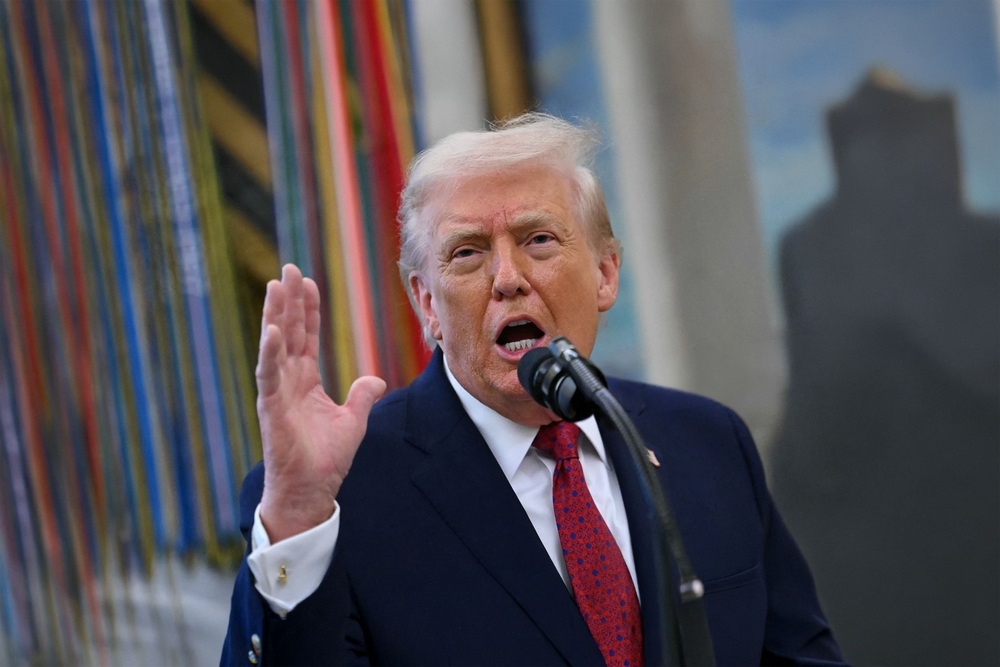
TradingKey - On Monday (March 23), ET, Trump once again opted for TACO (Trump Always Chickens Out), retreating at the last minute—despite having issued a fierce "48-hour countdown ultimatum" to Iran just last Saturday.
On Monday, Trump stated on social media that the deadline for bombing Iranian energy facilities would be delayed by five days, adding that both sides are engaged in "very good, productive dialogue" toward a "comprehensive and complete resolution" of the conflict.
On that day, crude oil plunged on the news, with intraday losses reaching 14% at one point, while the U.S. stock market staged a powerful rebound. The Dow surged nearly 1,000 points, and the S&P 500 rose as much as 2.2%, marking its largest gain since May. The Dow and Nasdaq closed up 1.38%, while the S&P 500 finished 1.15% higher. Prior to this, U.S. stocks had been sliding relentlessly, with the S&P 500 recording its longest weekly losing streak in a year as of last Friday.
From the tariff wars of 2025 to the Greenland controversy of 2026, Trump's TACO pattern has repeated constantly. Reckless rhetoric and broken promises have become synonymous with this president. Knowing well that Trump's orders change constantly and that this statement is no guarantee of a truce, why did the U.S. stock market still rise so resolutely?
The Bond Market’s Invisible Hand
Analysts believe that Trump's remarks lack any genuine sincerity toward Iran, and part of the objective may be to reassure investors shaken by the conflict.
For the market, the actual effectiveness of Trump's temporary ceasefire is secondary. The market rebound is merely a reflection of Trump's inability to tolerate recent market trends, signaling that he may prevent military conflict from spiraling further out of control and damaging the market.
As the war enters its fourth week, surging crude oil prices have intensified the inflationary shock. However, Tom Garretson of RBC Wealth Management believes that while Trump has been striving to suppress oil prices, it may have been the bond market that forced a shift in his stance.
According to Bloomberg data, the U.S.-Iran conflict has caused global bond markets to lose over $2.5 trillion in March, set to mark the largest monthly decline in more than three years. Bloomberg analysis notes that while this drop is smaller than the approximately $11.5 trillion loss in global equity markets, the plunge in bonds is perhaps more surprising given that bond markets typically rally during periods of geopolitical turbulence.
Due to the inverse correlation between bond prices and yields, falling bond prices translate to rising yields. For Trump, climbing bond yields will push up borrowing costs, drain market liquidity, and potentially lead to a simultaneous sell-off in both stocks and bonds; the surge in yields also reflects market fears of the economy falling into stagflation. Therefore, the bond market collapse is undoubtedly the most potent TACO signal for Trump.
Marko Papic, Chief Strategist at BCA Research, stated that if the situation is not resolved within the next 7 to 10 days, the global economy faces a massive shutdown; Trump's statement indicates he realizes the real economy could collapse.
Does This High-Stakes Surge Signal a Bull Trap?
Furthermore, fear of missing out (FOMO) is also a significant factor driving the rally in U.S. stocks. Steve Sosnick, chief market strategist at Interactive Brokers, emphasized that no one wants to miss a rally, and even a tiny bit of good news can trigger a strong market reaction.
Analysis suggests that a large portion of Monday's gains in U.S. stocks was driven by short covering. Data from Bespoke Investment Group shows that prior to this week, more than 50% of S&P 500 components were in "oversold" territory. Scott Rubner of Citadel Securities noted that current short positions in U.S. stocks are at historically rare levels; therefore, as long as geopolitical tensions ease slightly, the conditions for a rally are extremely favorable. Art Hogan, chief market strategist at B. Riley Wealth Management, remarked that the market is like a compressed spring looking for a reason to move higher.
Tim Pagliara, chief investment officer at CapWealth, considers this a classic "risk-on trade": the market has been waiting for any signs of de-escalation in the Iran conflict for weeks, and finally saw that on Monday. Even if the U.S.-Iran conflict has not been officially declared over, the stock market could stabilize and rebound before the war actually ends.
However, it is necessary to discern whether this rally is a signal of market recovery or a fleeting "dead cat bounce." Regarding the future direction of the stock market, Bloomberg macro strategist Michael Ball warned that the current rebound does not resolve the core problem: high oil prices are driving up inflation expectations, forcing the Federal Reserve to remain on hold and thereby tightening financial conditions, which remains bearish for U.S. stocks. Ross Mayfield, investment strategist at Baird, pointed out that even if the conflict ends this week, oil prices could maintain a higher premium for a long time due to damage to supply systems.
Recommended Articles





Comments (0)
Click the $ button, enter the symbol, and select to link a stock, ETF, or other ticker.