


Nike Stock: After a Sharp Drop, Is This a 5-Year Buying Opportunity?



AI Podcast


Nike's stock has declined due to sales trends, operational issues, and competition, impacting its direct-to-consumer transition and macroeconomic headwinds. However, its strong brand, innovation, and global scale remain advantages. The current weakness is viewed as transitional, offering a potential long-term buying opportunity as operational improvements and margin recovery are anticipated. Risks include continued competition, shifting consumer behavior, and execution challenges with the DTC strategy. For long-term investors, current valuations may be compelling if Nike successfully navigates its transition and re-establishes growth.
Introduction
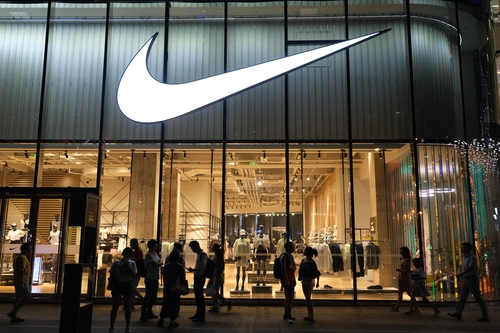
TradingKey - Nike has undergone one of the greatest sentiment shifts among global consumer brands in the last 12 months. Once a steady market performer, the stock has faced downward pressure due to weaker-than-expected sales trends, operational difficulties and increased competition. The main question is if this recent decline is a result of structural problems or a long-term buying opportunity.
Context / Information Regarding the Company
The stock price of Nike has fallen significantly from its recent highs and reflects lower sales growth and some inventory and retail challenges along with the consumer becoming more cautious about spending. Nike has also been in the midst of changing its business model to one that sells directly to consumers. The direct-to-customers (DTC) sales method makes strategic sense for Nike, however with change comes a risk of execution problems.
On top of the issues Nike has faced internally, there have also been a number of macroeconomic headwinds including weaker demand in their global markets as well as currency swings that have impacted their near-term performance and created uncertainty for investors.
The Scale and Power of Brand Are Unharmed
Despite some recent challenges, Nike has a very strong competitive advantage, which has continued to allow the company to be the unrivaled leader of the global athletic apparel and footwear sector through brand awareness, innovation, and global marketing.
The company's numerous endorsements, continual cycles of new product introductions, and vast global supply chain capabilities give Nike an advantage that few competitors can duplicate. Historically, even when experiencing periods of muted performance, Nike has been able to achieve renewed momentum through improving its products and making common-sense market movements.
Over the next five-year period, this brand strength is anticipated to reemerge, particularly as consumer demand for athletic footwear after the epidemic settles down, and new product offerings become available.
The Chance to Bring Changes to Operations in Order to Improve Margins
The chance to reboot an operation's processes to achieve better profit margins is highly probable and possible because one of the main problems affecting the price of Nike stock is management execution.
Nike has been navigating the management of excess inventory and moving to a wholesale distribution model. It is directly related to the complexities of expanding into a direct-to-consumer market.
However, Nike's difficult situation could be only temporary, as management has started to implement ways to develop more efficient operational processes, re-establish inventory levels and adjust distribution models to reflect changing consumer behaviours. If all of these operational initiatives are fully and successfully executed, it is anticipated that Nike will have increased gross margins and earnings.
The weakness in the current Nike stock price is due to transitional circumstances rather than structural ones.
Value Compression Provides Long Term Value
The strongest case for owning Nike equity centers on the price-to-earnings ratio of the underlying share price relative to its historical norms. The stock price has declined, so that at current prices the company trades at a much lower Price/Earnings multiple on trend versus its historical norm.
For those in it for the long haul, this value compression can become significant. Should Nike return to modest revenue growth and have margins stabilize, a combination of earnings recovery and P/E expansion will create the potential for attractive total returns over the long term.
This presents a strong opportunity for long term investors (greater than 5 years) who are less sensitive to rapid short term fluctuations in the stock.
Risks and Differing Views
There is no shortage of risks associated with the bullish perspective taken on Nike. Emerging competition continues to create opportunity as brands continue to fight for market share. Secondly, consumer behavior amongst younger consumers appears to be diverging from a historically strong inclination towards brand loyalty.
If the DTC strategy is successful from a margin standpoint, it is dependent upon an incremental investment and flawless execution.
Lastly, if growth does not restore, Nike shares may remain under pressure longer than what we initially anticipated.
Market Implications / Investor Takeaway
Nike is at a fork in the road regarding stock price today. An operating environment defined by short-term operating challenges & growth delays has caused the near-term narrative. On the other hand, the long-term story of Nike will be built around; brand strength, & global scale, as well as potential for margin recovery.
For long-term-minded investors, today's stock move may be a buying opportunity for you as long as you think about volatility and execution risk.
Ultimately, it comes down to whether or not Nike is able to successfully navigate the current transition and re-establish itself as a growth company/ If successful, then present valuations will be very compelling in retrospect.
Recommended Articles











Comments (0)
Click the $ button, enter the symbol, and select to link a stock, ETF, or other ticker.