


Tesla Shanghai Factory February Deliveries Nearly Double Year-on-Year. Can Demand Resilience Help It Regain Electric Vehicle Dominance?



AI Podcast


Tesla's Shanghai Gigafactory reported a 91% year-on-year delivery increase in February 2026. Despite a 2025 global delivery decrease, Shanghai remains its largest hub. Market concerns over demand were partially eased by this rebound and China's promotional financing. Conversely, BYD saw a 41% year-on-year decline in February new energy vehicle sales, attributed to policy changes and Lunar New Year timing. Intense competition in China, with evolving pricing and configurations, challenges Tesla's dominance. While Tesla expands into AI and robotics, China's expanding EV exports suggest a multi-manufacturer future, with Tesla's stock likely supported by short-term delivery recovery but long-term valuation dependent on future technologies.
TradingKey — According to Tesla (TSLA.US) latest disclosures, its Shanghai Gigafactory's delivery volume in February 2026 reached 58,600 units, a significant year-on-year increase of approximately 91%. Throughout 2025, Tesla delivered a total of approximately 1.636 million electric vehicles globally, of which the Shanghai Gigafactory delivered 851,000 units, accounting for approximately 52% of total global deliveries. It remains Tesla's largest production and export hub globally.
Regarding the full-year performance in 2025, Tesla's new vehicle deliveries totaled 1.636 million units, a decrease of approximately 150,000 units from 1.789 million in 2024, as electric vehicle sales experienced a periodic slowdown. Some market participants believe this is related to Elon Musk's previous controversial remarks regarding his political stance. In February 2025, Musk publicly expressed support for certain German political parties, triggering dissatisfaction among consumers in some European markets. This was followed by protests against Tesla in various parts of the world, and some sales outlets and owners also faced boycotts, which exerted a short-term impact on brand demand.
Entering 2026, Tesla's sales in China showed signs of recovery, benefiting from several promotional measures launched in the Chinese market, including "five-year zero-interest" and "seven-year low-interest" financing plans for certain models. The significant rebound in February delivery data has also eased previous market concerns regarding weak demand to some extent.
Meanwhile, regarding competitors, BYD's sales of new energy vehicles in February were 190,190 units, a year-on-year decrease of 41.09% and a month-on-month decline of approximately 9.46% from 210,051 units in January, marking the sixth consecutive month of year-on-year declines. This was also the most significant single-month contraction since the pandemic impact in early 2020. The sustained downward trend has caused the market to remain cautious about its short-term demand outlook.
The fluctuations in sales volume were mainly driven by policy and seasonal factors. On one hand, China resumed a 5% purchase tax on new energy vehicles at the end of 2025, while some national subsidies expired, exerting a certain suppressive effect on terminal demand. On the other hand, the shifting timing of the Lunar New Year holiday also disrupted monthly data. The 2025 Lunar New Year fell primarily in January, whereas the 2026 Lunar New Year occurred in February, causing a certain discrepancy in year-on-year sales comparisons.
Furthermore, competition in the Chinese electric vehicle market continues to intensify. "High cost-performance" is no longer the sole core advantage of any single manufacturer, as competition over pricing and vehicle configurations grows increasingly fierce.
Although the February delivery volume of Tesla's Shanghai plant nearly doubled year-on-year, its scale still struggles to compete with some Chinese manufacturers in terms of absolute sales volume. From a pricing perspective, Tesla does not necessarily hold a clear advantage in the Chinese market. Meanwhile, Chinese new energy vehicle manufacturers have continued to expand their overseas exports in recent years, impacting Tesla's existing global market share.
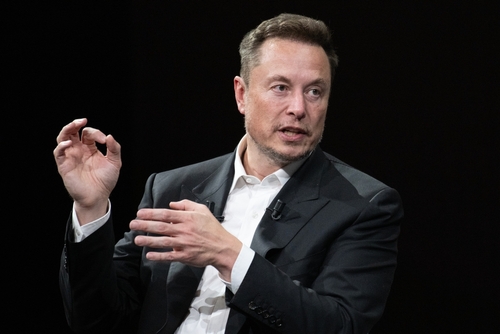
From a long-term perspective, the difficulty for Tesla to regain absolute dominance is rising. As the company's business footprint gradually expands, its strategic focus is also shifting. Musk has emphasized on several public occasions that Tesla is not just an electric vehicle company, but is also committed to the research and development of artificial intelligence and robotics technology.
At the same time, the maturity of China's electric vehicle supply chain continues to improve, expanding its influence in the global market through exports. The future global new energy vehicle market is more likely to feature a competitive landscape with multiple parallel manufacturers rather than dominance by a single enterprise.
Nevertheless, the electric vehicle business remains the most core component of Tesla's current revenue structure. If delivery volumes continue to recover, they are still expected to provide some support for the company's stock price in the short term. However, from a longer-term perspective, the premium in Tesla's valuation is derived more from the prospects of its business segments that have yet to achieve large-scale commercialization, such as its Full Self-Driving (FSD) system and humanoid robots.
This content was translated using AI and reviewed for clarity. It is for informational purposes only.
Recommended Articles








Comments (0)
Click the $ button, enter the symbol, and select to link a stock, ETF, or other ticker.