


What Is the Best Nuclear Energy Investment in 2026? Which Should You Buy in, OKLO or Nuclear Energy ETFs?



AI Podcast


Surging electricity demand, particularly from AI data centers, is driving a revival in nuclear power. Investors face a choice between speculative growth in Oklo, a microreactor developer with no revenue yet but significant potential, and broader, less volatile nuclear ETFs. Oklo's Aurora "powerhouse" aims for rapid factory-built deployment, catering to specialized needs. Key risks include regulatory approval, fuel availability, and substantial capital requirements. Established players like Constellation Energy offer stable baseload power, while Centrus Energy supplies critical HALEU fuel. ETFs provide diversified exposure to the nuclear value chain, mitigating single-company risk but limiting upside.
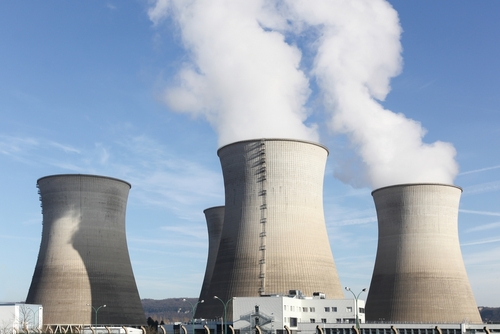
TradingKey - Demand for electricity is surging, and data centers designed for artificial intelligence are a big reason. Governments are also demanding cleaner, dependable power. This coupling has brought about a revival in nuclear power, with capacity expected to increase in the coming decades. To investors, the big question for 2026 is whether to bet everything on Oklo (OKLO) or to hedge their bets with exposure in broader nuclear energy exchange-traded funds (ETFs).
What Sectors Can You Invest in Nuclear Energy 2026
Nuclear energy encompasses multiple business models. Investors have choices among companies with extensive aircraft fleet operations, those who enrich or supply specific nuclear fuels, uranium producers, and start-up companies focused on advanced or small reactors. There are multiple components of the value chain represented in packaged ETFs. Investors in cash-flow-positive companies are not the same as those that back early-stage nuclear developers. Constellation Energy (CEG), which has the largest fleet of reactors in the U.S., offers a reliable source of power. Suppliers of fuel, such as Centrus Energy (LEU), are developing HALEU (high-assay, low-enriched uranium) required by various next-gen fission reactors. Uranium producers such as Cameco (CCJ) are also subject to cyclical commodity prices. Lastly, developers like Oklo are focused on commercializing small modular reactors (SMRs) that can be built in factories. Each of Global X Uranium ETF (URA), Sprott Uranium Miners ETF (URNM), and VanEck Uranium and Nuclear ETF (NLR) provides differing exposures to these categories with various mixes and costs.
What Is Oklo and How Does It Differ?
Oklo is designing small microreactors, dubbed the Aurora "powerhouse." Assuming these plants are capable of delivering about 15–75 MW of electrical power to customers that need a reliable source of on-site electricity, these reactors cater to applications such as remote industry, military bases, remote communities with weak grids and, more recently, data centers. The plants will be able to run on HALEU fuel and will be refueled infrequently (theoretically once a decade or more). The Aurora "powerhouse" approach emphasizes factory manufacturing and speed of establishment versus traditional large-scale nuclear plants which normally require large expenditures and can take years to construct.
Oklo has not yet generated any revenue and is in the process of completing the licensing process with the U.S. Nuclear Regulatory Commission (NRC). It was chosen by the Department of Energy (DOE) as one of the companies whose Reactor Pilot Program will result in at least three operational, advanced reactors outside of national laboratories by July 4, 2026. Oklo also entered into a pre-agreement with Equinix (EQIX) for up to 500 MW to supply electricity to its data centers (a sign of potential customer interest once the technology is commercialized). The business model could work off of selling electricity under long-term purchase agreements instead of selling equipment, aligning with the long-term, reliable needs of large electrical consumers.
How Oklo Performed in 2025
Oklo, listed in 2024, had a volatile beginning to its stock upon listing, but it had rebounded widely by 2025, returning roughly 280% for the year. The rally reflected growing investor belief that on-site nuclear would be a better fit for meeting soaring data center demand. That rally was a reflection of milestones that felt real: selection for the DOE’s pilot, moving forward with NRC licensing, and the Equinix pre-agreement that lays out how a customer would consume Oklo’s capacity if the reactors are licensed and built.
The wider nuclear system is also relevant here. Centrus Energy delivered 900 kilograms of HALEU in June 2025 and has an option for a DOE contract extension until June 2026, worth $110 million. A more stable source of domestic HALEU is a critical enabler for a range of advanced reactor designs, including Oklo’s. Policy support and potential loan guarantees can also ameliorate financing challenges should Oklo advance from licensing to construction. Regulatory timing and outcomes, how quickly fuel becomes available, and the amount of capital needed to transition from prototypes to commercially repeatable deployments are the primary risks.
Is Oklo the Best Nuclear Energy Stock?
Whether one company is the best stock or not depends on the tradeoff of potential upside and certainty. Oklo has massive upside potential if microreactors are the answer for data centers and remote loads. The total addressable market could be significant if power-hungry computing clusters grow faster than the grid can keep up, the analyst said. If Oklo successfully licenses and deploys initial units as planned, long-term contracts for specialized 24/7 power could offer the prospect of durably attractive margins.
But Oklo’s risk is orders of magnitude greater than the risk of companies with existing plants or recurring revenue. Constellation Energy is constructing baseload capacity, having received a $1.6 billion DOE support loan for the development stage of the Crane Clean Energy Center, an 835-megawatt facility. In 2025, Constellation Energy also agreed to acquire Calpine, significantly broadening its natural gas generation and adding a new cash-flow-bolstering customer base. Centrus Energy is upstream of developers, so if advanced reactors do scale, Centrus could see HALEU demand. While Oklo is the outlier, Constellation Energy and Centrus Energy at least have near-term revenue drivers (albeit arguably more limited upside than a new successful reactor platform).
What You Get—and What You Miss—with Nuclear Energy ETFs
An ETF can be a convenient vehicle to get exposure instead of leaning on a single name. Global X Uranium ETF (URA) has a combination of miners, industrials, and utilities and has just under $6 billion in assets with an expense ratio of 0.69%. Sprott Uranium Miners ETF (URNM) is a play on miners and physical uranium at a 0.75% net expense ratio. VanEck Uranium and Nuclear ETF (NLR) adds utilities to miners and developers and does offer a modest yield with a net expense ratio of 0.60%. These funds offer diversified exposure to the nuclear value chain and will commonly hold sizable stakes in established miners like Cameco and developers such as Denison Mines (DNN), and operators which already have a nuclear footprint.
What you get with ETFs is risk distribution: a dent in one company is less likely to wreck the entire holding. But what you give up is a more concentrated upside. Many nuclear ETFs are weighted toward miners and operators, so returns can be tied to uranium prices and utility fundamentals. Success for a developer such as Oklo is not going to make or break an ETF. Should advanced reactors, on the other hand, be delayed, an ETF’s overall mix may mitigate the impact.
Oklo or Nuclear ETFs in 2026? How to Decide?
If you are seeking the possibility of outsized gains and are comfortable with higher volatility, Oklo may make sense for a small, speculative position. There are a number of key 2026 items to watch for in this regard, in particular progress on NRC licensing, activities under the DOE Reactor Pilot Program, demonstration of HALEU fuel availability at scale, and movement toward binding contracts from pre-agreements. Even modest progress on just two of those items could bolster the next stage of the story, while slippages and backtracking could weigh on the stock.
If you want a smoother ride on the theme, you can use ETFs like URA, URNM, or NLR as the core holding. These funds are exposed to a variety of groups: miners, fuel providers, and operators benefiting from the growth in demand for nuclear fuel driven by data centers and energy security. For the majority of investors, a middle path is best: consider the ETF the core and keep a small satellite position in Oklo to catch any potential upside from advanced microreactors.
Recommended Articles










Comments (0)
Click the $ button, enter the symbol, and select to link a stock, ETF, or other ticker.