


Why Musk Thinks China Is the Strongest Competitor for Humanoid Robots?



AI Podcast


Chinese companies like UBTECH, Unitree Robotics, and CloudMinds are prominent in the humanoid robot sector. While not leading in single frontier technologies, they exhibit strengths in engineering, manufacturing, cost control, and deployment, aligning with Elon Musk's focus on large-scale production and cost reduction. China's manufacturing system advantages, including precision manufacturing and supply chain integration, are critical for mass production. Their strategy of rapid cost reduction through iteration and scale, proven in sectors like EVs, positions them to potentially reshape the industry by achieving consumer-grade pricing.

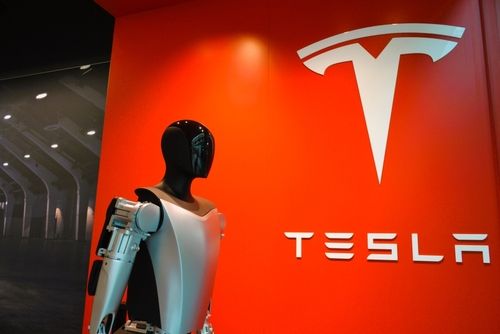
TradingKey - In Elon Musk's numerous public statements regarding humanoid robots, he has repeatedly emphasized one assessment: China is Tesla (TSLA) the "strongest competitor" in the humanoid robot sector.
Which Are the Cutting-Edge Humanoid Robot companies in China Currently?
UBTECH (UBTECH Robotics), as one of the first Chinese companies to systematically deploy humanoid robots, has long seen its Walker series as a symbol of China's "engineering capability" in the field. UBTECH does not merely showcase concept machines; instead, it consistently emphasizes field testing in factories, commercial services, and public scenarios, which gives it high recognition in both capital markets and the industrial sector.
Unitree Robotics is one of the Chinese robotics companies with the highest international exposure in recent years. Although initially famous for its quadruped robots, its core advantages in the humanoid robot sector lie in motion control, joint actuators, and cost control capabilities. Unitree's products frequently appear in overseas laboratories and tech companies, and are regarded as representatives of "cost-effective hardware capability," which is a key reason for its frequent mentions globally.
Another frequently discussed company is CloudMinds. Its humanoid robot logic is not entirely built on standalone intelligence, but rather emphasizes cloud intelligence, network collaboration, and multi-robot systems. Although its commercialization pace is relatively cautious, CloudMinds has long been viewed as a significant model for China's path in the differentiated direction of "Cloud + Humanoid Robots."
Overall, the currently frequently mentioned Chinese humanoid robot companies may not necessarily hold an absolute lead in any single frontier technology, but they have developed distinct characteristics in engineering implementation, manufacturing capabilities, cost structures, and the pace of deployment.
This is also why, in global discussions on humanoid robots, Chinese enterprises are often regarded as a major force "most likely to be the first to achieve scale."
In Musk's view, the final outcome of the humanoid robot race does not depend on who is first to demonstrate concepts or model capabilities, but rather on who can first complete large-scale deployment while continuously achieving cost reduction and efficiency gains.
From a product attribute perspective, humanoid robots are not purely AI products; the core challenges are not centered on the algorithms themselves, but on the long-term stable coordination of complex hardware systems.
The integration capabilities of drive systems, joint modules, sensors, batteries, and control systems directly determine whether a product can enter the reproducible and mass-production stages.
This is precisely where the long-accumulated advantages of China's manufacturing system lie. Whether in precision manufacturing, supply chain integration, or cost control, Chinese enterprises possess mature experience, and these capabilities are often more decisive than breakthroughs in individual technologies.
Crucially, for humanoid robots to truly create commercial value, their price points must drop significantly.
Musk has emphasized multiple times that the market space will only truly open up when robots possess a cost structure similar to that of consumer-grade products.
Based on this theory, Chinese companies have repeatedly validated a path across multiple emerging industries: entering the market before a product reaches its theoretical optimum, then driving down costs rapidly through continuous iteration and scale expansion. This strategy has proven effective in new energy vehicles and power batteries.
In contrast, some European and American companies prefer to push for commercialization only when technical maturity is extremely high; while their product performance is outstanding, their cost structures struggle to support large-scale adoption.
This regional difference keeps Musk highly vigilant regarding China's industrial capabilities. Once humanoid robots are proven to have practical application value, Chinese manufacturers are highly likely to rapidly widen the price gap, thereby reshaping the competitive landscape of the entire industry.
From a more macro perspective, what Musk worries about is not China's leadership in a single technical node, but the execution efficiency it demonstrates during the industrial scaling phase.
Historical experience shows that China is not always the originator of new technologies, but it often manages to quickly establish a scale advantage once an industry enters its expansion phase. If humanoid robots enter a development stage similar to that of new energy vehicles, China's competitive advantage may widen once again.
Musk viewing China as the strongest competitor is essentially a judgment based on the reality of the industrial landscape. Given the development speed of China's new energy sector and the competitiveness brought by iterative updates, the systemic advantages China possesses in the humanoid robot race should indeed not be underestimated.
This content was translated using AI and reviewed for clarity. It is for informational purposes only.
Recommended Articles





Comments (0)
Click the $ button, enter the symbol, and select to link a stock, ETF, or other ticker.