


Elon Musk’s SpaceX Poised for Record-Breaking IPO: How Can Retail Investors Get In on the Action of Starlink Stock?



AI Podcast


SpaceX is reportedly planning an IPO in 2026 with a target valuation of $1.5 trillion, aiming to become the largest IPO in history. Achieving this valuation necessitates a transformation into a space infrastructure and computing power provider, supported by Starlink and Starship advancements. Retail investors can gain exposure through SpaceX shareholders like Alphabet (GOOG) and EchoStar (SATS), specialized ETFs, or upstream/downstream companies. Equity tokens are recognized as high-risk with no direct SpaceX ownership. The IPO could significantly impact the US equity market landscape.
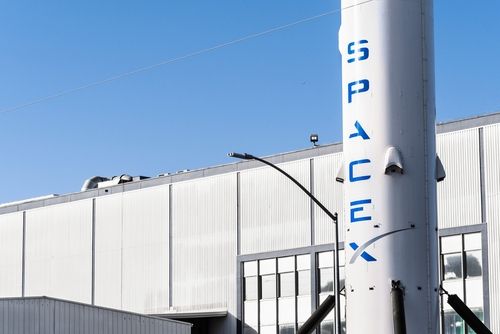
TradingKey - Elon Musk's rocket manufacturer SpaceX is expected to launch its initial public offering (IPO) in 2026, with a target IPO valuation projected to reach $1.5 trillion. However, prior to its listing, the stock is only tradable in private markets, characterized by low information transparency and high capital barriers. How can retail investors get a share of the benefits from SpaceX's IPO? Should one invest in SpaceX's suppliers, its current shareholders, funds holding its stock, or equity tokens?
Recent SpaceX News
According to Bloomberg, SpaceX is reportedly planning an IPO in 2026, aiming to raise over $30 billion and achieve a valuation of approximately $1.5 trillion. This could potentially make it the largest IPO in history. Sources familiar with the matter indicate that the company has issued a notice, declaring its entry into a regulatory 'quiet period' and requiring employees to comply with SEC regulations by refraining from speculating on its IPO plans.
Prior reports state that the company recently conducted an internal stock buyback, pricing shares at $421 each, nearly double the internal valuation of $212 per share in July. This brought its overall valuation to approximately $800 billion. SpaceX is allowing employees to sell approximately $2 billion worth of shares, with the company participating in the buyback.
Why has the SpaceX IPO caused such a stir?
The Most Valuable Private Company Goes Public: Will the MAG7 See a Major Reshuffle?
During this internal share buyback, SpaceX was valued at approximately $800 billion, surpassing OpenAI's $500 billion valuation record set in October this year, making it the world's most valuable private company. Furthermore, if calculated based on a target valuation of $1.5 trillion, SpaceX's total market capitalization after going public would be on par with that of Tesla today.
This will not only impact Elon Musk's personal wealth but also reshuffle the top-performing companies by market capitalization in the US stock market, potentially even challenging the rankings of the US stock market's 'first tier' (the MAG7).
Additionally, since Google's parent company, Alphabet, invested in SpaceX in 2015 and holds approximately 7%-7.5% of its equity, should SpaceX go public at its target $1.5 trillion valuation, the value of Alphabet's stake is projected to exceed $110 billion, which would also influence the landscape of the US stock market.
Redefining Commercial Space: From Niche to Mainstream
If SpaceX goes public at its anticipated $1.5 trillion valuation, it will become the undisputed leader in the commercial space sector.
Prior to SpaceX, most other listed commercial space companies have been 'niche' startups, such as Rocket Lab and AST SpaceMobile. This is primarily because the technologies involved in commercial space have long research and development cycles, high capital requirements, and a high probability of failure, making investments in such stocks inherently high-risk. Furthermore, the business models of these companies are largely nascent, and investment returns are often a distant prospect.
The commercial space sector is generally perceived as a high-risk market; however, SpaceX's IPO will mark the first time a commercial space company enters the mainstream market, potentially even rivaling the MAG7. This event is expected to prompt the market to reassess the investment value of the sector.
How Will SpaceX Balance Capital-Intensive R&D with Commercialization?
For a long time, Elon Musk had opposed SpaceX going public, citing the company's need for significant long-term investment and the difficulty of seeing short-term returns, which he viewed as contrary to the capital market's demand for short-term profits and clear plans. However, Musk has now proactively shifted his stance and is actively pushing for the IPO process, primarily because SpaceX plans to establish a space-based data network, with rising AI expenditures requiring substantial funding. SpaceX CFO Bret Johnsen stated that the funds raised from the IPO will be used to increase Starship rocket launch frequency, deploy AI data centers in space, and advance uncrewed and crewed Mars missions, among other initiatives.
Although SpaceX has never faced difficulties raising capital in private markets, the public market offers greater scale and liquidity, which could facilitate acquisitions. For SpaceX, going public means a necessary change in its business model. An IPO increases demands for revenue transparency from SpaceX and could bring pressure regarding profitability; some academics even suggest this could temporarily halt SpaceX's operations. In addition to profitability pressures, SpaceX must also live up to the market's expectation of a $1.5 trillion valuation, transforming from a mere rocket launch company into a 'space infrastructure and computing power provider.' The market will closely monitor how Musk balances these two aspects.
With Starlink and Starship, Can SpaceX Achieve a $1.5 Trillion Valuation?
This internal share repurchase was priced at $421 per share, bringing the company's total valuation to approximately $800 billion. However, according to Bloomberg, the target valuation for its IPO is $1.5 trillion. This has generated considerable skepticism in the market, given the substantial disparity between its valuation and revenue .
Last year, Elon Musk projected SpaceX's revenue for 2025 to be approximately $15.5 billion. For reference, Tesla's projected revenue for 2025 is $95.2 billion, with a current market capitalization of around $1.5 trillion. SpaceX's revenue is only about one-sixth that of Tesla, yet its valuation exceeds half of Tesla's, underscoring how elevated its valuation is.
While SpaceX's high valuation certainly benefits from Elon Musk's prominent personal brand, its primary support still stems from the profitability of its current operations and its commercialization progress, as well as the market's perception of its future growth potential.
By the end of 2025, SpaceX's Starlink business is projected to have surpassed 8 million subscribers. The company estimates its 2025 revenue to be approximately $15 billion, with the majority derived from Starlink. According to estimates from space industry publication Payload, SpaceX's revenue in 2024 was about $13.1 billion, with Starlink contributing $8.2 billion, accounting for 60% of the total. Starlink is undeniably SpaceX's revenue bedrock.
In terms of profitability, Starlink has already achieved positive cash flow, with estimated annual EBITDA of approximately $6-7 billion and gross margins as high as 60-80%. This is primarily due to the cost advantage of SpaceX's flagship product, the Falcon 9, in launch expenses. For reference, the cost for a NASA space shuttle to deliver payloads into low Earth orbit was about $54,500 per kilogram, whereas the Falcon 9 can reduce this cost by a factor of 20, to $2,720 per kilogram. Through this, SpaceX has built the world's largest space communications network.
However, relying solely on Starlink's profitability, SpaceX would, at best, be considered a rocket launch company or a satellite communications company. Achieving a $1.5 trillion valuation would be almost inconceivable.
While not entirely impossible to achieve, it hinges on SpaceX satisfying market expectations, meaning it can encompass communications, deep space exploration, and the construction of space-based data centers and other services, thereby becoming a comprehensive infrastructure giant.
This brings us to another pivotal supporting venture: Starship. This product is positioned as a fully reusable heavy-lift launch vehicle, a core tool required to achieve the vision of "colonizing Mars." Starship's design allows both its booster and spacecraft to return to Earth or be caught by a launch tower, thereby reducing launch costs and aiming to cut the cost per kilogram of payload transport by over 90%.
The development of SpaceX's space-based data centers is currently one of the most critical narratives for its IPO, serving as a key driver for the company's valuation to potentially reach $1.5 trillion. To realize this project, it will require not only Starlink V3 satellites to build the orbital data centers, but also the use of Starship for batch launches of V3 satellites and for transporting solar panels into orbit.
Therefore, in a nutshell, the $1.5 trillion valuation is predicated on Starship's recovery technology maturing, enabling cost reductions and commercial operations. This is the prerequisite for the market's perception of SpaceX to transform from a rocket launch company into a space infrastructure provider.
SpaceX IPO: Which investment targets should retail investors focus on?
Private Equity Transactions: Extremely High Barriers to Entry
As SpaceX is not yet publicly traded, investors cannot purchase its shares on stock exchanges but can only acquire stakes in the private equity market. This is the sole channel for direct investment in SpaceX.
Generally, buyers need to transact with early SpaceX employees or venture capital firms through specialized pre-IPO trading platforms, such as Forge Global, EquityZen, and Hiive, to purchase existing or employee shares.
However, these transactions typically have high entry thresholds, with requirements for annual income or net worth, meaning only qualified investors meeting these criteria can participate. Furthermore, transactions usually require SpaceX's approval. SpaceX equity comes with strict 'rights of first refusal,' allowing the company to reclaim shares. Therefore, it is generally not advisable for ordinary investors to engage in such transactions.
SpaceX Shareholders: GOOG, EchoStar, and ETFs
Alphabet (GOOG)
SpaceX's most prominent major shareholder is Google's parent company, Alphabet, which holds approximately 7% of the company's shares. If investors purchase Google stock, when SpaceX successfully realizes its valuation, Google's stake will undergo asset revaluation, and the resulting surge in profits will be reflected in Google's financial reports, driving up Google's stock price.
Although profiting from SpaceX's potential IPO through an investment in Google is quite indirect, it is indeed achievable. According to reports, after SpaceX's valuation was set at approximately $350 billion late last year, Google disclosed an $8 billion unrealized gain in April related to an investment in a private company. This gain once accounted for 25% of Google's Q1 2025 net profit, and the market widely believes that SpaceX was the underlying asset.
If SpaceX successfully goes public next year and achieves a valuation of $1.5 trillion, Alphabet's equity stake would skyrocket to approximately $111 billion, a 122-fold increase compared to its investment a decade ago. While Google itself is valued at $3.6 trillion, an 'unexpected windfall' of $111 billion is still a substantial sum.
However, the market will likely price in this $111 billion value in advance, rather than waiting until SpaceX successfully lists and realizes its valuation. Therefore, Google's stock price appreciation will likely precede the earnings release, and investors should seize the opportune entry point.
EchoStar (SATS)
Compared to Alphabet, EchoStar holds a smaller stake. However, given EchoStar's significantly smaller market capitalization, fluctuations in SpaceX's valuation have a greater impact on its stock. Compared to Alphabet, EchoStar is a purer play on SpaceX.
EchoStar's SpaceX stake was acquired in exchange for selling spectrum licenses. The total equity value was approximately $11.1 billion, when SpaceX was valued at about $400 billion. If SpaceX reaches a market capitalization of $1.5 trillion after going public, the value of this equity stake would reach approximately $40 billion. Driven by news of SpaceX's impending IPO, EchoStar's stock price has risen by 47% in the past month (as of the close on December 18).
ETFs Holding SpaceX Shares
Fund Ticker | Fund Name | SpaceX Holding % | Holding Date | Fund Type | Trading Method |
DXYZ | Destiny Tech100 | 23.3% | September 30 | Closed-End Fund | NYSE |
XOVR | ERShares Private-Public Crossover ETF | 6.95% | September 30 | One of the few actively managed ETFs in the market that directly holds private shares | NASDAQ |
ARKV.X | ARK Venture Fund | 7.43% | November 30 | Interval Fund, managed by Cathie Wood | Subscription through specific partner platforms such as SoFi, Titan, Charles Schwab, Fidelity |
BPTRX | Baron Partners Fund | 18.1% | September 30 | Mutual Fund, managed by Elon Musk 'superfan' Ron Baron | Subscription through fund companies or brokerage platforms |
BFGFX | Baron Focused Growth Fund | 11.6% | September 30 | Mutual Fund, also managed by Ron Baron | Subscription through fund companies or brokerage platforms |
SMT | Scottish Mortgage Investment Trust | 7.6% | September 30 | Investment Trust, a unique UK investment vehicle | London Stock Exchange (LSE) |
Note:
1. ARKV.X, as an Interval Fund, cannot be redeemed daily. Instead, it opens for redemptions periodically, and the proportion investors are allowed to redeem is also limited, typically to 5%.
2. DXYZ is a closed-end fund; its total number of shares is fixed after issuance. Its price often deviates from its Net Asset Value (NAV), leading to significant premiums or discounts. Since 2025, DXYZ has traded at a high premium due to SpaceX IPO rumors.
3. BPTRX and BFGFX, as mutual funds, typically have a minimum initial investment of $2,000 for standard accounts, though this can vary across different channels. There is only one transaction price per day, which is the closing price.
4. DXYZ has the highest 'SpaceX content' and also carries the greatest risk. DXYZ, XOVR, and SMT are the most convenient to trade, offering the same trading methods as stocks and the highest liquidity. ARKVX has the highest management fee, at 2.5%.
5. Both BPTRX and BFGFX are managed by Elon Musk 'superfan' Ron Baron and hold significant positions in SpaceX and Tesla. The distinction is that, BPTRX is more aggressive, employing higher leverage, essentially borrowing to bet big on Musk's ventures. BFGFX, on the other hand, does not use leverage, and its investment portfolio is more balanced.
SpaceX's Upstream and Downstream Companies and Related Sectors
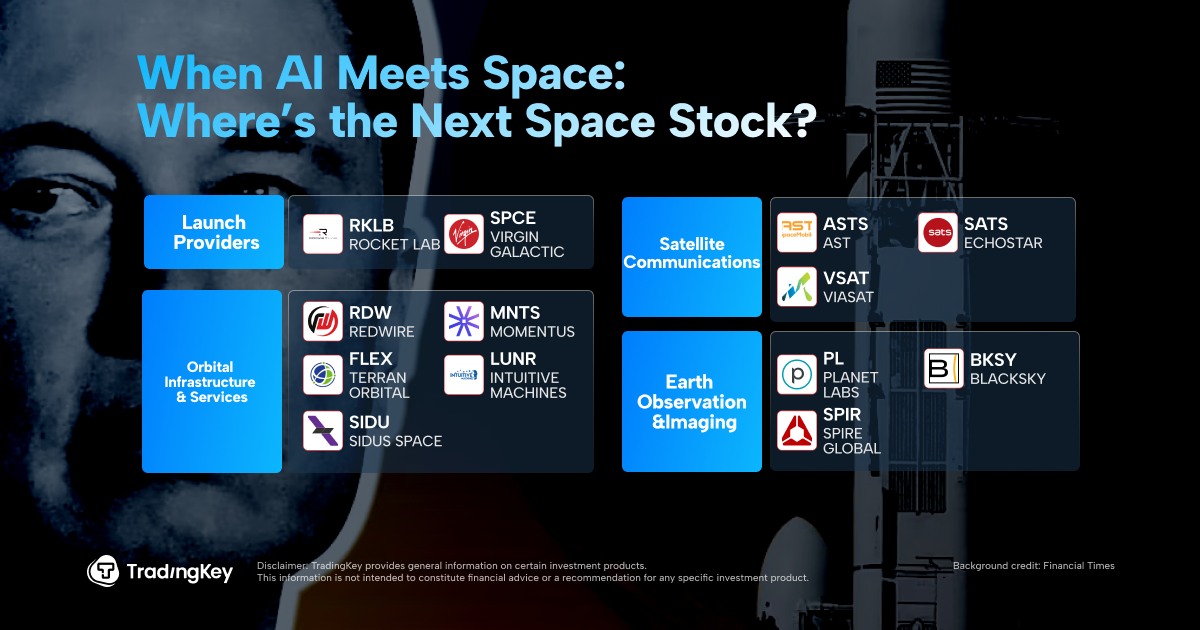
Upstream Suppliers
STMicroelectronics (STM): A core radio frequency (RF) chip supplier for Starlink satellites and ground receivers, poised to benefit from the surge in Starlink users.
Filtronic (FTC): Listed in London; manufactures Solid-State Power Amplifiers (SSPAs) used to connect Starlink satellites with ground stations.
SeAH Besteel Holdings: Listed in Seoul; supplies aerospace-grade special alloys to SpaceX.
Teledyne Technologies (TDY): A supplier of imaging sensors and extreme-environment electronic devices to SpaceX; these technologies have high barriers to entry, making it difficult for SpaceX to develop them in-house in the short term.
Downstream Customers
Intuitive Machines (LUNR): One of SpaceX's most important customers; its lunar landers require SpaceX rockets for space travel and specialize in lunar orbital navigation, communication, and small cargo delivery to the lunar surface.
T-Mobile (TMUS): Collaborates with SpaceX Starlink on 'direct-to-cell satellite communication.'
Planet Labs (PL): A satellite imaging giant, possessing the world's largest constellation of Earth observation satellites, but primarily relies on SpaceX's Transporter program for satellite deployment.
Commercial Space Sector
Rocket Lab (RKLB): A competitor to SpaceX, specializing in small satellite launches.
AST SpaceMobile (ASTS): Focused on direct-to-cell satellite communication, a competitor to SpaceX in its Starlink business.
Aerospace ETFs
Although some ETFs do not hold SpaceX shares, SpaceX's potential IPO could still lead to a market revaluation of this sector, making these ETFs worth watching.
UFO (Procure Space ETF): Top five holdings include AST, Rocket Lab, EchoStar, among others.
ROKT (SPDR S&P Kensho Final Frontiers ETF): Holds a substantial number of small, high-growth satellite service providers and rocket component manufacturers.
ARKX (ARK Space Exploration & Innovation ETF): Holds significant stakes in L3Harris (LHX), Kratos (KTOS), and Teradyne (TER).
ITA (iShares U.S. Aerospace & Defense ETF): Holds traditional defense aerospace stocks such as Boeing and Lockheed Martin.
XCOM (NextGen Communications ETF): Holds satellite communication stocks.
Equity Tokens
Equity tokens on the market are typically categorized into mirror tokens and tokenized equity certificates. The former does not represent actual ownership of SpaceX's underlying shares but is merely a derivative designed to mimic SpaceX's stock performance. Each token of the latter theoretically corresponds to a portion of real equity, which is actually held by an institution (e.g., an SPV fund) and managed on behalf of clients.
Platform | Token Type | Token Ticker | Platform Features |
Robinhood (European Version) | Tokenized Equity Certificate | SpaceX Stock Token | Licensed Brokerage / Crypto Retail Trading Platform |
Dinari | Tokenized Equity Certificate | SPACEX | FINRA-Regulated Compliant Securities Tokenization Platform |
Colb Finance | Tokenized Equity Certificate | CSPX | RWA (Real World Assets) Tokenization Platform |
Meteora or Raydium | Mirror Token | SPACEX | Two of the most significant decentralized exchanges on the Solana blockchain, carrying extremely high risk |
Republic | Mirror Token | rSPAX | Currently the world's largest issuer of SpaceX equity tokens, having completed a funding round and temporarily closed for new issues. |
It is worth noting that SpaceX officially does not recognize any SpaceX tokens; these tokens are not equivalent to actual equity. If you purchase these tokens, you are essentially holding debt certificates issued by the platform, and investors have no direct relationship with SpaceX. When SpaceX goes public, investors will most likely only receive a forced cash settlement from the platform, not actual shares. If the platform absconds, investors will lose everything.
Summary
As an outlier among rocket manufacturers, SpaceX has already achieved an $800 billion valuation prior to its IPO, highlighting the market's anticipation for the company's business prospects. However, to truly meet market expectations and achieve a staggering $1.5 trillion valuation, it must undergo a complete transformation into a space infrastructure giant and develop space computing capabilities.
SpaceX's public listing will undoubtedly represent a "recalibration" for the U.S. equity market, with some assets set to benefit and others facing significant impact. For retail investors, it may be prudent to consider positions in SpaceX shareholders and their ETFs, companies within its industry supply chain, or related sectors. Currently, equity tokens generally carry lower security and thus require careful consideration of investment risks.
This content was translated using AI and reviewed for clarity. It is for informational purposes only.
Recommended Articles







Comments (0)
Click the $ button, enter the symbol, and select to link a stock, ETF, or other ticker.