


The Yen’s Dilemma Under Middle East Conflict: Why the Safe-Haven Halo Is Gone as Exchange Rate Still Lingers Near 160 Mark?



AI Podcast


The USD/JPY pair shows volatility, breaching 160 due to Middle East geopolitical tensions rather than BoJ policy. Elevated oil prices, driven by conflict and supply disruptions, disproportionately pressure Japan's energy-dependent economy, widening the U.S.-Japan "energy trade scissors gap." While the BoJ signals potential rate hikes, aggressive moves risk economic recovery and fiscal stability. The Fed faces inflation risks, delaying rate cuts. The yen's traditional safe-haven status is eroding due to Japan's debt, corporate profit retention abroad, and ambiguous monetary policy. USD/JPY's near-term direction hinges on oil prices and potential intervention, with the 160 level a critical battleground.
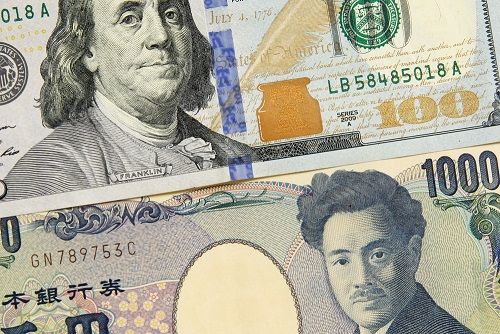
TradingKey - Since April 2026, the USD/JPY ( USD/JPY) exchange rate has experienced sharp 'rise-then-fall' volatility. At the end of March, the rate briefly breached the 160 psychological level, marking a nearly two-year high; in early April, it retraced slightly to around 159.30, entering a tug-of-war. Contrary to historical patterns where the yen significantly strengthened during past Middle East crises, the current geopolitical conflict has not only failed to bolster the currency, but has also cast serious doubt on its traditional safe-haven status.
I. Ceasefire Prospects Fluctuate, Oil Prices Remain Elevated
The direct driver of the yen's depreciation remains centered on Middle East geopolitics. Although the U.S. and Iran reached a two-week temporary ceasefire agreement on April 7, Israel launched its largest airstrike against Lebanon since the start of the current conflict on the first day the ceasefire took effect, resulting in over a thousand civilian casualties. Iran immediately declared that the foundation for negotiations had been undermined, subsequently re-closing the Strait of Hormuz and threatening retaliatory deterrence. Significant uncertainty now surrounds whether the U.S.-Iran negotiations, originally scheduled for April 11 in Islamabad, can proceed smoothly.
As a result, international oil prices did not see a significant pullback following the ceasefire news. As of April 10, Brent crude futures were reported at $95.78 per barrel and WTI crude futures at $98 per barrel; while down from the peak of the conflict, they remain at historical highs. More alarmingly, tightness in the spot market is far exceeding futures prices: crude oil exports through the Strait of Hormuz plummeted to just 8% of normal levels, driving North Sea spot prices to nearly $147 per barrel and triggering the Intercontinental Exchange (ICE) hedging limit threshold. Saudi Arabia also confirmed that its crude infrastructure was attacked, with pumping stations on the East-West Pipeline damaged, reducing daily transport capacity by approximately 1.3 million barrels.
Meanwhile, the U.S. dollar continues to attract safe-haven capital. The U.S. Dollar Index was trading near 98.645 on April 10, maintaining a relatively strong overall position. The interest rate differential of approximately 3 percentage points between the U.S. and Japan continues to support carry trades, with capital continuing to flow out of Japan, exerting fundamental pressure on the yen.
II. Sustained High Oil Prices Continue to Pressure the Japanese Economy
The core variable currently driving USD/JPY is no longer monetary policy, but crude oil prices. Japan depends on the Middle East for over 90% of its oil imports, and domestic gasoline prices have climbed to 190.8 yen per liter, the highest level since 1990. Estimates suggest that for every $10/barrel increase in oil prices, Japan's economic growth could face a drag of 0.4 to 0.6 percentage points. Nomura Research Institute further evaluates that the current Middle East crisis could result in a 0.65% drop in Japan's real GDP. In contrast, as a net energy exporter, the U.S. reaps structural benefits from high oil prices; this "U.S.-Japan energy trade scissors gap" provides fundamental support for the dollar's relative strength.
UBS strategists warned in their latest report that if the energy crisis escalates and oil prices surge to $150 per barrel, USD/JPY could reach a cyclical peak of 175 by year-end. Even in its base-case scenario, UBS raised its June target from 152 to 155. Junya Tanase, Chief Japan FX Strategist at JPMorgan, stated bluntly, "The yen's fundamentals are quite weak, and this situation will not change significantly even by next year," forecasting 165 for the end of 2026. However, bearish views are not unanimous. Nomura expects USD/JPY to pull back to 140 by year-end, while Citi anticipates the pair will fall to 142 as the Bank of Japan gradually raises rates while the Fed continues to cut. Such sharp divergence among institutions reflects high market uncertainty regarding oil price trajectories and monetary policy outlooks.
III. Both Central Banks Caught in a Policy Dilemma
The Bank of Japan is currently facing a difficult dilemma. Since ending its negative interest rate policy in March 2024, the BOJ has implemented a cumulative four rate hikes, raising the benchmark interest rate to 0.75%. At the monetary policy meeting on March 19, the central bank voted 8-1 to maintain the status quo, although hawkish member Hajime Takata advocated for a hike to 1.0%. However, the BOJ statement explicitly indicated that the Policy Board still intends to further raise the benchmark rate if the price outlook is realized. Former BOJ chief economist Toshitaka Sekine noted that the conflict in Iran has pushed up upside inflation risks, and the central bank should have sufficient data to support a hike by the April 28 policy meeting. Markets are currently pricing in an approximately 80% probability of an April rate hike.
However, aggressive rate hikes could dampen Japan's fragile recovery momentum. February household spending fell 1.7% year-on-year, indicating a lack of domestic consumption momentum. The budget for fiscal year 2026 reaches a staggering 122.3 trillion yen, with nearly a quarter reliant on new government bond issuance. As the government debt-to-GDP ratio has already exceeded 260%, rate hikes will directly exacerbate the fiscal interest burden. With economic stagnation, high prices, and high debt levels, the Japanese economy is increasingly overshadowed by the specter of stagflation.
The Federal Reserve is also facing a complex situation. At the March Federal Open Market Committee (FOMC) meeting, the federal funds rate was held steady at 3.50%-3.75%. The dot plot revealed a median expectation of only one rate cut in 2026, while the number of officials expecting no cuts this year increased from four to seven. Notably, the March meeting minutes rarely placed both the possibility of rate hikes and cuts on the table simultaneously: some officials advocated for keeping the hiking option on the table to counter upside inflation risks, while others expressed concern about the conflict's impact on the labor market. Chairman Jerome Powell stated clearly, "In the absence of seeing improvement in inflation, there will be no rate cuts." Market analysts judge that the Fed will likely maintain rates until September, as the probability of a June cut has declined. An interest rate differential of approximately 3 percentage points between the U.S. and Japan persists, with carry trades continuously channeling capital out of Japan and exerting long-term pressure on the yen.
IV. Why is the Yen’s safe-haven status fading?
The most surprising aspect of the yen's current trajectory is the rapid fading of its safe-haven status. Traditional theory posits that during geopolitical crises, investors shift capital into the yen—Japan holds vast overseas assets, and repatriating profits during times of crisis creates strong demand for the currency. However, during the current Middle East conflict, the yen has not only failed to strengthen but has remained under continuous pressure after breaching the 160 level.
This anomaly is driven by a convergence of multiple structural contradictions: first, Japan's fiscal sustainability has come under widespread scrutiny, with massive government debt undermining international investors' long-term confidence in the yen; second, post-pandemic, Japanese corporations are more inclined to retain overseas profits locally for reinvestment rather than repatriating them during crises, causing the yen to lose key 'repatriation support'; third, the Bank of Japan's policy signals remain ambiguous, as it can neither decisively tighten policy to curb depreciation nor maintain easing to support the economy, further intensifying market wait-and-see sentiment.
V. Market Outlook: Bull-Bear Tug-of-War at the 160 Mark
Taken together, the short-term trajectory of USD/JPY will be highly dependent on two key variables: oil price trends and the Japanese authorities' willingness to intervene. From a technical perspective, the 160 level is the most critical battleground, serving as both a psychological round number and a sensitive zone where the Ministry of Finance might step in. Once the exchange rate sustainably holds above 160, the next target will be the 161-163 range, a zone that has historically triggered actual intervention by the Bank of Japan. Conversely, if oil prices continue to retreat and Middle East tensions see material de-escalation, the yen is expected to find support near the 158 or even 156.50 levels.
Market expectations indicate a roughly 40% probability of a Fed rate cut this year, while the probability of a Bank of Japan rate hike is near 80%. While this appears bullish for the yen, the support from marginal monetary policy adjustments may be limited given that the BoJ only moves in 'gradual steps' of 25 basis points while the U.S.-Japan interest rate differential remains as high as 3 percentage points. Bearish forecasts such as UBS at 175 and JPMorgan at 165 essentially reflect the broad market consensus on the yen's structural weakness.
For investors, USD/JPY is no longer a simple tug-of-war over monetary policy, but a comprehensive test of Japan's economic resilience, central bank governance, and geopolitical direction. Will 160 be followed by a rebound or the start of a new downtrend? The answer may not lie with the Bank of Japan, but rather in the tanker lanes of the Persian Gulf, on the negotiating table of U.S.-Iran talks, and within every crack of a ceasefire agreement.
This content was translated using AI and reviewed for clarity. It is for informational purposes only.
Recommended Articles












Comments (0)
Click the $ button, enter the symbol, and select to link a stock, ETF, or other ticker.